
Shkodër, Lezhë and Elbasan woke up this Friday to youth protests, while in Lezhë the situation escalated into physical clashes with Police. In Tirana, another gathering had been announced, but by the time of reporting the participants had not assembled.
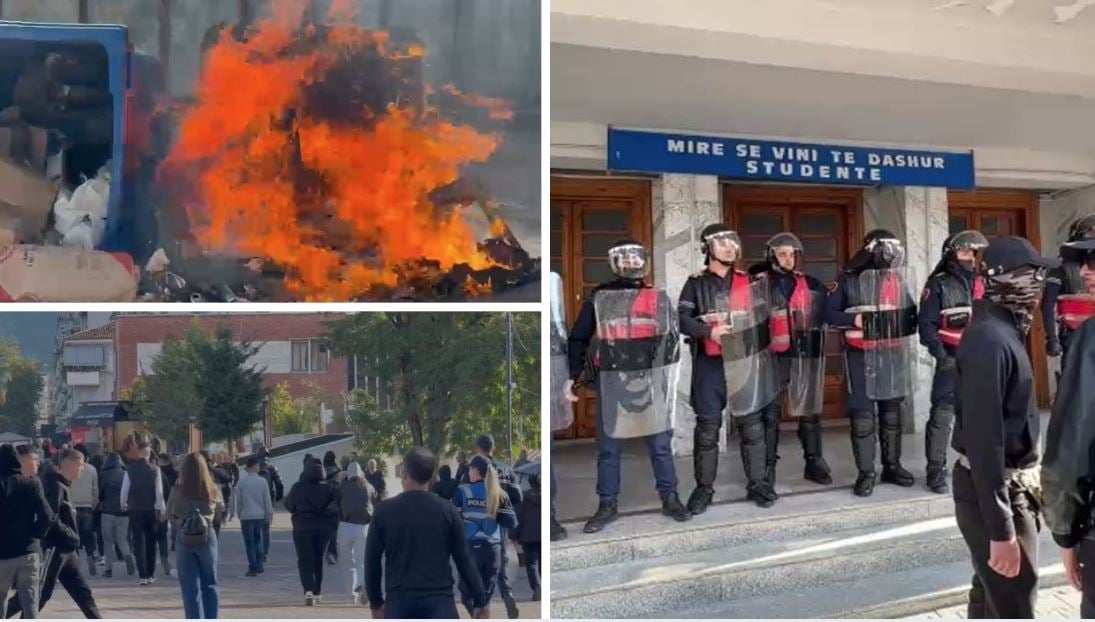
Second day of protests in the districts
According to reports from the ground, high school pupils and university students have boycotted classes and taken to the streets in Shkodër, Lezhë and Elbasan. In these cities, the protest marks its second consecutive day.
The expansion of the reaction across several districts at once shows that the discontent has not remained only in the capital, while institutions so far have not given a full response to the scale of the mobilization.
Clashes in Lezhë and Police withdrawal
In Lezhë, tensions were reported between protesters and Police forces, including physical clashes. Stones were also thrown in the direction of a high school.
Later, according to the reported official version, Police were ordered to withdraw and avoid clashes with the young people. The full circumstances of the incident and responsibility for the escalation remain unclear.
In Tirana, the announced protest did not gather at the scheduled time
Another protest in Tirana had been announced for this Friday at 10:00. By that time, the protesters had not gathered.
Over the previous three days, the gathering in the capital has started from the Ministry of Education, an indication that the protesters’ anger has also targeted institutional responsibility.
Rama at damaged businesses, statement on the fires set the night before
Prime Minister Edi Rama went to private businesses that were damaged by fires set the previous night in Tirana.
He said: “This fire is not the students’, and we will get through this ordeal together as well.” The statement comes as political and public tension around the protests is rising, but without a full clarification from the authorities on the dynamics of the events and responsibility for the violent episodes.
Friday’s protests showed that the situation remains tense both in the districts and in Tirana, with young people in the streets and Police under pressure in managing the crowds.
Beyond the political statements, the central question remains institutional responsibility and how an escalation that has now moved from boycotts to incidents on the ground is being handled.