
Prime Minister Edi Rama repeated the gesture from a day earlier outside the Prime Minister’s Office, once again placing chairs and sheets with messages calling for dialogue. The move comes after the previous protest rejected this political staging, tearing up the papers and overturning the chairs.
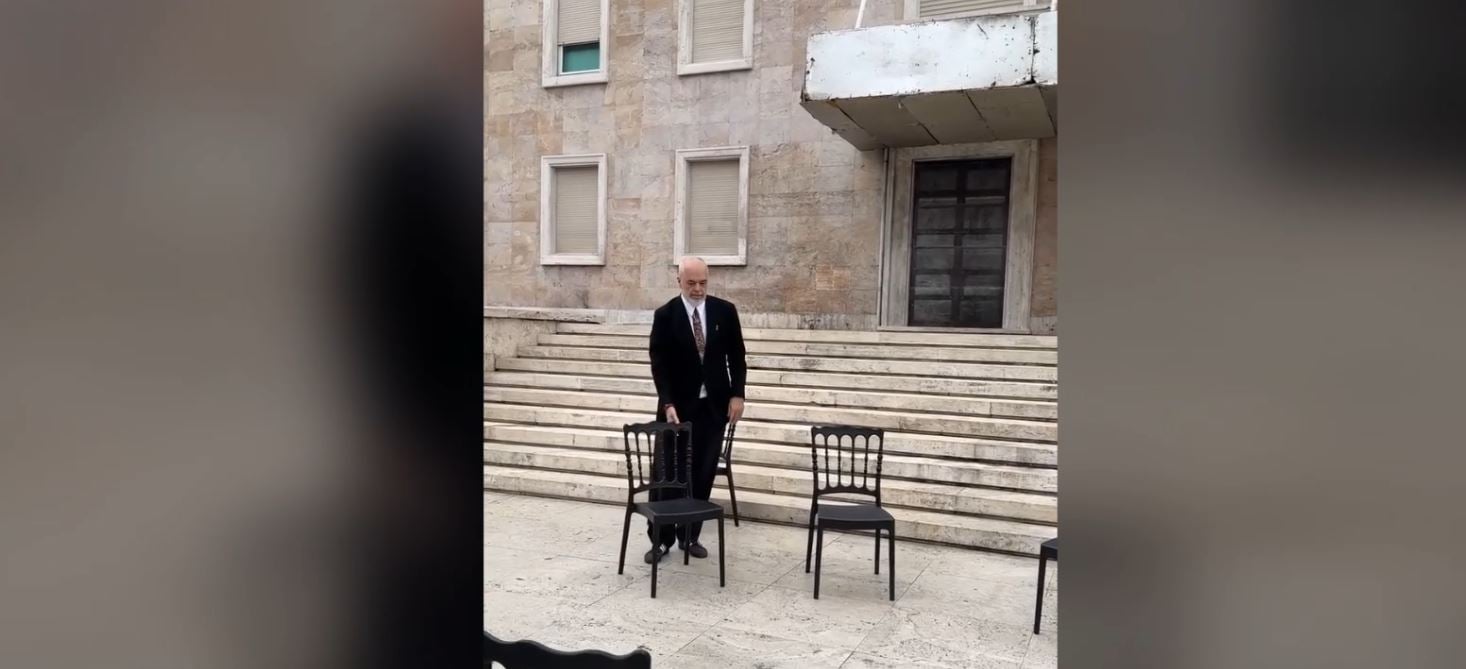
The same setup returns outside the government building
According to the version made public by the prime minister, chairs accompanied by sheets for dialogue with protesters have once again been placed outside the Prime Minister’s Office.
In essence, the government is restoring the same public symbolism just 24 hours after the first attempt was rejected on the ground by protesters. This makes the message appear more like a political act displayed before cameras than evidence that the sides have actually entered into communication.
Rama’s message: many reasons to protest, but not for violence
Rama said there are “1001 dissatisfactions, worries and problems, reasons to protest,” but added that, in his view, “no reason justifies violence.”
In the same reaction, he presented dialogue as the only acceptable path between the sides and insisted that the response to violence will be “legal” and “financial,” with the warning that whoever destroys “will pay.”
What happened a day earlier
A day earlier, the prime minister had also placed chairs and sheets outside the Prime Minister’s Office, in a similar effort to send a message of dialogue.
But the protesters’ reaction was the opposite: they tore up the papers and turned over the chairs, publicly rejecting the framework the government tried to impose on the protest.
A message for calm, but without addressing the core of the discontent
Rama’s statement emphasizes the condemnation of violence and the legal consequences for damage, but it does not provide concrete answers to the causes that produced the clash with protesters.
At this stage, the government is presenting the situation through the language of order and dialogue, while it remains to be seen whether, beyond the symbolism of the chairs, there will be room for a real response to the demands and grievances on the ground.
For now, the only tangible development is the return of the same scenario outside the Prime Minister’s Office: chairs, sheets and a repeated message about dialogue, in a climate that remains tense.
It remains clear that the government’s message has not been received as a solution by everyone in the square, especially after the open rejection it received a day earlier.