
Lecturers from public and private universities stood alongside students in the protest near Parliament, openly rejecting the political labeling directed at them by Democratic Party leader Sali Berisha. Their message was direct: the protest is not an extension of any party, and the discontent is aimed not only at the government, but at the entire political class.
The boycott continues, lecturers return to protest
For the third consecutive day, lecturers first gathered at the Polytechnic University, as the teaching boycott at universities continues. Before setting off toward Parliament, they described the protest square as “the largest auditorium of democracy.”
They then marched along Elbasan Road and the Small Ring Road to join students protesting near Parliament. Some of them later remained alongside the students and other protesters in the area.
Confronting the official narrative around the protest
The protest also featured accusations over the way the movement is being presented in public discourse. Mimoza Manxhari said the government is trying to delegitimize the protest by portraying it as violent and as a gathering of hooligans.
According to this position, the protest is being framed in a way intended to weaken its civic legitimacy, while organizers and participants insist that this is a broad reaction against the way the country is being governed and against the crisis of political representation.
Calls for a stronger role for lecturers
Within the lecturers’ own ranks, the need for greater engagement was also voiced. Ervin Goci called on lecturers to take on a more leading role in the protest and to increase their presence.
This position places the academic body not simply as moral supporters of the students, but as a more active factor in a protest that is trying to remain outside party control.
Response to Berisha: the protest belongs neither to the DP nor the SP
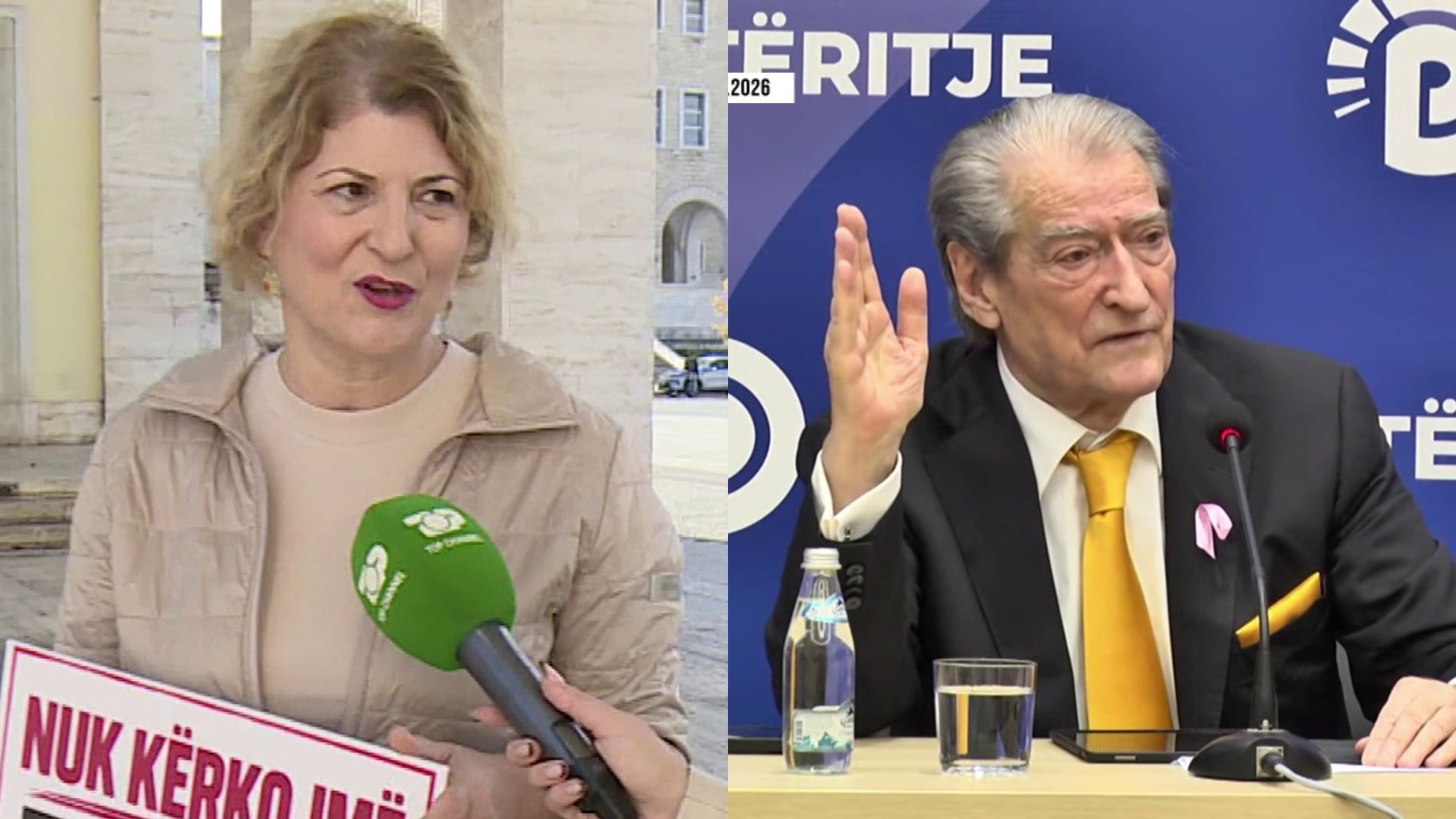
The strongest reaction from the lecturers came after a statement the previous day by Sali Berisha, who claimed that hundreds of lecturers at the protest are linked to the Democratic Party. From the square, the lecturers rejected that characterization and said the decision to join the students had been made independently.
Enkeleda Olldashi said that both the DP and the SP are trying to undermine the protest, each in its own way. Along the same lines, Maksim Meço said the students’ cause encompasses the entire political class, including the opposition and its leader.
Ermal Hasimja also denied any political influence over the lecturers’ decision-making, insisting that participation in the protest was not dictated by any party or political figure.
Brief tension near Parliament
After the lecturers arrived, some protesters broke through the metal cordon and approached police officers. The tension lasted only a few minutes.
The incident did not change the essence of the message that emerged from the protest: a rejection of party labels and an open accusation that both the government and the opposition are trying to interpret and use the revolt according to their political interests.
With lecturers coming out in support of the students, the protest took on broader public and political weight, making efforts to force it into party molds even more difficult.
What was heard from the square was clear: distrust is directed not only at the government, but at the entire political system which, according to the protesters, is trying to speak in the name of a revolt it does not control.