
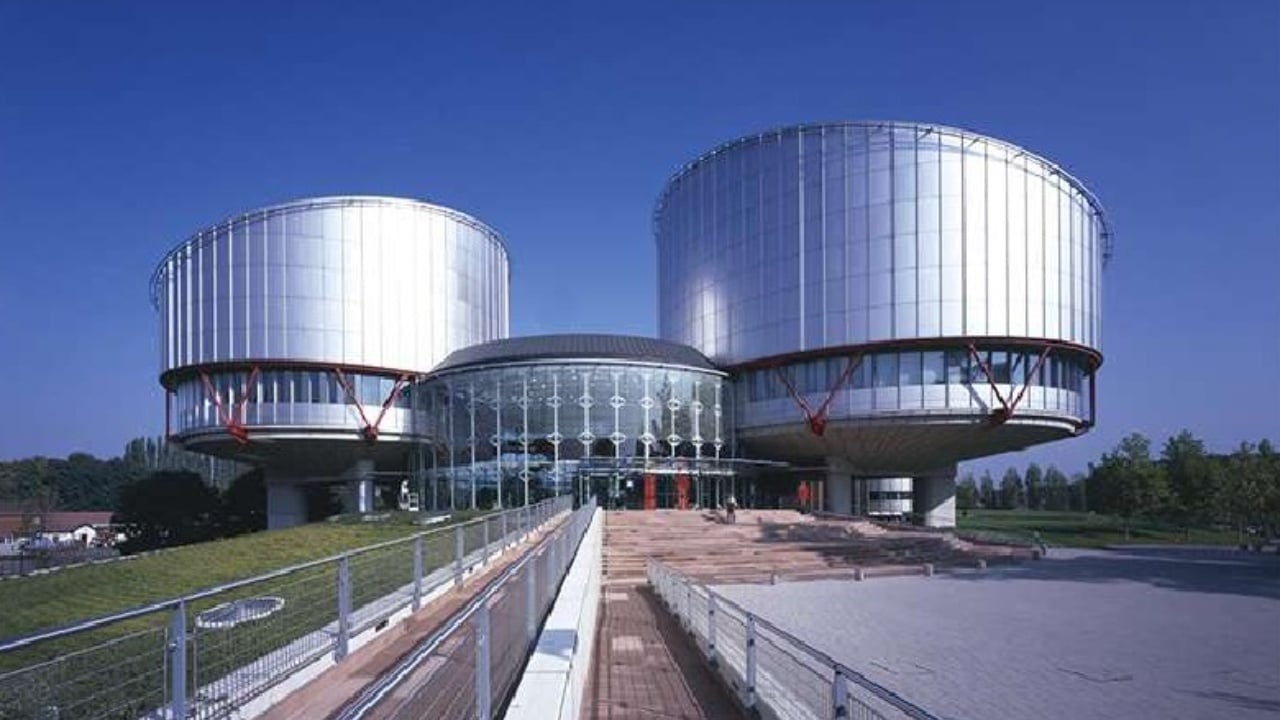
The latest ruling by the European Court of Human Rights on a pay dispute in Romania opens a debate that also directly affects Albania. At its core, Strasbourg sets out several clear limits: the state cannot hide behind a lack of funds to avoid enforcing court rulings, but at the same time courts cannot behave like an authority that rewrites fiscal policies and allocates public funds according to its own institutional interests.
What Strasbourg decided in the Romanian case
In the case of “Puşcaşu and Others v. Romania,” five judges and former judges turned to the ECHR after the Romanian state had failed to fully enforce decisions granting them financial benefits. According to the information presented in the proceedings, the amounts claimed ranged from €30,000 to about €572,000 per person.
The Court started from a well-known principle: a lack of funds does not justify the non-enforcement of a judicial decision. But in this case, Strasbourg viewed the situation as exceptional because of the scale of the liabilities, the difficulty of foreseeing them, and Romania’s strained economic and fiscal situation.
Conflict of interest and the limits of the courts
The most delicate part of the reasoning concerns the way these financial obligations were created. According to the ECHR, the case-law of Romania’s Constitutional Court and Court of Cassation had, over the years, influenced the reshaping of the pay system for judges and prosecutors without formally changing the salary law.
Here Strasbourg clearly raises the issue of conflict of interest: when judges decide on pay elements from which they themselves may also benefit, a risk is created for impartiality and for public perception. According to the court’s reasoning, in such cases an impression may also arise that the judiciary is moving from interpreting the law to intervening in the territory of the legislative and executive branches.
Along the same lines, the ECHR stresses that setting public spending priorities and allocating funds belongs to the government and parliament, which enjoy a wide margin of appreciation in economic and fiscal policy.
Why this ruling is also being read in Tirana
This reasoning comes at a time when in Albania the debate over magistrates’ salaries has turned into an institutional clash. After July 31, 2026, the deadline the Constitutional Court had given Parliament to amend the law, the legislative intervention was not made within the set timeframe.
After that, the High Judicial Council and the High Prosecutorial Council set the new reference salary for judges and prosecutors, as well as the financial differences that had to be calculated from April 1, 2023. The debate immediately shifted to the funds needed to implement these decisions, precisely the point where the independence of the system and control over public money collide.
In September, Parliament intervened with a new salary law, but this too was again challenged before the Constitutional Court by associations of judges and prosecutors. In this climate, the Strasbourg ruling does not provide an automatic solution for Albania, but it does bring a standard that can hardly be ignored in the debate.
How the court justified the postponement of payments
In the Romanian case, the ECHR examined whether the postponement of payments was proportionate. According to the ruling, the payments had not been removed, but had been divided into installments and delayed over time through legal acts, with the argument of reducing pressure on public finances and achieving fiscal consolidation.
According to the version presented by the Romanian government, payments made over the years for judges and prosecutors exceeded €1.6 billion. For 2026 alone, the Court of Cassation and the General Prosecutor’s Office had requested around another €1.4 billion for arrears and interest. In 2025, when the budget deficit had reached 9.3% of GDP, payments still outstanding for that year were postponed to 2026.
The Court also took into account another element: the concrete impact of the delays on the five applicants. It observed that their incomes were significantly above the average salary in Romania and even above the salaries of the highest state officials, which in the court’s view weakened the claim that the delays had created an excessive individual burden.
In conclusion, the ECHR unanimously declared the applications inadmissible as manifestly ill-founded, and the ruling is final.
For Albania, the message emerging from this standard is twofold: judicial decisions cannot be treated as optional by the state, but nor can the justice system behave as if it holds in its hands both the law and the budget, as well as the bill sent to taxpayers.