
Prime Minister Edi Rama appeared before the media with a list of names, initials and accusations for people arrested during the protest, insisting that they are not students. In the version presented by the head of government, some of those detained have criminal records, ranging from drugs and theft to domestic violence and even much more serious crimes.
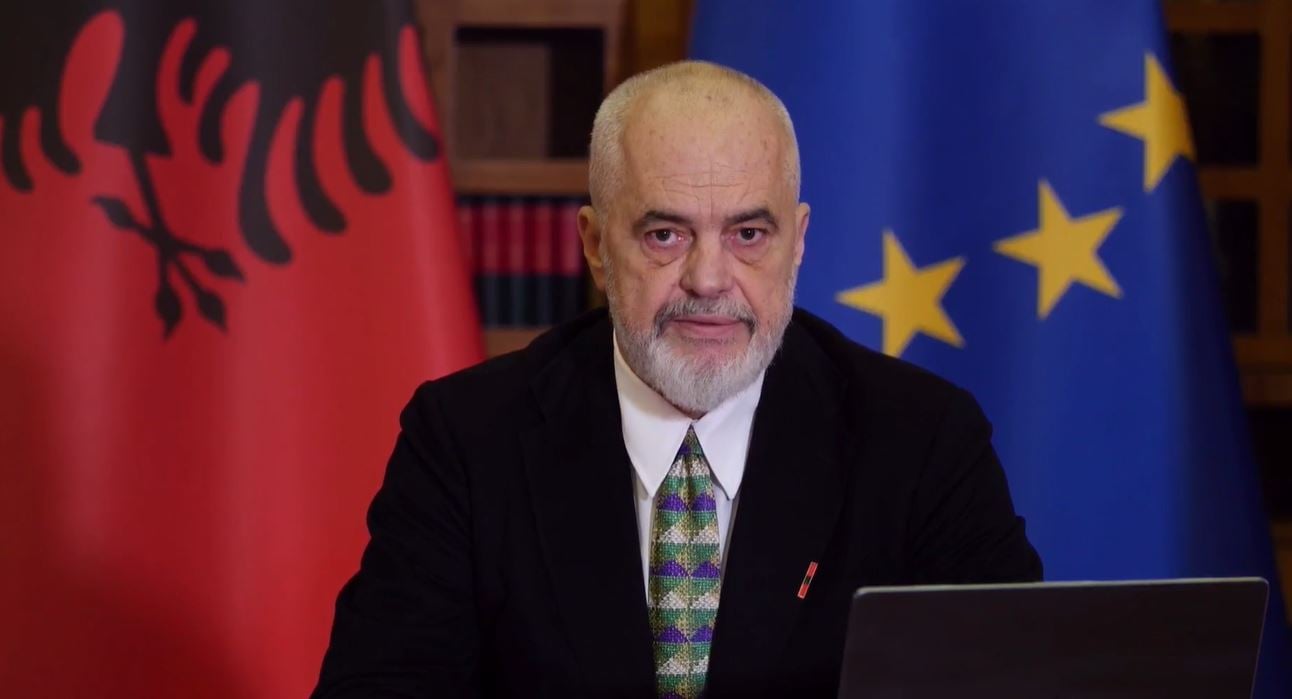
The government shifts the focus to the profile of those arrested
In his statement, Rama focused not on the causes of the protest, but on the identity and criminal past of some of those arrested. He published initials and photos with the eyes covered, while reading a long list of criminal offenses and previous convictions which, according to him, prove that these people have no connection to the university.
The political message was clear: in the government’s reading, the protest is not represented by students, but by individuals used for violence. This is a claim made publicly by the prime minister, but without a full presentation of the files or decisions for each case in that media appearance.
Claims of serious records, from drugs to murder
While reading the list, Rama mentioned dozens of cases which, according to him, are linked to the production and sale of narcotics, theft, document forgery, resisting police, domestic violence, illegal possession of weapons and participation in unlawful gatherings.
In some cases, he also spoke of convictions abroad, trafficking in human beings and even one person convicted of premeditated murder. Some individuals were also mentioned by Rama as being suspected of financing from the Islamic Republic of Iran, an accusation with a strong political charge that in the public statement was made without accompanying evidence being made public on the spot.
“These are not the students,” the prime minister’s repeated line
The central part of the statement was the repetition of the thesis that those arrested are not students. Rama emphasized this formula several times, highlighting the ages and the records mentioned in order to build the argument that the protest has been infiltrated by criminal elements.
On the list he read were people aged from 17 to 57. For some, Rama expressly said they have no connection whatsoever to the university, while for others he used irony with the term “student” in quotation marks.
Harsh political rhetoric beyond the list of names
Beyond the names and accusations, the prime minister’s statement had a strong political tone. He spoke of a “criminal component” of the protest, attacked media outlets that he said have glorified violence, and made broad allegations about the influence of organized crime and “foreign forces.”
These are claims raised by the prime minister himself in a political appearance, while it remains to be seen whether and to what extent they are supported by investigations, court evidence or official positions of justice institutions beyond the public statement.
The publication of the names, initials and alleged criminal histories of those arrested shifts the debate from the protest to the narrative of order and security, a terrain where the government usually seeks political advantage.
But in the absence of full documentation made public in the same appearance, the list read by Rama remains, for the moment, the executive’s version of what happened at the protest and of those who were detained.