
Albanians in Serbia are awaiting certification of the election results in the hope that their representation in Parliament could expand to three mandates. At this stage, the final figure remains open, while from the Presevo Valley the problems that have been denounced for years, but not resolved by Serbian institutions, are once again being raised.
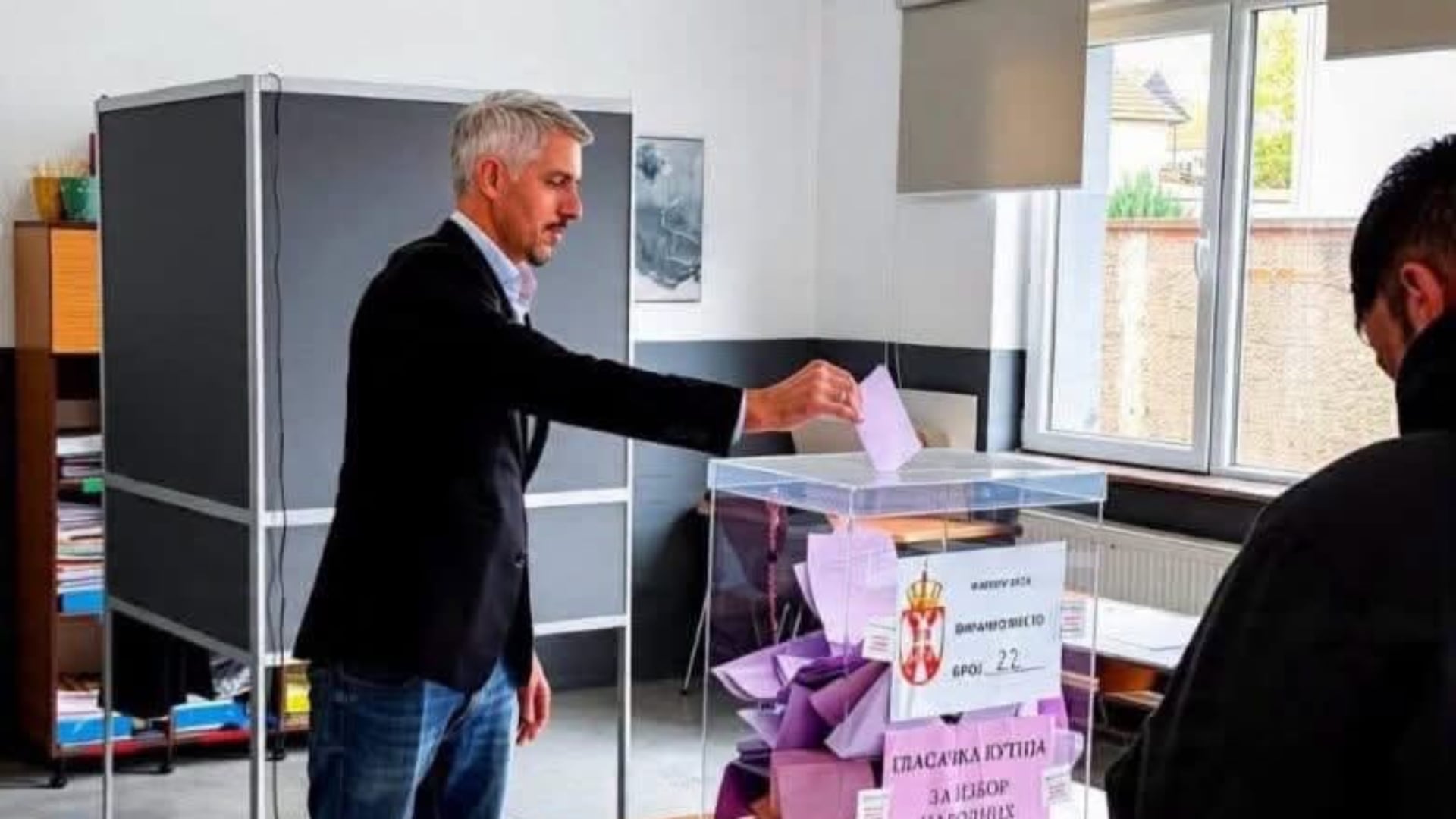
Waiting for the final result
Visar Mehmeti said that the focus is now on certification of the results, while hope for a third mandate, according to him, remains alive until the end of the process.
He described the race as intense and difficult, but suggested that the result so far has raised expectations for stronger Albanian representation in the Serbian Parliament.
The issues Albanians want to take to Parliament
According to Mehmeti, the list of problems affecting Albanians in the Valley is long and is not limited only to political representation.
He mentioned the passive deregistration of addresses, the non-recognition of diplomas from Kosovo universities in the Presevo Valley, the lack of inclusion of Albanians in state institutions, and the high sensitivity of relations with the police. In his assessment, these are issues that are pushing people toward emigration and that require treatment at the central level.
Political unity and old divisions
Mehmeti said that in the previous elections, in 2022 and 2023, the desired result had not been achieved, while this time, according to him, Albanian forces united by setting aside personal and clan-based clashes.
However, he acknowledged that division remains visible, especially on local issues. According to him, there are many political parties in the Valley and internal divisions continue to weigh on the ability to build a common approach for the interests of the Albanian community.
Comments on Vucic and the dialogue with Kosovo
In his comments on political developments in Serbia, Mehmeti described change after many years in power as positive and said that Aleksandar Vucic, in his view, no longer has a political future after 14 years at the top of government.
As for the Kosovo-Serbia dialogue, he said that during the campaign the issue of Kosovo was not in the foreground and that the focus was more on the internal problems of Serbian society. In this context, it remains to be seen whether the new political configuration in Belgrade will bring real change or only a rotation of names without solutions for the issues that minority communities have been raising for years.
The representation of Albanians in the Serbian Parliament is seen as an opportunity to once again bring to the institutional level a package of problems that remain unresolved.
If the third mandate is confirmed, the political weight will increase. But for the community in the Valley, the real test remains whether these issues will truly be heard in Belgrade or whether they will once again remain part of a debate without concrete consequences.