
The defeat of Aleksandar Vučić’s Serbian Progressive Party in Serbia’s parliamentary elections has also set in motion the political scene among Serbs in Kosovo. Srpska Lista, the dominant force in Serb-majority municipalities, has yet to take a public position, while opposition figures in the north are reading the result as a direct blow to the structure that for years has been backed by Belgrade.
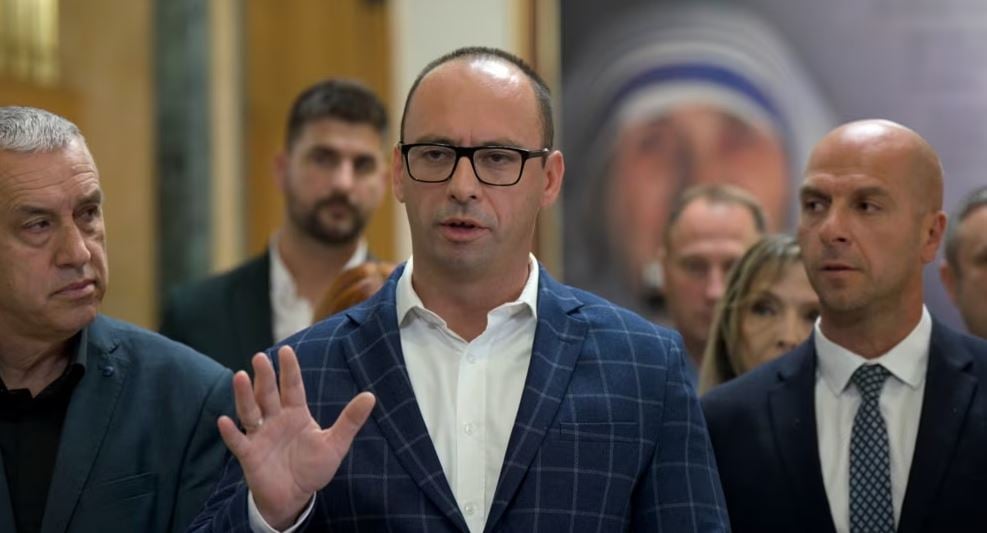
The result in Serbia and the weight of the vote of Serbs from Kosovo
According to preliminary results from Serbia’s Republic Electoral Commission, at polling stations where Serbs from Kosovo voted, the list “Aleksandar Vučić–United Serbia” received about 71 percent of the vote, while the Student List received about 21 percent.
Nationwide, the picture was different: the Student List won more than 52 percent, while the list led by former president Vučić received about 39 percent. Vučić himself acknowledged the defeat, although he said that the SNS had won in areas where Serbs live in the region, including Kosovo.
Srpska Lista silent, opponents warn of divisions
Srpska Lista, created in 2013 with the direct backing of the SNS and Vučić, did not respond to requests for comment after the first results were published. That silence is being read politically, at a time when support from Belgrade is seen as a key condition for its survival.
Ivan Vučković, an opposition representative of Kosovo Serbs from Leposavić, told Radio Free Europe that “nothing will be the same anymore,” arguing that Srpska Lista cannot function without the support of the authorities in Belgrade. A similar position was also expressed by Vladimir Radosavljević of Serbian Democracy, who considers the end of cooperation with the old structures inevitable.
Local power in Kosovo remains in its hands
Despite the political blow coming from Belgrade, Srpska Lista continues to control all 10 Serb-majority municipalities in Kosovo. In the June elections, it won nine of the 10 seats reserved for the Serb community in the Assembly of Kosovo.
In addition to local power, its officials also lead Serbian institutions that continue to operate in Kosovo. One of the key names is Srpska Lista chairman Zlatan Elek, who heads the Clinical Hospital Center in North Mitrovica.
Questions over funds and Belgrade’s role
The debate is not being limited only to the political fate of Srpska Lista. Serbian opposition figures in Kosovo are also raising questions about the way funds that Serbia has sent over the years to Serb-majority areas have been managed, making claims of abuse and misuse of power.
These accusations remain at the level of political claims, but they carry weight at a moment when the student movement in Serbia has risen on anti-corruption rhetoric. In this climate, some of Srpska Lista’s opponents are seeking a full review of the distribution of funds and appointments in institutions that depend on Belgrade.
What could change after the rotation in Belgrade
Nenad Rašić, a minister in the Government of Kosovo and a Serbian politician who supported the Student Movement, believes that cooperation between Srpska Lista and the new authorities in Serbia does not appear possible. He does not rule out the scenario that the SNS could ask Srpska Lista to withdraw from the positions it holds, although he says he is skeptical that this would happen voluntarily.
On the other hand, Miodrag Milićević, director of the non-governmental organization Aktiv, says that formally the election results in Serbia do not change the status of Srpska Lista within Kosovo’s system. But politically, according to him, the change of power in Belgrade raises serious questions about the role this force has played as an extension of the SNS in Kosovo and about how it will function going forward.
Also remaining in this picture are the broader tensions around Serbian institutions in Kosovo. The Government of Kosovo has begun closing Serbia’s structures and has announced the integration of health and education institutions into Kosovo’s system, while the international community has asked that such steps proceed through dialogue and consultation with the Serb community.
For the moment, what stands out most is the political vacuum after the SNS defeat and Srpska Lista’s silence in the face of a change that could affect not only its ties with Belgrade, but also the control it has built on the ground in Kosovo.
Whether the rotation in Serbia will bring only a change of names or also an investigation into the way power and funds have been exercised in the north remains one of the most sensitive issues to emerge after the election.