
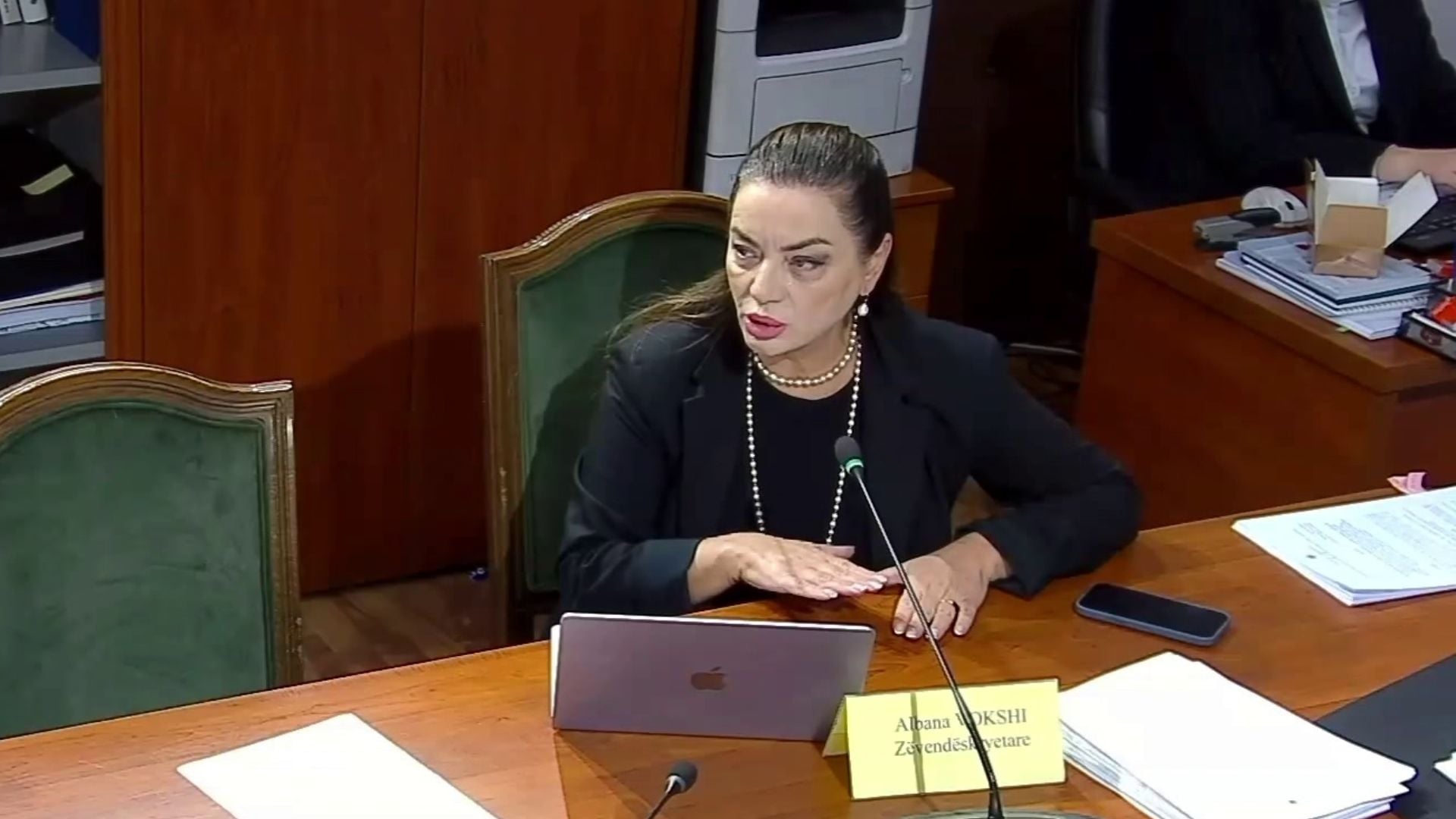
For the second day in a row, the opposition did not take part normally in parliamentary committees, choosing to send only one representative each to signal that, in its view, Parliament cannot function as usual in a heated political climate. The sharpest clash was recorded in the Committee on Europe and Foreign Affairs, where Democratic MP Albana Vokshi voiced serious political accusations against the majority and former Deputy Prime Minister Belinda Balluku.
The opposition boycott entered its second day
The opposition continued its boycott of parliamentary committees for a second day, not taking part with its full membership. Instead, only individual representatives appeared, with the aim of sending a political message that parliamentary life, in their view, cannot be presented as normal under the current conditions.
This stance appeared as a demonstrative act inside Parliament, at a moment when the opposition is linking the political crisis to protests on the ground and to accusations of a double standard in the treatment of citizens and senior officials.
Vokshi’s sharp accusations against Balluku and the majority
In the Committee on Europe and Foreign Affairs, Albana Vokshi said normality cannot be discussed while, outside Parliament, protests have continued for four months and in recent days, according to her, an escalation of violence has been seen.
The PD lawmaker accused the majority of politically protecting Belinda Balluku. According to her statements in the committee, it is unacceptable for citizens to face consequences over protests while a senior official, about whom the opposition raises serious political and financial allegations, does not face the same standard of accountability.
Vokshi went further, claiming that Balluku continues to have influence over important appointments, including ministers and police chiefs. She also questioned the political legitimacy of the majority, linking the current revolt to the opposition’s claims about the 2025 elections.
Clash over the legitimacy of Parliament
At the same meeting, Vokshi declared that Parliament does not represent the will of the citizens, but criminal interests, using harsh political language toward the majority. Such accusations shifted the debate beyond parliamentary procedure and toward a direct confrontation over the legitimacy of the institutions.
The opposition’s rhetoric is built on the idea that the political crisis cannot be isolated within committee rooms while outside them there are protests and clashes over the way the country is being governed.
Hasani responds: Parliament was freely elected
The committee chair, Socialist MP Igli Hasani, rejected the accusations and defended the legitimacy of the current composition of Parliament. According to him, all representatives in Parliament were elected freely and democratically, just like the opposition’s representatives.
Hasani said the Socialist Party represents its electorate on the basis of a victory that, according to him, has been confirmed since 2013. He rejected calls to dissolve Parliament and said that if the opposition wants to give up its mandates, that is its choice, while the majority will continue its work in the committees.
The clash in the committee showed once again that the political crisis is spreading into every layer of parliamentary life, with the opposition refusing any normalization of the situation and the majority insisting on the legitimacy of the mandates.
Beyond the strong statements, the fact remains that the political accusations made in the room were not accompanied by new evidence at that meeting, and the debate ended without any movement toward the other side.