
Prime Minister Edi Rama has chosen harsh language toward the protests, portraying the protesters as a grouping that, according to his version, is infringing on the freedom of other citizens and attempting to speak in the name of the majority without having received that mandate through a vote.
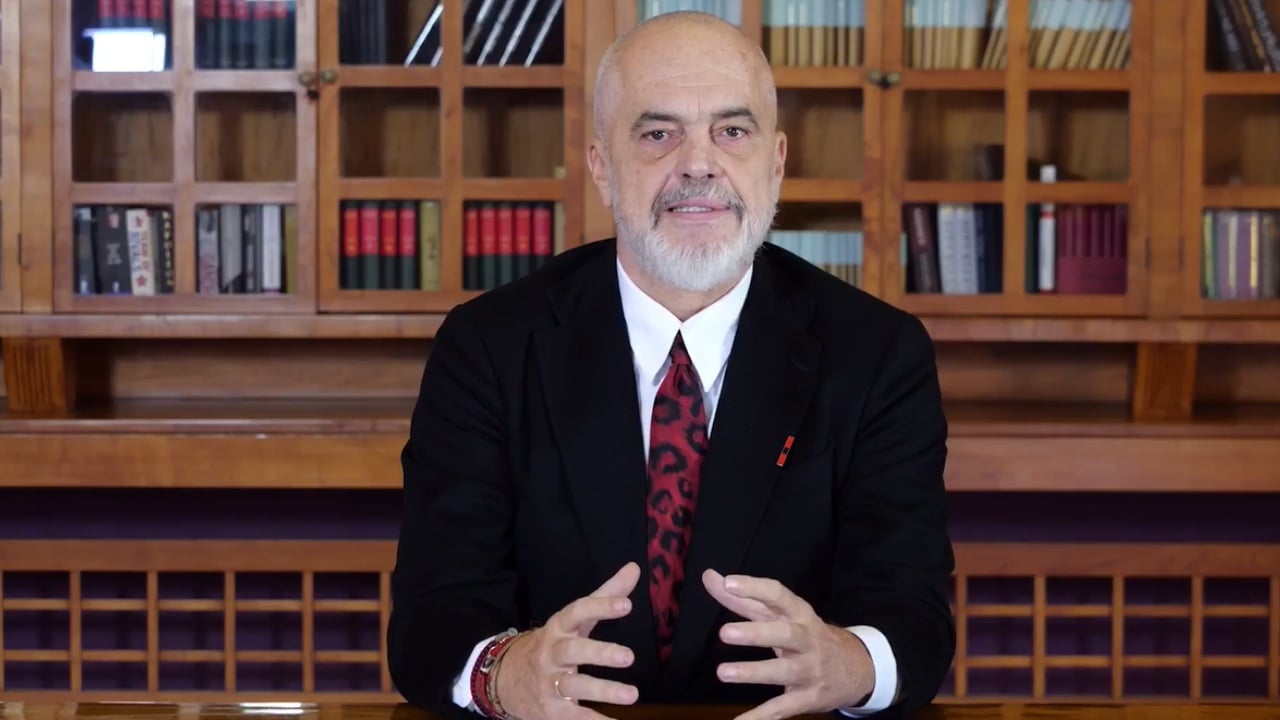
Rama presents the protest as a threat to daily order
In his reaction, Rama said he was not referring only to the government or the parliamentary majority, but to all citizens who, according to him, are not part of the protest and want to move freely in Tirana, take their children to school, and not be forced to change their daily lives because of the gatherings.
According to the prime minister, the protest has shifted into aggressive behavior and has been accompanied by violence, stones, and fire. These claims were used by him to draw a clear line between the protesters and the rest of society.
Political attack on the composition of the protesters
Rama described the participants as a mixture of individuals, social groups, and political parties that, according to him, have no connection to one another. He used contemptuous language to describe this union, implying that the protest lacks political cohesion or clear representation.
This rhetorical line aims to delegitimize the protest not only through accusations of violence, but also by casting doubt on its very political and social basis.
‘Mandates are given only by the sovereign,’ the prime minister stresses
The central point of Rama’s statement was the claim that no one can speak in the name of the people outside the electoral mechanism. He said the protesters have no authorization to demand resignations in the name of the people and that mandates are given only by the sovereign through the vote.
This is a familiar argument from the majority whenever a political protest seeks to exert public pressure on the government. However, the rhetoric of the electoral mandate does not automatically resolve the questions raised in the streets about public discontent, accountability, and the limits of power.
Parallels with fascism and communism
In the strongest part of his statement, Rama said that the boundary between the freedom to protest and the rights of others is what separates political coexistence from violence. He claimed that this boundary was historically crossed by fascists and communists, who, according to him, also acted in the name of the people.
Such comparisons burden the political debate with strong historical tones and serve to present the clash as a matter of order and legitimacy, not simply as opposition to the government.
The prime minister’s statement deepens the political clash over the protests and the way power reads them: not as a signal of public dissatisfaction, but as a challenge to order and institutional legitimacy.
In this climate, the battle is not being fought only in the streets, but also over the definition of who has the right to speak in the name of citizens and with what limits.