
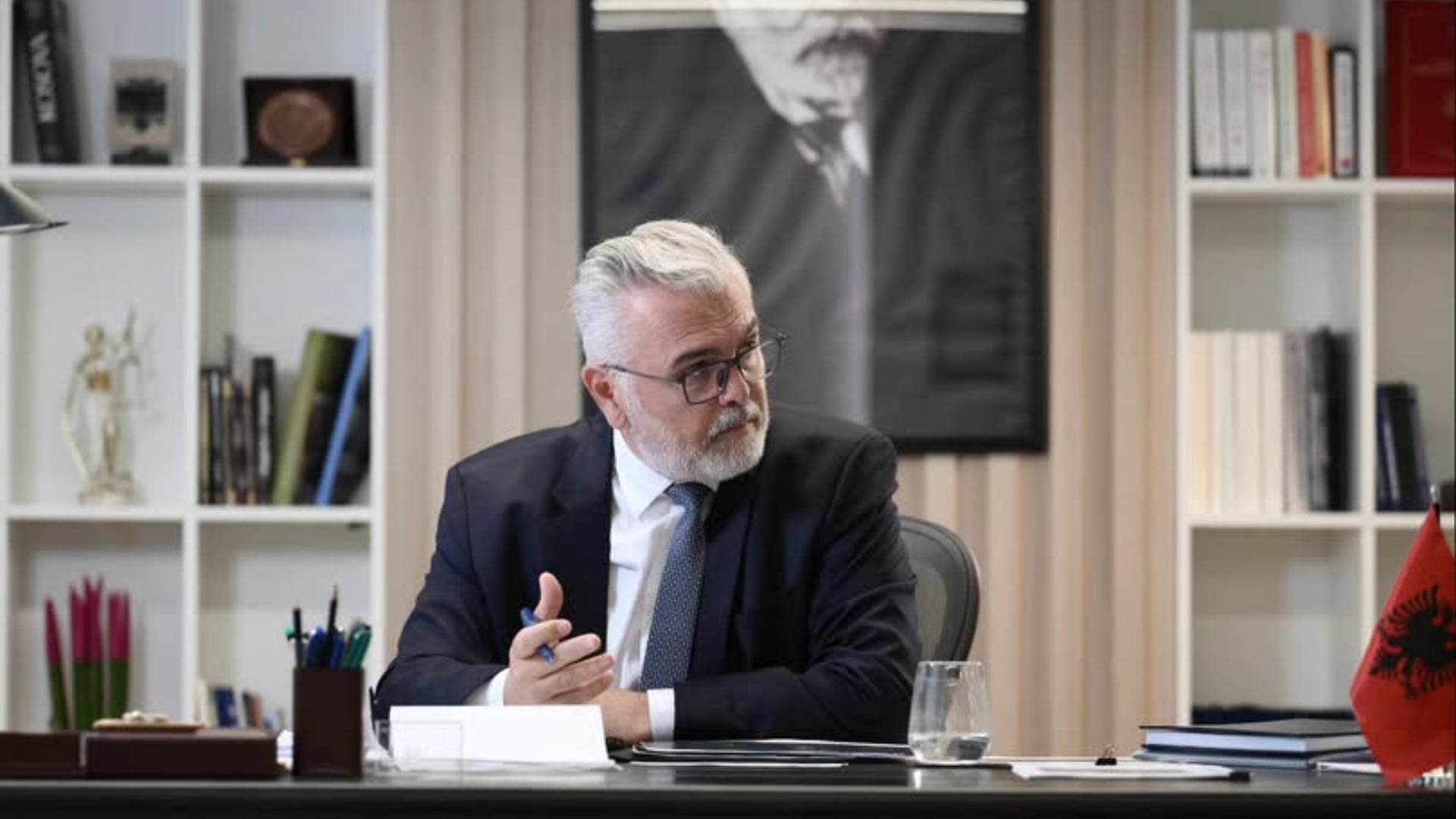
Justice Minister Toni Gogu has confirmed that he held a meeting with Erion Veliaj at IEVP Fier, rejecting claims that the visit was linked to political requests for his resignation or for him to give up his mandate. In his version, the conversation was limited to treatment conditions and concerns raised publicly by Veliaj’s lawyer.
Confirmation of the meeting and denial of the claims
Gogu’s reaction came after speculation circulated that he had met Veliaj at Fier prison and that during the meeting a message had been conveyed to him to give up his mandate, on the instructions of Prime Minister Edi Rama.
The minister acknowledged the meeting, but denied that version. According to him, the visit took place on Friday as part of his duties as justice minister and had no political content.
What Gogu says was the reason for the visit
According to his statement on social media, Gogu went to IEVP Fier to familiarize himself with Veliaj’s treatment conditions after his transfer from Durrës prison and to hear the complaints that, according to the official version, had been expressed publicly by his lawyer.
He insisted that the conversation was linked only to Veliaj’s current case and the conditions in which he is being held.
Personal friendship and distancing himself from ‘messages’
In his response, Gogu also acknowledged that he has a long-standing friendship with Veliaj, an element that makes the meeting even more sensitive in public and political terms.
However, he sought to distance himself clearly from claims that he had conveyed political messages, calling them untrue and suggesting that he does not believe they came from Veliaj himself.
The claim of verifiable circumstances
Gogu said the circumstances of the visit are documented and verifiable. This remains the main point on which the official version seeks to rely in the face of the public controversy that has accompanied the report.
Beyond the minister’s denial, the fact remains that such a meeting, at a politically charged moment and amid contradictory reporting, raises unavoidable questions about institutional transparency and the line between a state role and personal relationships.
So far, the Ministry of Justice does not appear to have made public any additional information about the full content of the meeting beyond the minister’s statement.
At the center of the debate remains not only the visit itself, but also the way institutions choose to explain episodes that touch at once on justice, politics and public trust.