
Prime Minister Edi Rama used a forum in Dublin to push forward the government’s narrative on Albania’s rapprochement with the European Union, calling it a “culminating moment.” In the same appearance, he linked Serbia’s European future to normalization with Kosovo, at a time when the region remains gripped by unresolved tensions and integration promises that for years have moved faster in rhetoric than on the ground.
Rama presents 2027 as a possible target
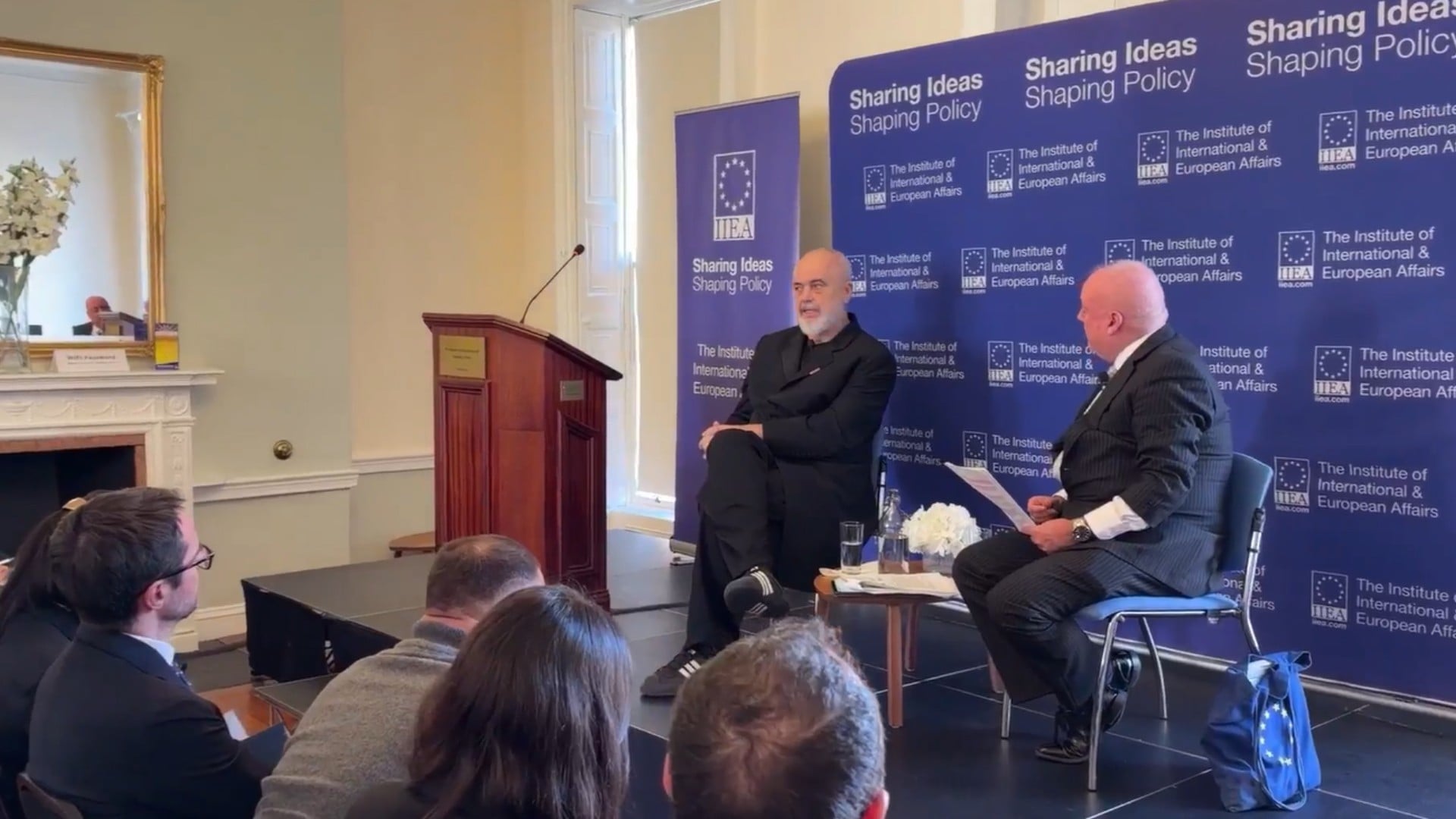
During remarks at Ireland’s Institute of International and European Affairs, Rama said Albania is in a phase that, according to him, has not existed before in relation to the EU accession process.
According to the prime minister’s version, the end of 2027 remains an ambitious but achievable target for closing the negotiations. He said the European Commission shares the same assessment, while stressing that the process remains dependent on complex decision-making among the 27 member states.
Gradual integration as the line the government is selling as a solution
Rama defended the idea of gradual integration into the EU, claiming he was among the early supporters of this approach. According to him, this model gives meaning to a merit-based process and aims to narrow the financial and economic gap between candidate countries and the union’s member states.
In that logic, he also included the Growth Plan as part of the same architecture. However, it remains to be seen how much these political formulas translate into concrete benefits and how much they remain new packaging for a process that has dragged on for years.
Message to Belgrade: without Kosovo, the past will not let go of Serbia
Asked about political developments in Serbia, Rama said it is still too early for conclusions about the direction governance there may take. He noted that the European Commission had problems with the previous Serbian government over issues related to the rule of law and other fundamental requirements.
At the same time, he underlined that he does not see any new opening when it comes to normalization with Kosovo or alignment with Western positions on Russia. According to him, without normalization with Kosovo, Serbia cannot break away from the weight of the past.
On emigration, a comparison with Ireland and long waits for young people
In the discussion on Albanians leaving the country, Rama acknowledged that emigration has for a long time been the choice citizens have seen as the best path to the future. He drew a comparison with Ireland’s history, arguing that the turning point comes when a country gives people real opportunities to choose between leaving and staying.
According to him, young people face the temptation of a better life that appears close at hand, while building prospects in Albania requires years of waiting. Rama also said that Albanians are returning and that balance will come only when the country offers conditions closer to the EU average.
Rama’s appearance in Dublin confirmed the government’s familiar line: optimism about EU negotiations, support for gradual integration, and verbal pressure on Serbia over Kosovo.
But beyond the encouraging tone, the fundamental question that has long accompanied this process remains: how much of these targets are real deadlines, and how much are part of political communication seeking to sell progress where results are measured more slowly than statements.