Kaja Kallas issued a clear warning about growing risks in the Mediterranean, saying that no country has the capacity to face alone the threats building up in the region. In her statement, the focus was placed on maritime security, migration, smuggling and new technologies that are changing the risk landscape.
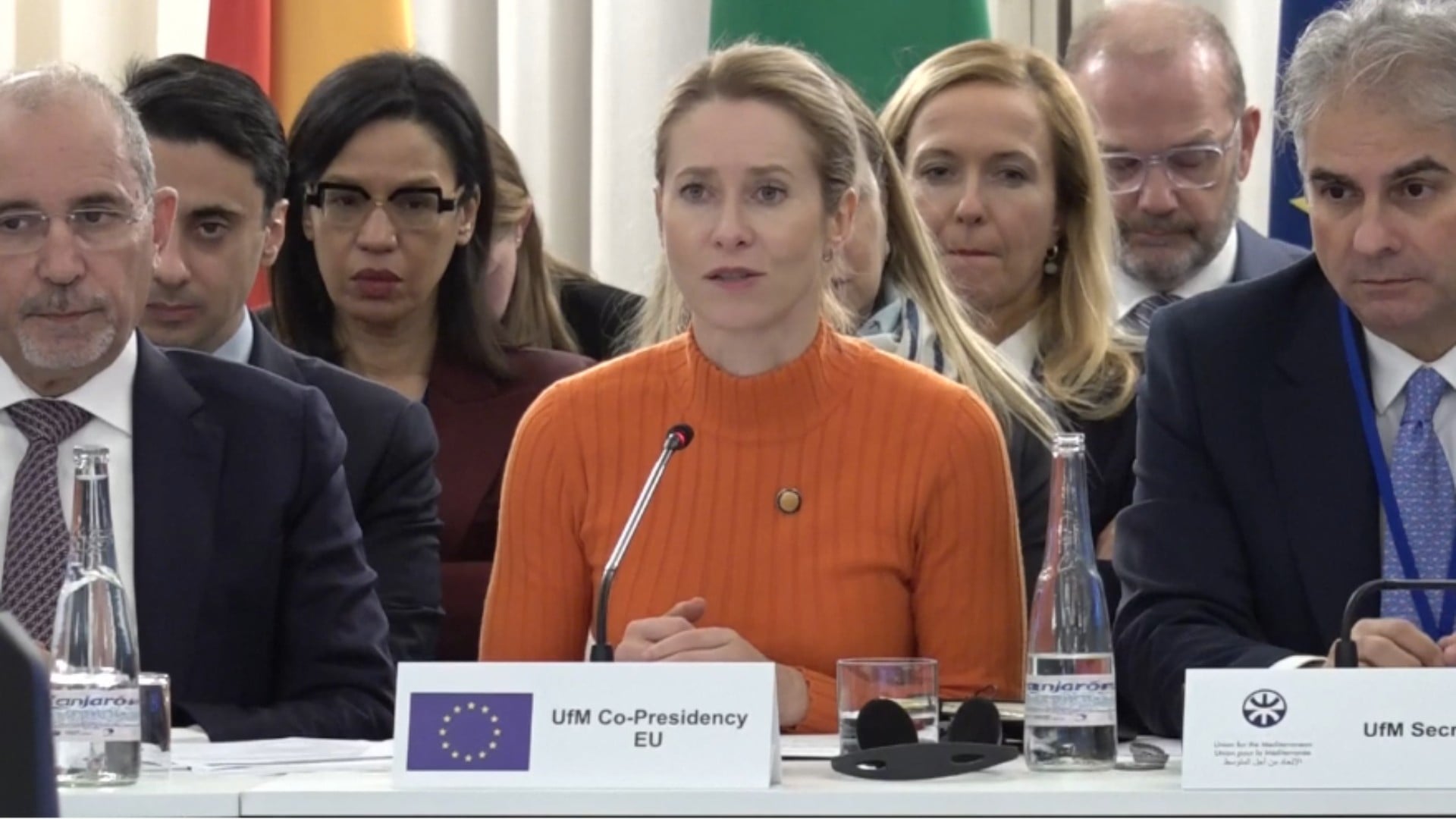
Call for joint action in the Mediterranean
The European Union’s High Representative for Foreign Policy called for greater coordination among Mediterranean countries, presenting cooperation as a basic condition for managing security crises.
According to her statement, challenges involving maritime transport, migration, trafficking and hybrid threats cannot be addressed by a single state, but require a joint regional and institutional response.
From Hormuz to Bab el-Mandeb, the EU points to pressure on sea routes
Kallas identified the Bab el-Mandeb Strait and the Strait of Hormuz as critical points, linking them to disruptions in maritime traffic and to broader insecurity in maritime spaces.
She called for protection of the UN Convention on the Law of the Sea and backed the commitment not to impose fees or taxes for passage through the Strait of Hormuz, an initiative that so far, according to the official statement, has been supported only by Jordan among the countries of the region.
Operation IRINI extended until 2029
At the center of the message was also the EU naval operation IRINI, which Brussels presents as a key instrument for enforcing the arms embargo on Libya, preventing illegal oil exports and monitoring maritime security.
According to the EU’s official version, IRINI’s mandate has been extended until 2029 and has been accompanied by additional capabilities, including the protection of underwater cables and pipelines. The statement also mentioned the goal of joint exercises with the naval forces and coast guards of Egypt, Lebanon, Tunisia and Libya.
Additional humanitarian funding, but no reference to Albania
Beyond security, Kallas said the EU has increased humanitarian funding by more than 19 million euros to deal with the consequences of a crisis she described as ongoing and worsened by recent floods.
According to the announcement, this brings total EU humanitarian funding for 2026 to more than 217 million euros. The published statement made no direct reference to Albania.
The political message from Brussels is clear: the EU is pushing for greater joint engagement in the Mediterranean while acknowledging that pressure on maritime security and strategic corridors is not easing.
What remains to be seen is how much of this cooperation rhetoric will translate into concrete support and how much will remain at the declarative level, in a region where interests often clash faster than they are coordinated.