
The match between Argentina and Egypt continues to generate controversy, this time over how VAR was used in decisive moments. According to former Premier League referee Mark Halsey, the technology was not applied to the same standard in two incidents that directly affected the final 3-2 scoreline and Argentina’s qualification for the quarter-finals.
Criticism over Egypt’s disallowed goal
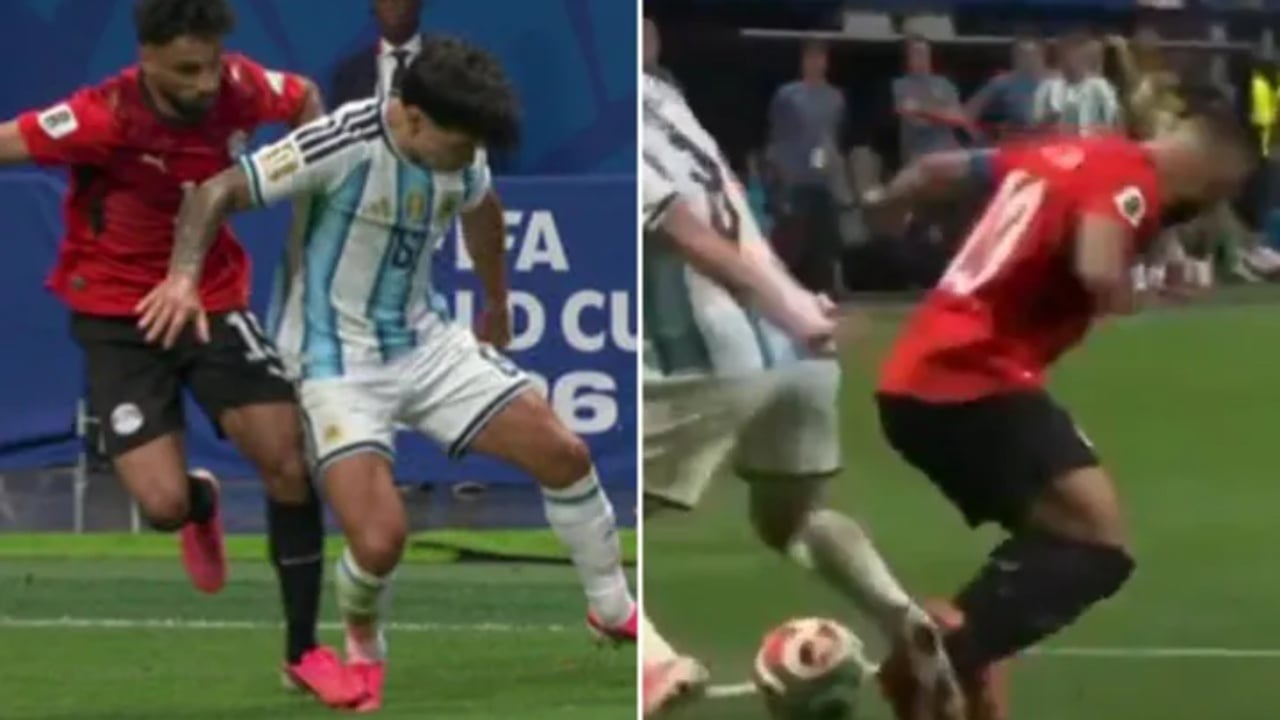
According to Halsey, the VAR intervention to disallow Mostafa Zico’s second goal was unjustified. The goal was wiped out after referee François Letexier reviewed the footage on the monitor and awarded a foul on Lisandro Martinez at the start of the move.
The former referee argues that the incident did not amount to a “clear and obvious error” and that, in his view, there was therefore no basis for VAR to call the referee for a review. At its core, his criticism is not only about the final decision, but also about the threshold for intervention by the technology.
Penalty claim involving Salah went unanswered
The controversy deepened further in the incident when Egypt appealed for a penalty after contact between Mohamed Salah and Julian Alvarez in the box. The referee allowed play to continue, and from the ensuing move Argentina found the winning goal through Enzo Fernandez in stoppage time.
It is precisely here, according to the version presented by Halsey, that the problem of the standard becomes clear: if the contact on Martinez was considered significant enough to cancel a goal, then the incident involving Salah should have been assessed by the same measure.
Accusation of a double standard in the use of technology
The former referee’s position is direct: either VAR should not have intervened in either case, or it should have intervened in both. That is the essence of the accusation of two different standards in a match decided by highly disputed incidents.
In such cases, the debate is no longer simply technical. When two similar situations are treated differently, the legitimacy of decision-making on the pitch is immediately called into question, especially when the consequence is a team’s elimination.
Strong reactions from the Egyptian camp
After the match, forward Mostafa Zico went further by claiming the game had been “manipulated” to favor Argentina’s qualification. This is a claim made by the player after the match, not a proven fact.
Egypt coach Hossam Hassan also strongly attacked referee François Letexier over the way the match’s main incidents were handled. The reactions from the Egyptian camp followed a dramatic turnaround, after the team had gone in front while goalkeeper Mostafa Shobeir had also saved a penalty from Lionel Messi.
How the match turned around
Egypt had initially surprised with a goal from Yasser Ibrahim and then a second finish from Zico, which was later disallowed. On the other side, Argentina responded late with goals from Cristian Romero, Lionel Messi and Enzo Fernandez.
It is precisely the sequence of events and the weight of the refereeing decisions that have led the match to be read not only as a sporting comeback, but also as a case that will continue to fuel debate over the limits and consistency of VAR.
For now, the controversy remains open and is being driven by differing interpretations of the two key incidents which, according to critics, were not handled by the same standard.
Beyond the result, Argentina-Egypt is once again bringing to the forefront a question football still has not resolved: is VAR correcting injustice, or making it harder to accept?