
The debate over the opening of a Serbian consulate in Shkodër has received a direct response from the Minister for Europe and Foreign Affairs, Ferit Hoxha. In the government’s official version, this move does not affect Albania’s sovereignty and is linked to the effort to secure an Albanian consulate in Bujanoc, a request that Tirana presents as a national interest for Albanians in the Presheva Valley.
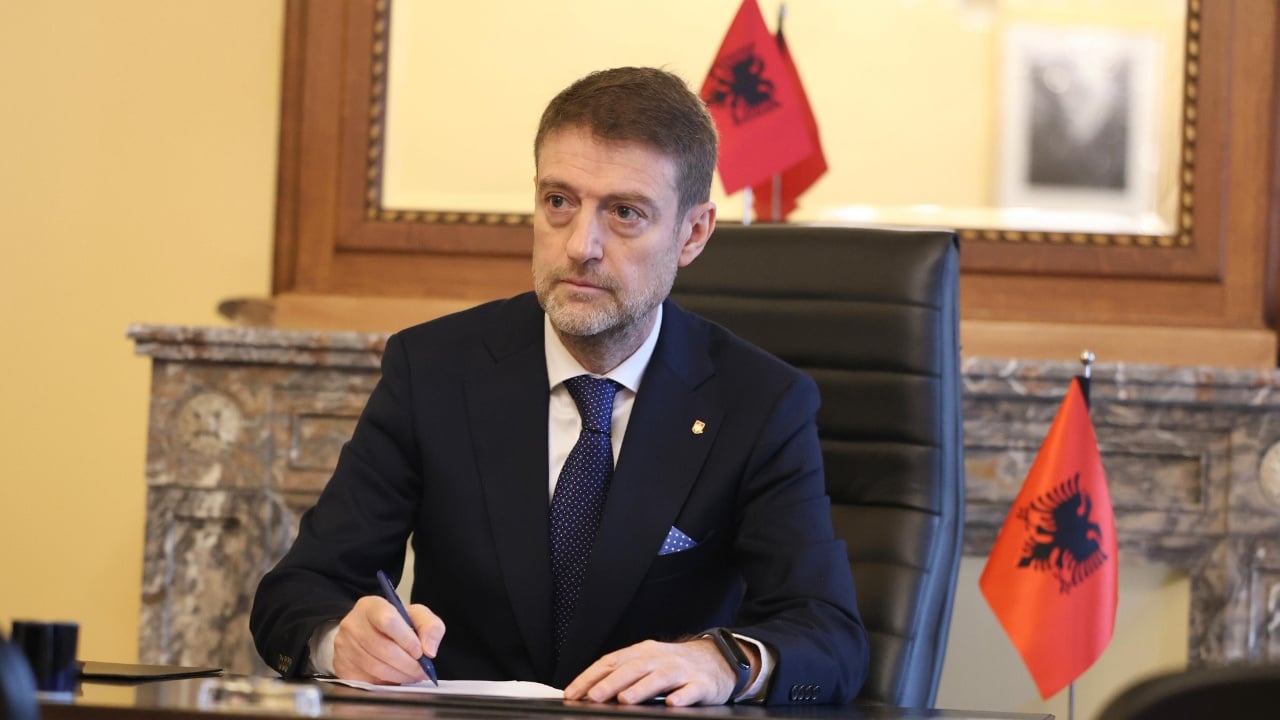
The government defends the agreement with Serbia
Ferit Hoxha said that opening a Serbian consulate in Shkodër does not give Serbia any power over Albanian territory and, according to him, does not constitute a violation of sovereignty. He argued that any diplomatic or consular presence on Albania’s territory operates only in accordance with international law and Albanian legislation.
The minister did not back away from this initiative, despite public controversy, and presented it as part of a normal diplomatic process between the two states.
Tirana’s goal: an Albanian consulate in Bujanoc
According to Hoxha, the request for a Consulate General of Albania in the Presheva Valley is not a new idea, but a long-standing objective of Albanian foreign policy. He said this request has been delayed or rejected for years by the Serbian side and that negotiations have advanced on the basis of reciprocity.
The government presents this as a way to bring the Albanian state closer to Albanians living in Presheva, Bujanoc and Medvegjë, arguing that an institutional presence would serve to protect their rights and interests.
Controversy over ‘reciprocity’ and comparisons with Shkodër
Part of the public debate has focused on the question of whether accepting a Serbian consulate in Shkodër creates a kind of equivalence between Albanians in the Presheva Valley and the Serbian community in Shkodër County. Hoxha rejected this reading, saying that reciprocity in diplomacy does not mean automatic equality of interests, numbers or benefits.
He added that consulates are not opened solely on the basis of the size of communities, but also for economic, cultural, tourism and strategic reasons. However, the government so far has chosen to flatten the debate mainly through the technical argument of diplomacy, while public sensitivity over a Serbian presence in Shkodër remains strong.
Kosovo, the point where the government seeks to lower doubts
In response to criticism that diplomatic engagement with Serbia could be read as a softening of the position toward Kosovo, Hoxha said this engagement changes nothing in relation to Albania’s support for Kosovo’s independence, sovereignty and territorial integrity.
In essence, the minister is seeking to separate two issues: dialogue with Serbia for interests that Tirana considers concrete, and the continuation of political support for Kosovo. Whether this distinction convinces public opinion remains the most debatable part of the entire initiative.
The minister’s statements clarify the government’s position, but do not necessarily dispel public suspicion over the political and symbolic cost of this understanding.
This is precisely where the core of the debate remains: not whether diplomacy functions through reciprocity, but whether this reciprocity truly serves the Albanian interest in relation to Serbia.