
The opening of a Serbian consular office in Shkodra has prompted a critical reaction from former prime minister Pandeli Majko, who questions the political logic of the announced agreement between Tirana and Belgrade. At the center of his opposition is the equation of Shkodra and Bujanoc, a comparison he considers distorted on both the political and national level.
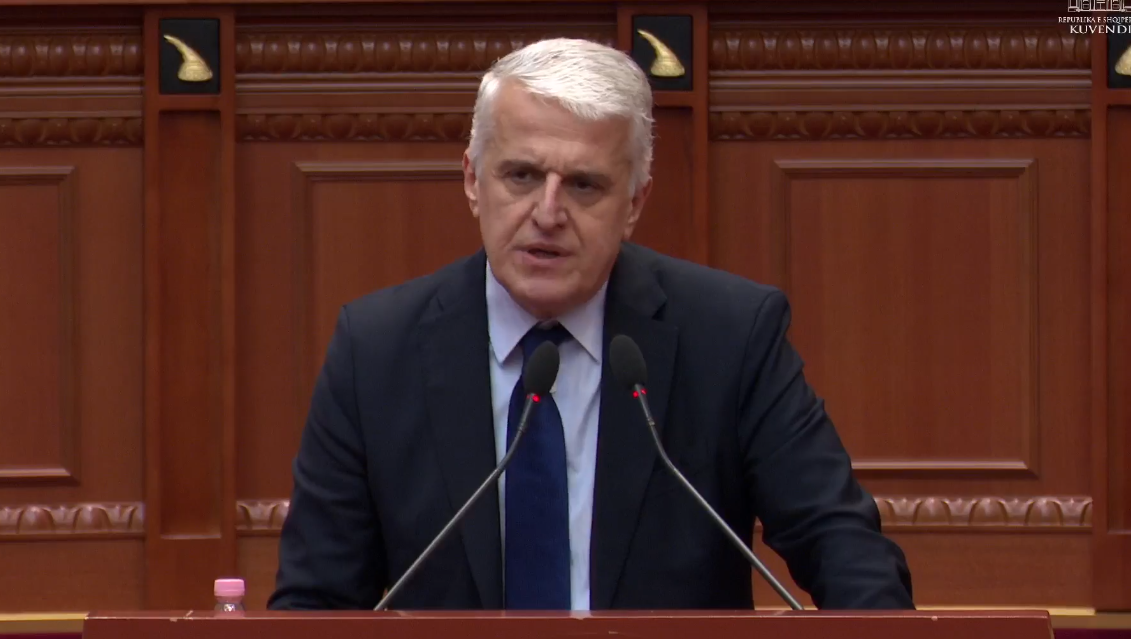
Majko’s reaction after the agreement in principle
After the agreement in principle between Albania and Serbia to open a Serbian consular office in Shkodra and an Albanian consular office in Bujanoc, Majko published a reaction on social media.
The former prime minister presents this development not as a routine diplomatic move, but as an unequal relationship between two realities that, in his view, cannot be treated as equivalent.
Why he calls the comparison “more than an irony”
At the core of his reaction is the fact that Bujanoc is located in an area inhabited mainly by Albanians, while Shkodra does not present the same context for Serbia. For this reason, Majko argues that setting these two locations against each other does not hold up politically.
“In exchange for the opening of the Serbian consulate in Shkodra, the Albanian consulate will be opened in the Presheva Valley. The comparison is more than an irony,” he said in the published reaction.
The political message the former prime minister sees
Majko goes further when he says that in Shkodra, in his view, the Serbian consulate will carry more weight than the minority it is claimed to represent. Along these lines, he implies that Serbia’s move should not be seen simply as a standard consular service.
He also recalls that the Presheva Valley is a territorial continuity inhabited by Albanians within Serbia’s sovereignty, which makes the debate over how this agreement is being presented even sharper.
Remarks on Kosovo and Montenegro
In his reaction, Majko also raises the regional dimension of the issue. According to him, an Albanian consulate in the Presheva Valley “bypasses” Kosovo, while the Serbian consulate in Shkodra is placed at a point with Montenegro in between.
He links this to Serbia’s well-known positions toward Kosovo and to the debates that, according to him, Belgrade has also maintained over Montenegro’s identity. In this sense, Majko suggests that the Albanian side has treated the issue as a standard diplomatic interest, while Serbia may read this step differently.
“Serbia in Shkodra has received more than a consulate,” Majko concludes in his reaction, turning the agreement from a diplomatic announcement into a debate with political weight.
So far, there has been no detailed institutional reaction to the criticism raised, while the controversy is linked precisely to what is often missing in such announcements: a public explanation of the concrete interest being protected by each side.