
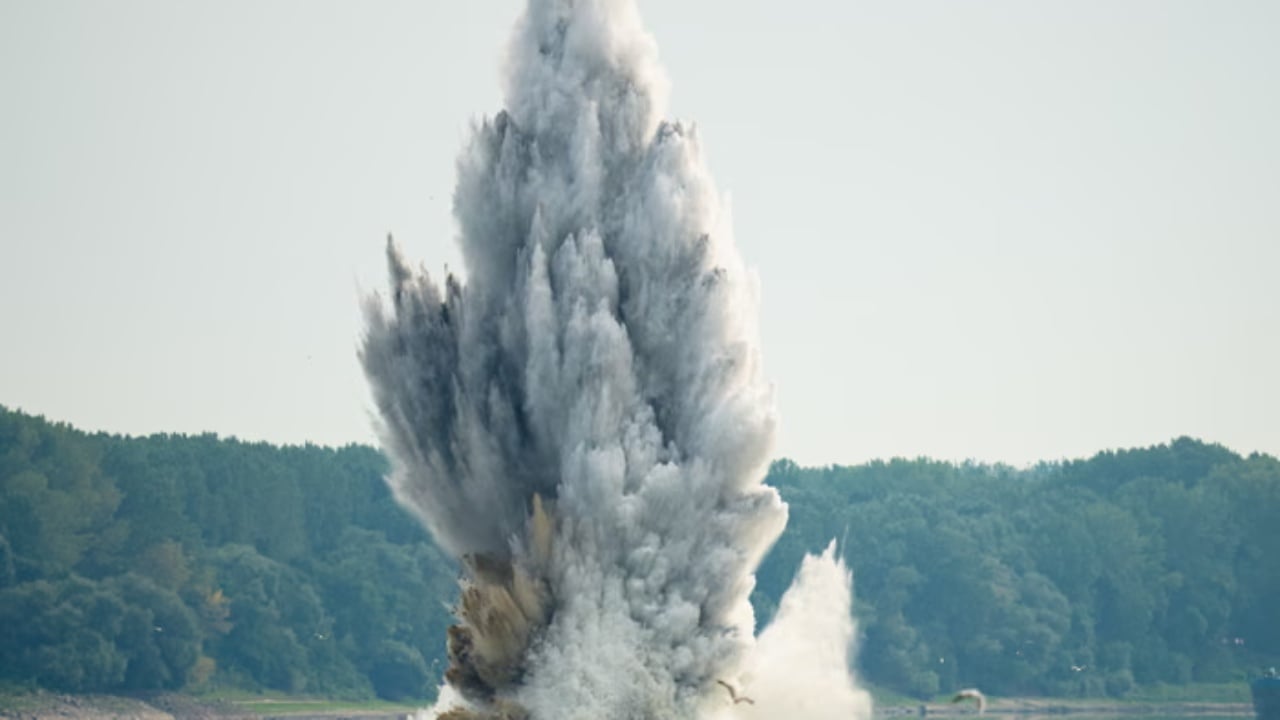
Extreme temperatures in Europe are also putting pressure on critical infrastructure. In Romania, the significant drop in the Danube’s water level has pushed authorities to intervene near the Cernavodă nuclear power plant, with an unusual operation involving controlled underwater explosions to improve the flow of water for cooling.
An unusual operation near the plant
According to reports cited by the Guardian, the Romanian Naval Forces carried out a controlled underwater explosion to remove a rock mass that was obstructing the flow of water toward the Old Branch of the Danube and onward to the Cernavodă nuclear power plant.
The aim of the intervention was to increase the amount of water reaching the facility, at a time when inflows have been hit by prolonged heat and the river’s level has fallen significantly.
180 kilograms of explosives to keep the cooling system running
About 180 kilograms of explosives were used in the operation. According to the official version, the intervention is intended to prevent difficulties in supplying water to the cooling system, a key link in the safe operation of any nuclear facility.
Cernavodă uses water from the Danube for cooling, making the plant sensitive to drops in the river’s level during prolonged heat episodes.
Warning from Romanian authorities
Interim Defense Minister Radu Miruță described the operation as successful and said it helps not only with cooling the plant, but also with navigation on the river.
However, he acknowledged that if extreme weather conditions continue, the plant could be forced to temporarily suspend operations for safety reasons. This shows that, despite reassuring statements, the pressure on the facility remains real.
No immediate risk reported, but the challenge remains serious
Authorities have not reported any immediate risk of a nuclear accident or explosion at the plant. However, the lack of cooling water remains a serious problem for any facility of this kind.
In this case, the use of explosives was presented as a necessary measure to avoid a premature halt in operations, as the heatwave tests the capacity of institutions to protect critical infrastructure.
The case in Cernavodă shows that the heatwave is affecting not only daily life and agriculture, but also the most sensitive energy systems.
When a nuclear power plant depends on the level of a declining river, the alarm is tied not only to the weather, but also to the real limits of institutional management in the face of climate extremes.