
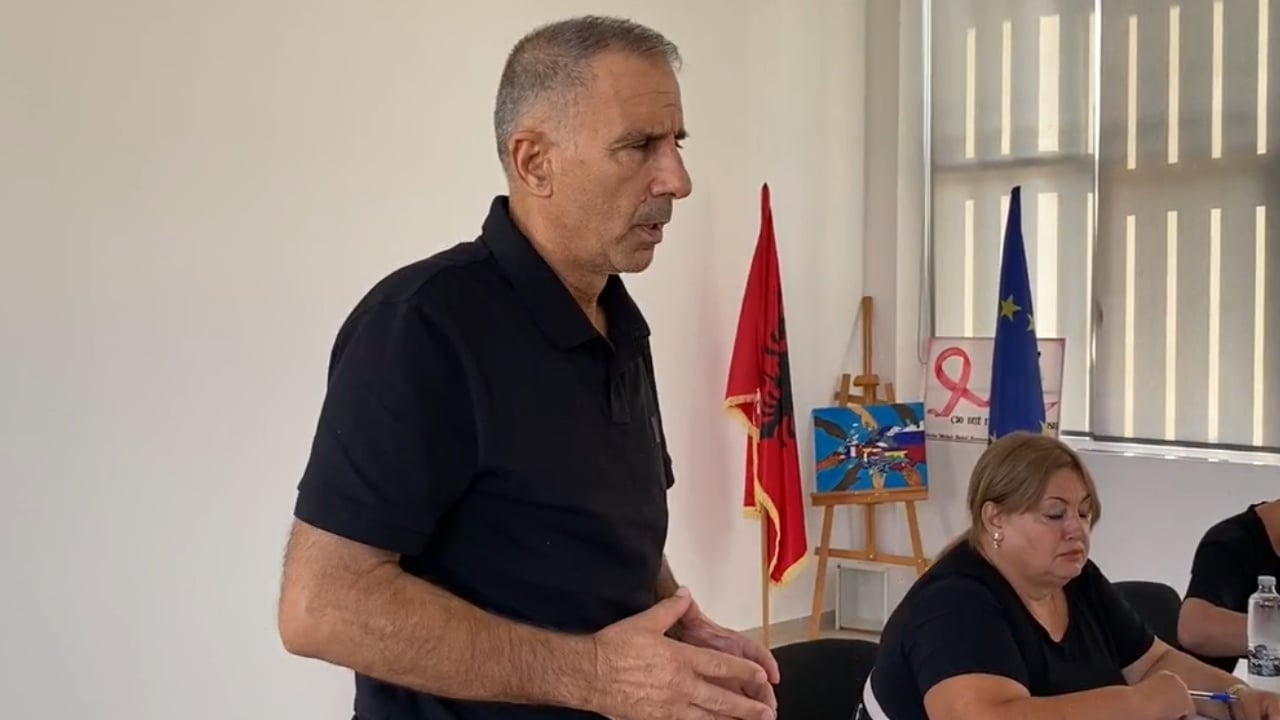
Divjaka Mayor Josif Gorrea appeared before the Municipal Council to clarify his version of the meeting held in Kuç with Prime Minister Edi Rama, where territorial reform was discussed and where there were also tensions among mayors. At the heart of his statement was a clear political message: Divjaka, at least according to his position, is not giving up its current status.
Closed meeting, but with public resonance
Gorrea said the meeting with Rama was a closed-door meeting, where the discussion took place within the political grouping and where, according to him, everyone was given space to express an opinion.
According to his account, the prime minister had left the discussion open, while some mayors, whom he described as emotional and hasty, had interrupted him during the debate.
Position on Divjaka unchanged
In his explanation before councilors, Gorrea insisted that he has not moved from his previous position on preserving the Municipality of Divjaka.
He said that even at that meeting he had spoken only about the issue related to the municipality he leads, strongly defending the idea of why Divjaka should remain on its own.
Doubts over the commission and comparison with Lushnja
Gorrea also raised questions about the work of the commission led by Mazniku, claiming that he had found inconsistencies in the approach being followed.
He said he had also identified mistakes, which he said he would make public, while also citing as an argument a comparison between Lushnja and Divjaka.
Contradictory messages for Fier County
In his remarks, the mayor of Divjaka also mentioned the positions of senior representatives of the Socialist Party, who, according to him, have clearly stated that there will be no changes in Fier County.
He also said he had defended the fact that he had previously been uninformed about developments, a detail that sheds light on how this process is being managed politically and the level of transparency toward local leaders.
Gorrea’s statements once again place territorial reform at the center of the debate, not only because of the administrative consequences, but also because of the way decision-making is being shaped.
So far, what is clear is that there is resistance at the local level and that the official version of a calm and agreed process does not fully match the signals coming from the political field.