Edi Rama has convened the next meeting with the government cabinet in Pogradec, immediately after his meeting with the political leaders of the Socialist Party in the regions and the heads of parliamentary committees. According to the official version, the focus is on the work balance sheet and priorities for the second year of the fourth mandate, but the political calendar of recent days suggests the move carries broader weight than a routine post-summer review.
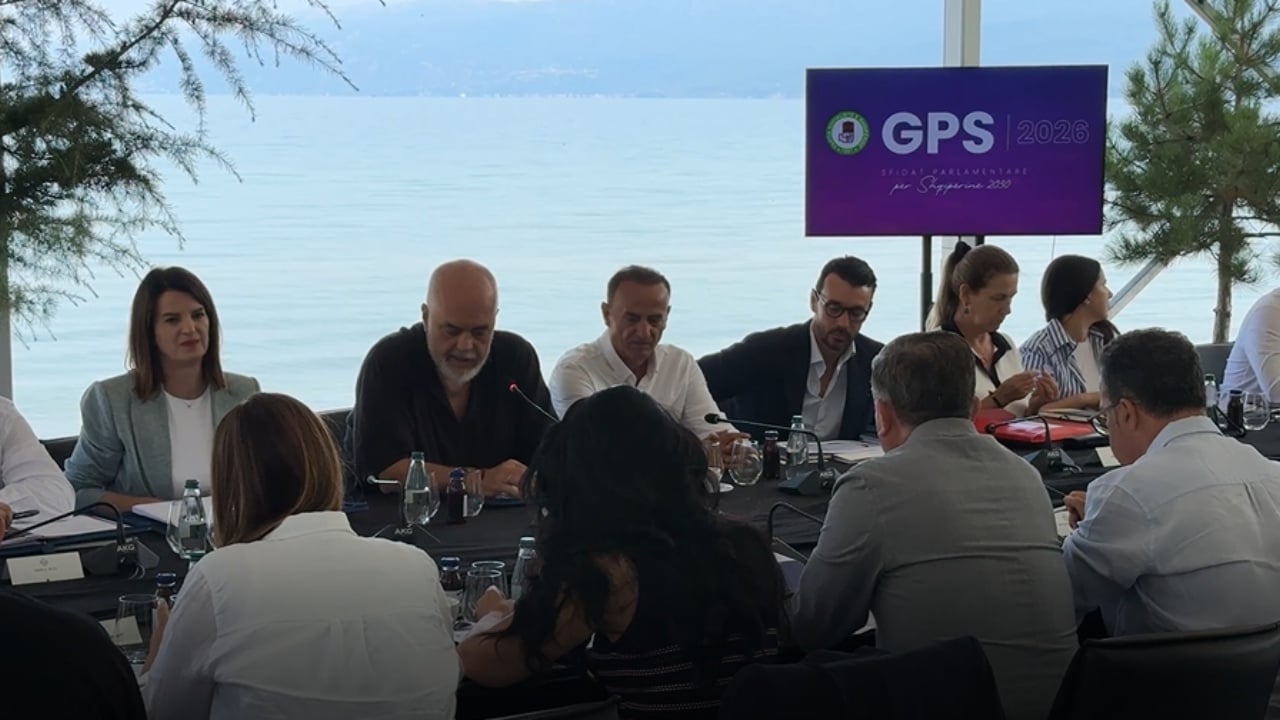
Another closed-door meeting in Pogradec
The meeting with ministers comes as a continuation of the series of meetings the prime minister has held with the majority’s leadership structures. A day earlier, in the same city, Rama held a several-hour meeting with Socialist political leaders in the 12 regions and with heads of parliamentary committees.
The chosen format has been presented as a “retreat,” a model Rama has used before, usually after the summer, to reorganize the agenda of the government and the Socialist Party for the months ahead.
What is expected to be discussed
According to the government, the meeting with ministers will be devoted to the balance of work so far, as well as defining objectives and priorities for the second year of the fourth mandate.
The meeting is taking place at a time when the executive is seeking to send signals about the direction of the next political and administrative phase. For this reason, the discussions in Pogradec are also being read as a test of the pace, control and messages the prime minister wants to impose within the cabinet.
The political documents being pushed by the Socialist Party
At the previous meeting with Socialist leaders, several documents presented by Rama at the end of July were at the center of discussions. Among them was “Besa,” which is linked to the Socialist Party’s new approach in the fourth mandate and its focus on citizens’ concerns.
Also discussed was “Pasqyreb Albania,” the platform that, according to the official presentation, aims to record, track and address citizens’ concerns in real time. It remains to be seen to what extent these instruments will translate into concrete decision-making rather than simply the political packaging of government communication.
Eyes on September and signals for the government
After the meetings in Pogradec, political attention is expected to shift to the beginning of September, when the Socialist Party is expected to convene the National Assembly. This forum has also been used before for politically significant announcements, including changes to the composition of the government.
The latest meeting comes after a busy period on the political scene, accompanied by several months of protests near the Prime Minister’s Office. Against this backdrop, every closed-door meeting of the majority is seen not only as internal coordination, but also as preparation for decisions that could affect the political and governing balance in the weeks ahead.
For the moment, what is being presented publicly is the need for a review and a redistribution of priorities. But the way the meetings have been concentrated in Pogradec, and the timing of them, make this gathering more than a routine end-of-summer work session.
Whether there will be only political guidance or also signals of cabinet moves is expected to become clearer from the majority’s next steps in September.