
A component of SpaceX’s Falcon 9 rocket, left in lunar orbit since last year, appears to have crashed at high speed into the Moon’s surface. Although final verification is still pending, the case is once again bringing attention to a problem that is often addressed only after an impact occurs: the accumulation of space debris beyond full control.
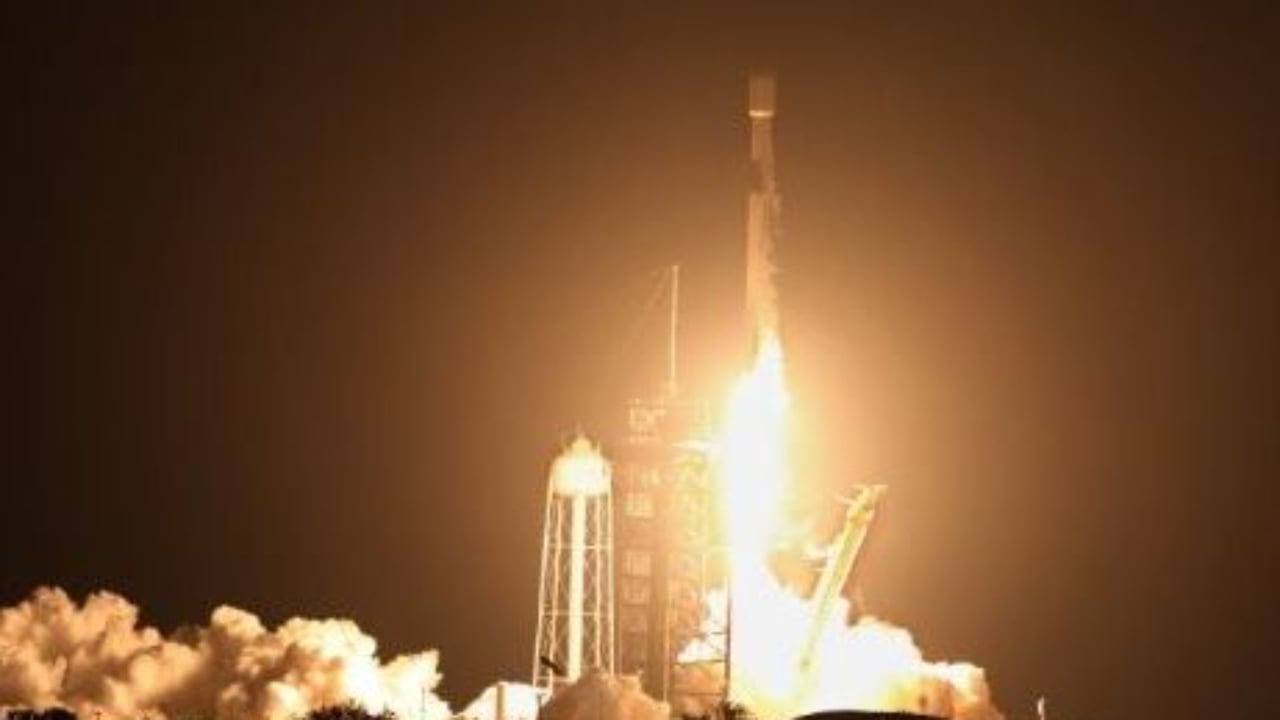
The object weighed around 4 tons and was moving at very high speed
According to published data, the object was the second stage of a Falcon 9 rocket, comparable in size to a school bus and weighing about four tons.
This section was used in January 2025 to send a vehicle from Firefly Aerospace toward the Moon. It later remained in space as orbital debris, following a trajectory that experts had considered inevitable toward the lunar surface.
The crash is believed to have occurred on the far side of the Moon
According to experts’ calculations, the impact occurred in the Einstein crater, on the far side of the Moon, at a speed of about 8,690 kilometers per hour.
The area where the crash is believed to have happened is far from the historic Apollo 11 landing site. Since there are no orbital instruments in position to directly record the event, scientists are analyzing images from specialized telescopes to identify the dust cloud created after the impact.
SpaceX calls it an unintentional collision
According to the company’s account, the impact was not planned. SpaceX explained that the lunar mission required more thrust than missions that return to Earth, where rocket stages usually burn up during reentry into the atmosphere.
According to Julianna Simon, a program manager at SpaceX, the trajectory was affected by a combination of gravitational forces and solar activity, leading to the final deviation toward the Moon’s surface.
The debate over space debris is growing louder
Although such cases remain rare, the incident adds to previous episodes, such as the crash of a Chinese rocket in 2022 and NASA’s controlled impacts for scientific purposes.
The issue is gaining greater weight at a time when NASA is preparing missions under the Artemis program and aims to build a base on the Moon. In this context, managing orbital debris is no longer seen only as a technical debate, but as a direct safety issue for future space infrastructure.
For now, full confirmation of the impact remains pending further analysis.
But even without a direct view of the collision, the case once again highlights the gaps in monitoring objects left behind in space.