
An app used every day for private communication is at the center of a much darker scheme: according to an investigation by the investigative network of the European Broadcasting Union, a WhatsApp group with hundreds of members was used to coordinate large cash movements across several countries, outside the radar of the formal banking system.
The group with 532 people and thousands of cash messages
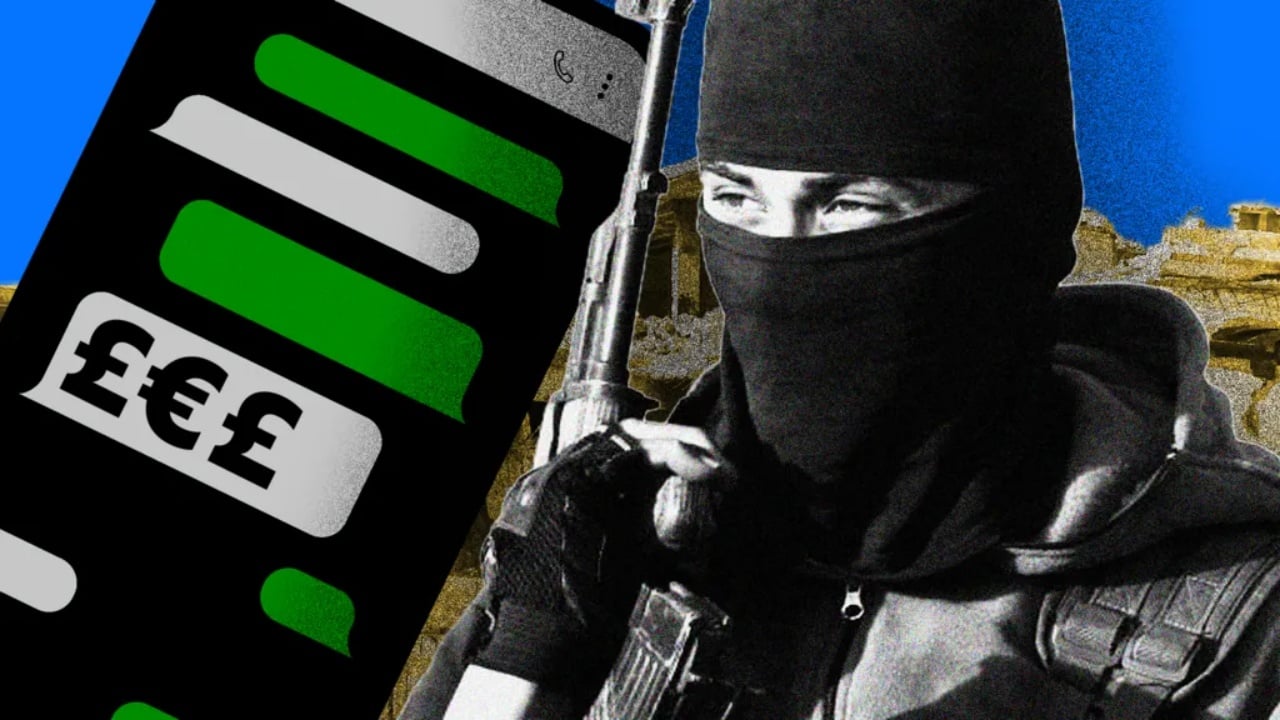
The investigation identifies a group called “Traders of Greater Europe,” with 532 people, in which more than 82,000 messages were exchanged from late February to December 2022. In the conversations, mainly in Arabic, large sums of money were requested and the cities where they were to be delivered were specified.
The messages mentioned specific figures and various destinations, including cities in the United Kingdom. In one case, £60,000 was requested in London; in another, £15,150 in Birmingham; while in Liverpool, the availability of £200,000 was reported.
How the scheme worked through hawala
The transactions, according to the investigation, were carried out through the hawala system, a traditional money transfer mechanism that relies on intermediaries and avoids the physical movement of funds from one country to another. This makes the system difficult to trace, especially when it is used outside formal oversight.
Hawala itself is not inherently illegal and is also used for legitimate purposes, especially by migrants sending money to family members in countries with limited banking access. But the investigation raises the central question: how easily a parallel financial mechanism can become a haven for criminal money.
According to the published data, the WhatsApp group was reserved for transactions above 5,000 euros, while many payments went significantly higher.
From Brussels to Syria: the financing trail and convictions in Belgium
One of the cases mentioned by investigators concerns money sent from Brussels that, according to the Belgian authorities’ account, ended up with Islamic State militants in Syria. Belgian police said some people in the network had also sent funds to help the wives of ISIS militants leave detention camps in Syria.
The investigation began as a terrorism financing case and was later expanded after authorities said they uncovered the broader scale of the financial network. The WhatsApp group was found on the phone of Abu Adam, who investigators consider the head of the network in Brussels.
The case ended with six people being convicted of money laundering in Belgium. On Abu Adam’s phone, investigators found about 6,000 photographs of 5-euro banknotes with visible serial numbers, as well as around 6,000 photographs of identity documents. According to investigating judge Vincent Guerra, this data may have been used to identify hawala transactions and suggests at least 12,000 transactions were processed.
The network extended beyond Belgium
The investigation shows that the use of hawala was not limited to a single group. A former money launderer, identified as “Frank,” said he had taken part in transactions worth several hundred million euros and that the system was used for money linked to drugs, prostitution, human trafficking and terrorism financing.
In Austria as well, authorities have uncovered cases in which hawala was used by migrant smuggling networks. Police raided an office in Vienna that, according to authorities, served to organize payments for people smuggling.
In another operation, Austrian police and Europol dismantled a network suspected of transporting about 100,000 people to Europe within 18 months. According to Austrian investigators, hawala payments were in some cases accompanied by brutal blackmail against families, including the sending of torture videos to extort more money.
A legal system that can also be used by crime
A Europol official described hawala as the main money laundering channel for organized crime. However, the investigation itself also makes an important distinction: the use of hawala does not automatically imply criminal activity.
In countries such as the United Kingdom, hawala transfers are permitted if intermediaries are registered with the authorities. This is precisely where the central tension of the story lies: a system that can serve the real needs of migrant communities, but which, when it operates outside control, creates ideal conditions for untraceable money and cross-border criminal networks.
The investigation highlights not only the use of WhatsApp as a coordination tool, but also the gaps that remain in monitoring parallel financial flows in Europe.
When everyday communication becomes intertwined with informal payment systems, the line between lawful use and the infrastructure of crime becomes much harder to distinguish and to disrupt.