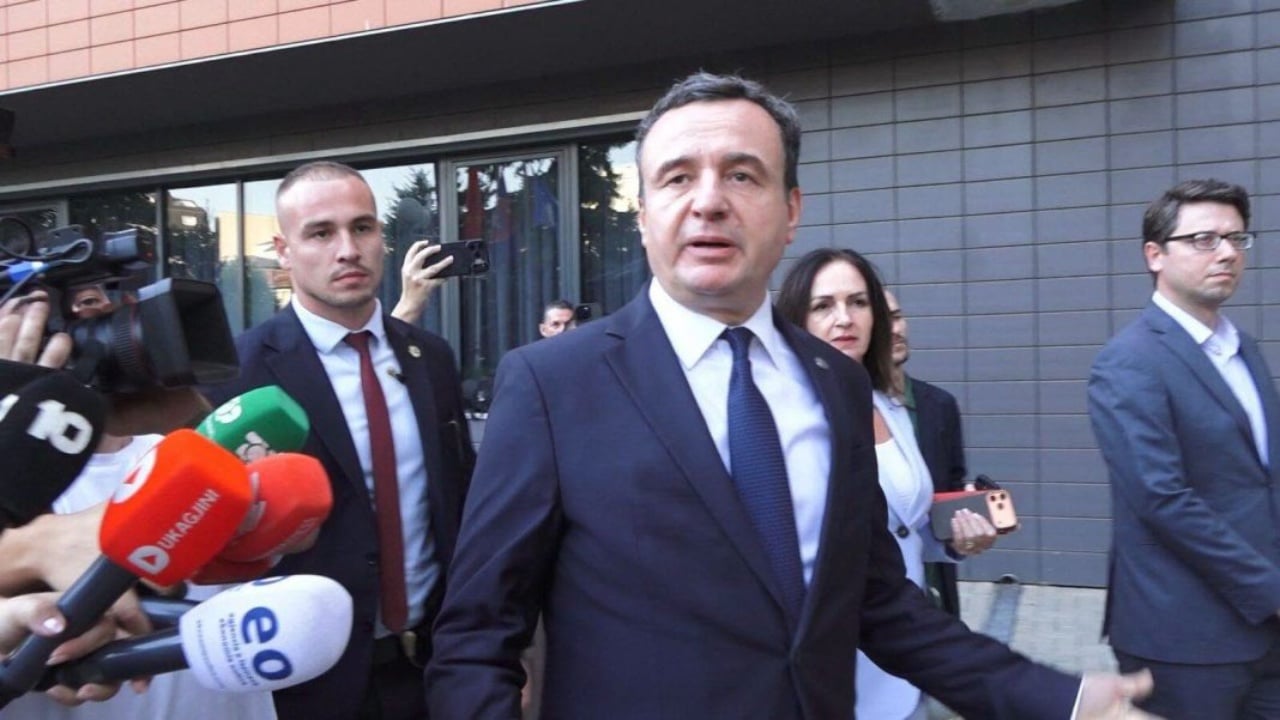
The clash over the election of the president is once again pushing Kosovo into a political deadlock with direct consequences for institutional stability. After failing to secure the quorum and the necessary support, the country appears closer to another election cycle than to a swift political solution.
The quorum was not secured, the proposed candidate was left without full support
The quorum of 80 lawmakers required for the election of the president is not being secured by Lëvizja Vetëvendosje and the Democratic League of Kosovo, leaving the process deadlocked.
On August 31, the sides proposed Bekim Sejdiu, a former judge of the Constitutional Court, but on Tuesday he did not receive the support of six LDK lawmakers. That move directly struck the formula agreed between the two political forces.
Conflicting messages from potential partners
Lëvizja Vetëvendosje is maintaining the position that the agreement remains valid and that Albin Kurti is seeking another meeting with LDK leader Lumir Abdixhiku.
But the political version coming from the LDK is markedly harsher. According to Abdixhiku, the refusal to vote for the candidate proposed by his party has determined the country’s path toward new elections.
Abdixhiku’s own reaction also highlights the internal rift within the LDK, as he has expressed indignation over the six lawmakers who did not support the candidate.
Kosovo closer to elections than to compromise
The latest developments are being read by political observers as an indication that Kosovo is closer to new elections than to a new agreement on the president.
According to this assessment, everything depends on the direction Albin Kurti gives the situation: either to take the country immediately to elections, or to try a new solution to secure the necessary votes.
Two options for Kurti, but little real room to maneuver
If he chooses the path of elections, the political process could quickly take a new direction. If he seeks an institutional solution, then according to assessments in circulation, Kurti has two options: negotiate for individual votes from lawmakers of other parties or change the candidate entirely.
However, the political terrain remains narrow. The Democratic Party of Kosovo has made it known that it will remain in opposition and has shut the door on cooperation with Kurti.
Meanwhile, the Alliance has set six conditions, including acceptance of the American gas project. Without the fulfillment of these conditions, according to its position, it will not help Kurti in the election of the president.
A crisis that brings back the summer scenario
This is the second major institutional crisis in just a few months. On June 7, Kosovo held snap elections after failing at the start of the year to elect a new president.
The repetition of the same deadlock once again raises serious questions about the ability of Kosovo’s political class to produce functional majorities and sustainable solutions, beyond the latest party calculations.
For the moment, the weight of the political decision appears to fall on Kurti, but signals from the parliamentary field do not promise an easy path.
Amid a worn-out candidacy, uncertain allies and a closed opposition, the scenario of new elections is drawing closer than compromise.