
The government is signaling a shift in how checks on businesses will be carried out. According to Edi Rama’s statement, there will no longer be routine inspections without prior notice, while fines should not be used as the state’s first tool against entrepreneurs.
What Rama announced after the meeting
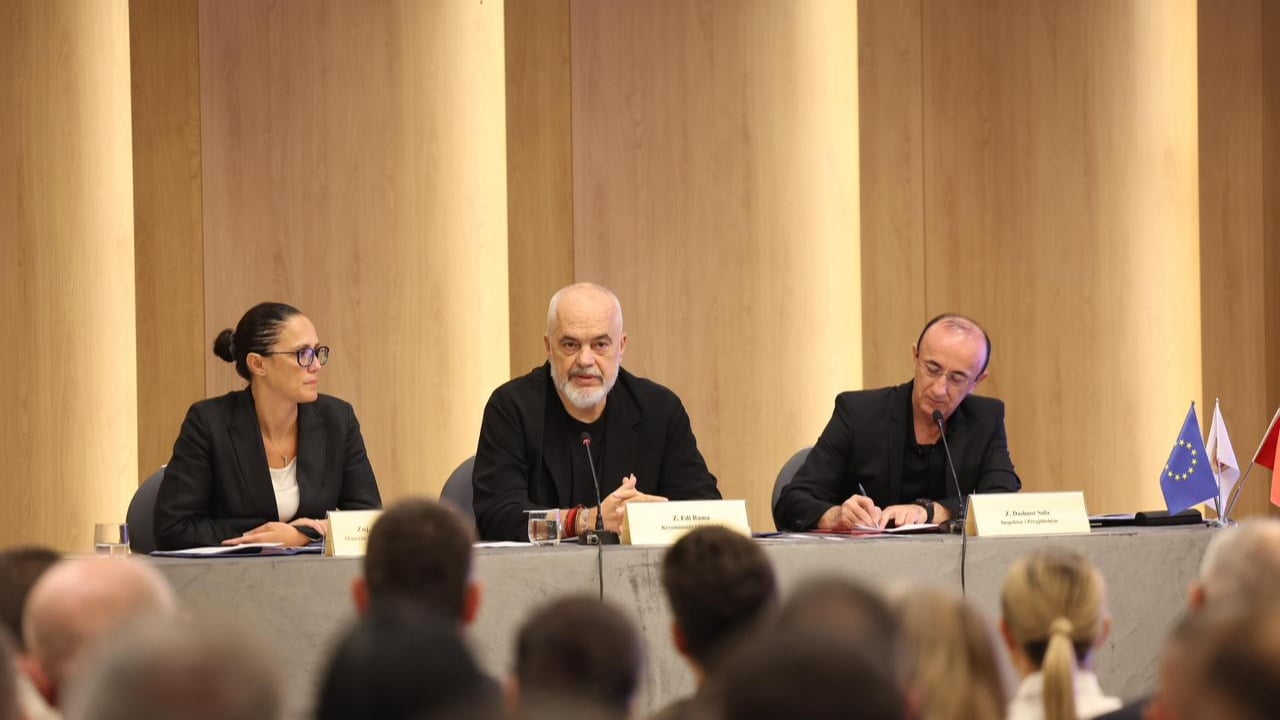
The statement came after a meeting with the Minister of Economy and Innovation, Delina Ibrahimaj, and Inspector General Dashnor Sula. According to the prime minister’s version, the way inspections are carried out will change, with the emphasis on guiding entities rather than imposing immediate punishment.
Rama called on inspectors not to show up at businesses with the logic of identifying violations for fines, but with the aim of helping to correct problems and meet standards. This has been presented by the government as a more cooperative approach between the administration and entrepreneurship.
No checks without prior notice
The strongest point of the announcement was the end of inspections without advance notice for routine checks. According to Rama, every such inspection must pass a “trust test,” while businesses were invited to report to the Inspector General any case in which inspectors appear without warning for checks unrelated to emergencies or exceptional cases.
The prime minister’s message is aimed at softening the perception that inspections are used as pressure on taxpayers. However, it remains to be seen how this will be implemented in practice and whether the inspection administration will actually change its behavior on the ground.
Fines, according to the government, no longer the first tool
Rama said that a fine should be the “last weapon, not the first,” presenting it as a measure that should not be used as blackmail against entrepreneurs. In essence, the government is publicly acknowledging a problem that businesses have raised for a long time: the use of checks and penalties as an instrument of pressure.
If this standard is implemented equally for everyone, that will depend not on political statements but on how inspections are documented, how complaints are handled, and how much real space businesses are given to correct violations before being punished.
Body cameras and uniforms for inspectors
Another measure announced is equipping inspectors with smart body cameras and uniforms, with the argument that all of their actions should be monitored. According to Rama, this will soon be extended to every inspector who appears on behalf of the state at the door of a taxpayer.
The government presents this as a tool for transparency and oversight over the administration. But the real effect of this measure will depend on the rules for using the footage, how it is stored, and whether it will truly serve accountability, or simply remain another announcement without clear implementation mechanisms.
The prime minister’s statements set a new standard on paper for the relationship between the state and business, but the real test will be implementation. For entrepreneurs, the main question remains whether the end of surprise checks and the limited use of fines will become everyday practice, or remain only political guidance.