
Debate over a possible return by SPAK to Parliament over Belinda Balluku has flared up again, as the case against the former deputy prime minister has expanded and the political climate around her no longer appears to be what it was in March. At that time, the Socialist majority voted down the request for her arrest with 82 votes; today, the question is whether circumstances have changed enough for the Special Prosecution to seek a new security measure.
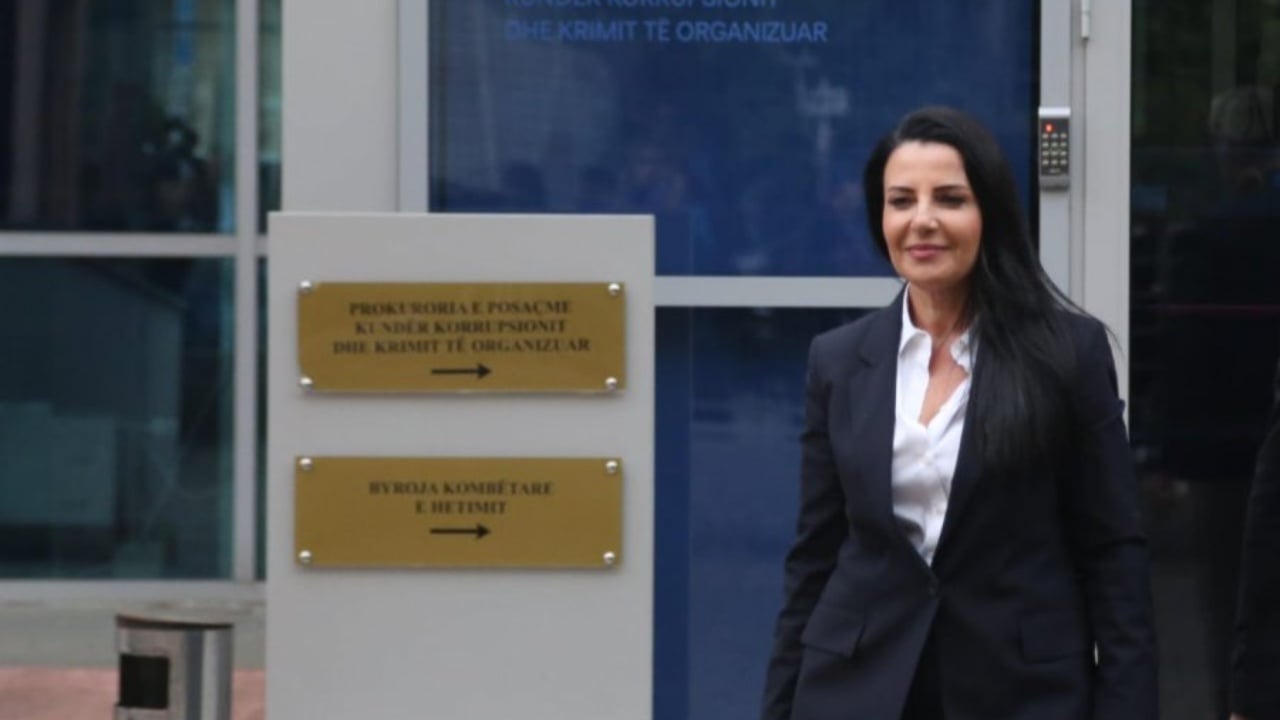
Rama changes his tone toward the former number two in government
The spark for the renewed debate came after a statement by Prime Minister Edi Rama about Belinda Balluku on the podcast “Flasim.” He said that his former deputy “has an issue with justice” and that “no one is protecting her,” suggesting that her confrontation with the investigation is now a personal matter rather than a political one.
What has changed in the case
According to information made public by SPAK, the investigation has been expanded. Initially, the identification of a villa in Palasë was announced, suspected to be Balluku’s beneficial property but registered in other names. Later, the Special Prosecution also announced the identification of another unjustified asset, suspected of being the proceeds of corruption.
These developments have worsened Balluku’s procedural position. She continues to be investigated while free and no longer holds a government post. However, she remains an MP, which means that any measure restricting her liberty requires authorization from Parliament.
Could there be a second request in Parliament?
The key question is whether SPAK will return with another request to Parliament. In July, during reporting to Parliament, SPAK chief Klodian Braho avoided details about the specific case, but suggested that the prosecution would make the relevant decision at a later moment.
So far, no new request has been submitted. But compared with March, the case is no longer at the same stage: the investigation has expanded, the accusations have increased, and Balluku is no longer part of the government. This brings back to the center the question of whether SPAK has enough elements to seek another security measure.
Amid political debate and suspicions of influence
The opposition is also increasing pressure for SPAK to return to Parliament. Democratic Party parliamentary group leader Gazment Bardhi has argued that the expansion of the investigation and the worsening of Balluku’s procedural position should be accompanied by a reassessment of the security measure.
On the institutional level, another question mark is tied to the influence the former minister may still have in the sectors and structures she led for years. The fact that directors and officials appointed during her time continue to work in these institutions does not in itself prove any unlawful influence. But as long as the investigation concerns decisions taken precisely at these levels, the question remains legitimate as to whether informal power is automatically extinguished upon leaving office.
For the moment, SPAK has not filed a second request with Parliament. But with the case expanded, the accusations increased, and political distancing now expressed more openly, the Balluku case has once again become a concrete test of the relationship between special justice and parliamentary protection.
At its core, the debate is not only about what the case file contains, but whether the institutions will act differently than they did the first time, or once again allow decision-making to collide with political arithmetic.