
The clash between the government and the justice system over salaries has escalated further, as Edi Rama again responded in strong language to the positions taken by some judges and their associations. In the prime minister’s version, no one can dictate to Parliament how and when it votes, while the role of the Constitutional Court is limited only to reviewing constitutional violations, not imposing political decision-making.
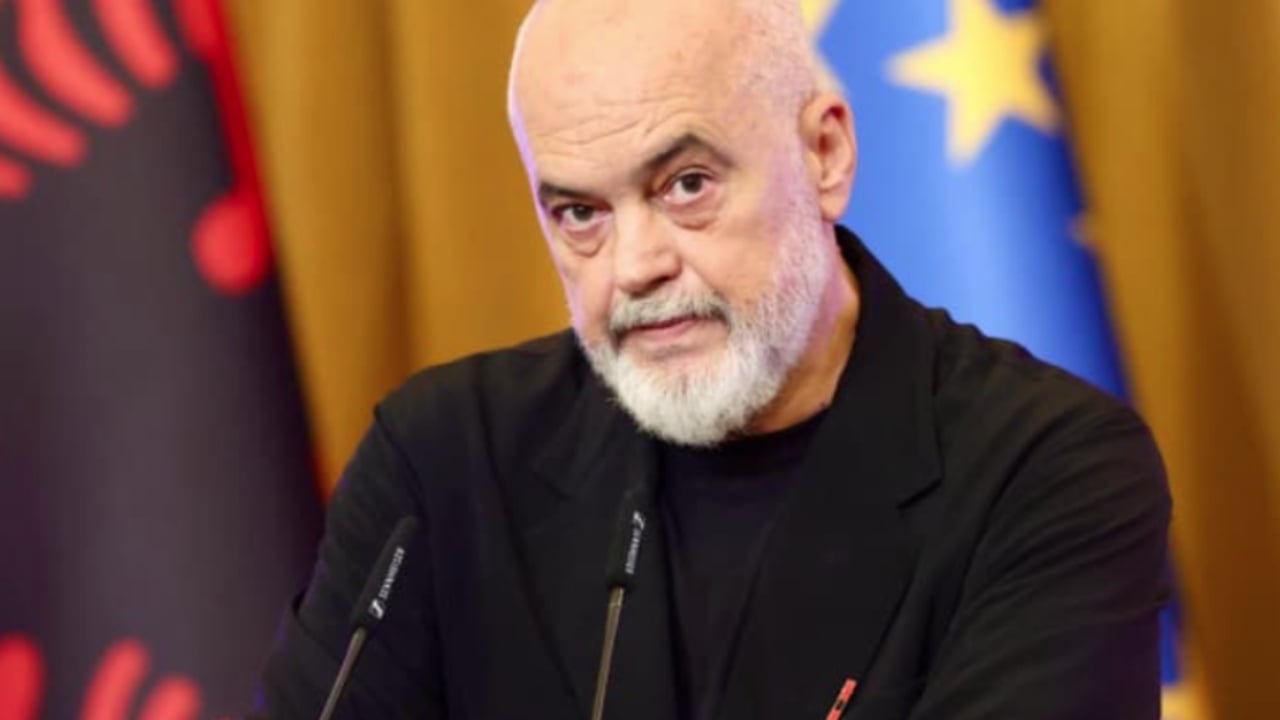
Rama against the language used by a judge
The prime minister began his response with a direct attack on the way criticism had been expressed by a judge, in his view. He said this was not the “language of a judge,” but a discourse that, according to him, resembled the tones of the street more than institutional communication.
This wording shows that the debate is no longer being held only on the technical level of salaries, but is shifting into an open political and institutional clash between the executive and segments of the justice system.
The government’s claim: salaries are decided by the government and Parliament
According to Rama, wage policy is proposed by the government, approved by Parliament, and then implemented by the government. He insisted that no one can replace Parliament, nor can anyone order the legislature when it should “raise its hand.”
Along the same lines, Rama said that only the Constitutional Court has the right to tell Parliament when it has acted contrary to the Constitution, but not to dictate how it should vote. In other words, according to the government, the line between constitutional oversight and political decision-making should not be crossed.
Accusations of coordinated pressure from judges’ and prosecutors’ associations
The strongest part of the reaction was where Rama cast doubt on coordinated action between judges’ and prosecutors’ associations, supported, according to him, with political and legal means, to impose salary increases on the government.
He spoke of a “challenge of a new kind,” suggesting that complaints, security measures or enforcement could be used to exert pressure on the executive. These are serious political accusations, articulated by the head of government, in a debate that directly affects the balance between the branches of power.
The canceled meeting and the September 17 deadline
Rama said the table for the requested and then canceled meeting remains open. According to him, September 17 marks only the end of this publicly tense episode, but not the end of the need for communication between the independent branches.
He presented this communication as necessary going forward, especially in the context of the European integration process. However, beyond the call for dialogue, his reaction remains charged with confrontational tones and with a clear message that the government will not accept pressure over decision-making on salaries.
In the end, Rama implied that on the government’s side there is readiness for a meeting, while the rest, according to him, remains in the hands of the judges.
The salary debate, although presented as a technical and constitutional issue, is increasingly openly revealing a crisis of mistrust between institutions that goes beyond the figures on the payroll.