
A heated debate during Parliament’s marathon session once again brought to the surface one of the most disputed files on public finances and state responsibility: the Becchetti case. The opposition accused the government of ignoring binding court rulings, while Prime Minister Edi Rama sought to present the conflict as a matter still open, also bringing SPAK into the majority’s political reasoning.
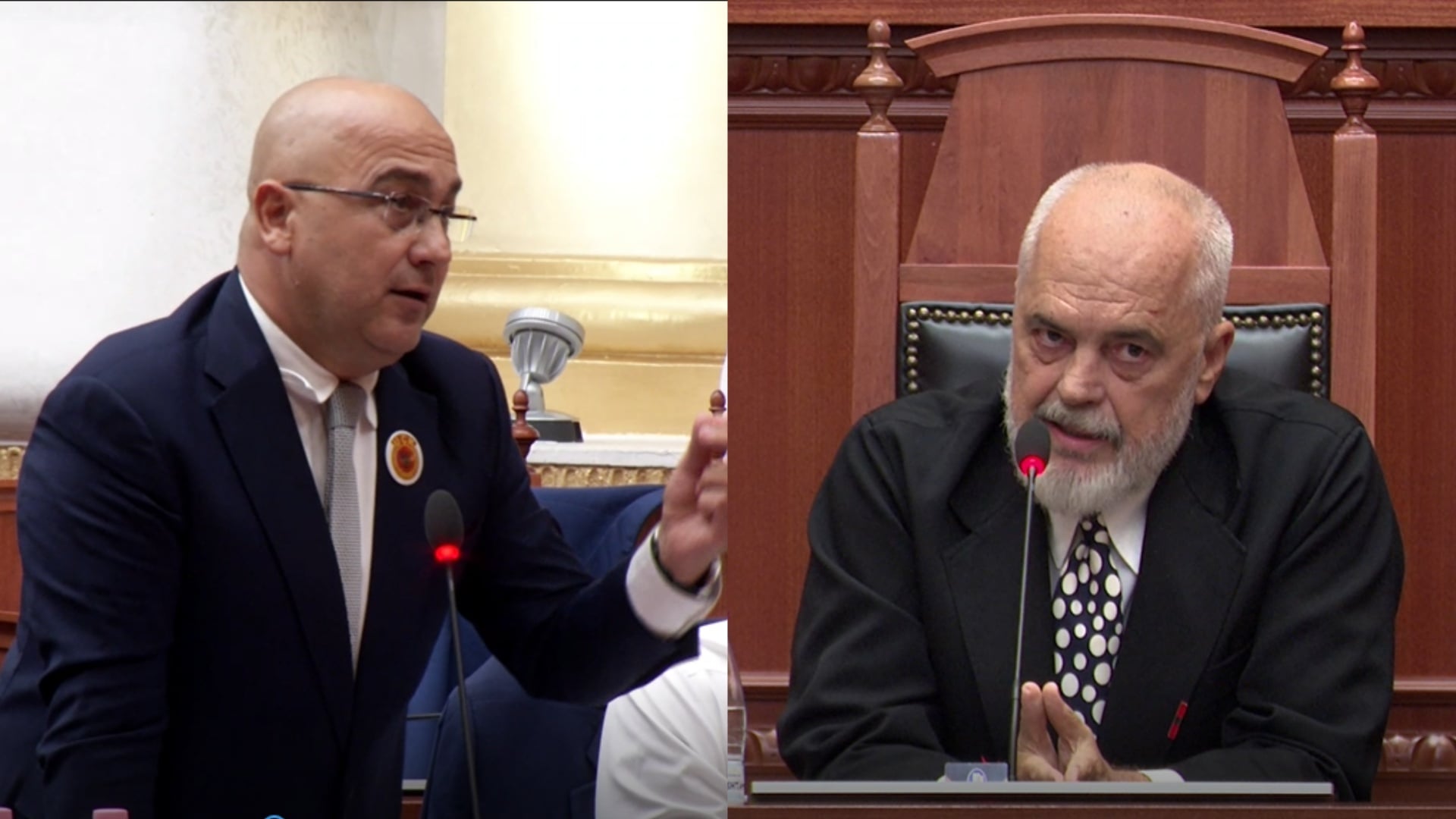
Himçi: The government is not implementing court rulings
Democratic Party MP Blendi Himçi accused the government in Parliament of failing to implement international arbitration court rulings and of following the same logic with regard to Constitutional Court decisions.
According to Himçi, international arbitration rulings are binding on the Albanian state and cannot be bypassed with political statements. He linked these positions to the debate over the Constitutional Court’s ruling on employees’ salaries, claiming that the government is giving Parliament a spirit of non-implementation of judicial decisions.
The opposition MP also said that Parliament had forwarded the issue to the government as early as June and that, according to him, by July 31 no concrete measures had been taken for implementation or financial calculations. In his assessment, the draft later presented was not based on a clear legal foundation in relation to what the Constitutional Court had decided.
Rama: The ruling is recognized, but it has been challenged
In response, Prime Minister Edi Rama rejected the accusation that the government does not recognize the arbitration ruling. According to his version, it is precisely because the ruling is recognized that it has been challenged in other instances, and for that reason it has not been enforced so far.
Rama said that if the government had not pursued the case through other legal avenues, the ruling would have been implemented long ago and the funds would have been received by the beneficiary party. He insisted that no amount has been paid so far and that the process remains open.
In the same intervention, the prime minister also used insulting language toward the opposition MP, calling him an “unknown jurist,” shifting the debate from the substance of institutional responsibility to personal political sparring.
What Rama said about SPAK and the frozen funds
The prime minister said the case has seen other developments because of SPAK’s involvement as well. According to him, the entity facing the Albanian state is no longer only a party in arbitration, but has also become involved in a criminal issue, inside and outside the country.
Rama added that Albcontrol’s blocked funds are in a frozen fund and, according to his statement, will be touched only after the issue is finally clarified. However, the debate in Parliament did not provide any clear deadline for the conclusion of these proceedings or for the cost that the public budget may bear.
It is precisely this lack of clarity that remains the most sensitive point of the debate: the government seeks to gain time with the argument of parallel proceedings, while the opposition raises doubts about non-implementation and the evasion of responsibility.
The political clash overshadowed the main question
Despite the sharp exchange in the chamber, the debate did not produce a full clarification of the Albanian state’s concrete obligations in relation to arbitration and court rulings. The opposition insisted on the binding nature of the rulings, while the government relied on the fact that the case has not yet reached enforcement.
On the political level, Rama’s retort sought to delegitimize his opponent, but that does not answer the question that remains essential for the public: is this issue being managed with transparency and in line with legal obligations, or is procedural fog being used to delay accountability?
The clash in Parliament showed once again that the Becchetti file continues to be treated more as a political weapon than as an issue with direct consequences for the public interest and state finances.
Amid accusations of non-implementation and the government’s defense based on proceedings that are still open, what remains missing is a clear institutional explanation of the real bill and the concrete responsibilities.