
Communications included in an investigative file shed light on the relationship between former SHISH head Vlora Hyseni and Ergys Agasi, while the conversations also mention senior figures in the ruling majority and the State Police. Their content does not automatically prove institutional influence, but it raises serious questions about the line between political power, security structures and decision-making within the SP.
What emerges from the communications
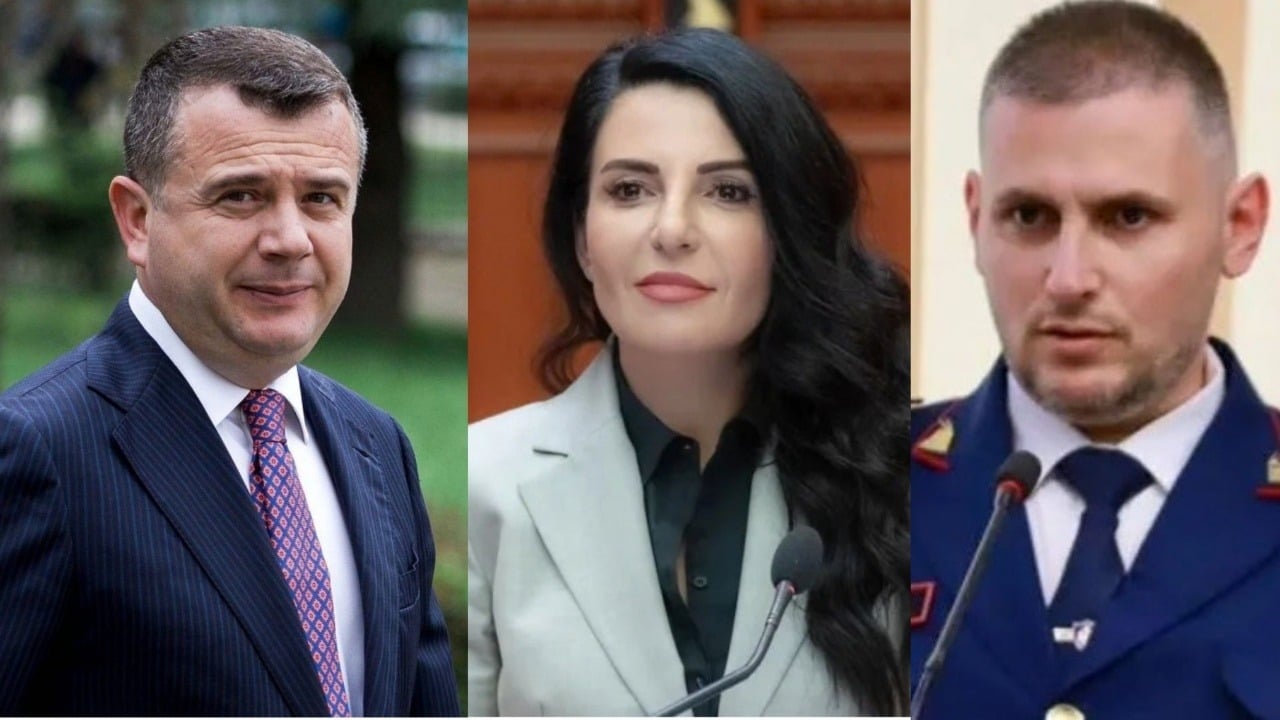
According to data published from the investigative file, there were numerous messages and phone calls between Vlora Hyseni and Ergys Agasi. In these communications, the name of Belinda Balluku is also mentioned, feeding suspicions of political weight that goes beyond her formal role.
One of the quoted messages says: “Taulant Balla speaker of parliament… That’s the info… Bela with Tao mate.” In the SPAK file, “Bela” is identified as Belinda Balluku, while “Tao” is identified as Taulant Balla. The content of the message itself is presented as internal political information, but without clarifying its source or degree of reliability.
The Police director is also mentioned
In another communication, dated August 19, 2026, Hyseni writes to Agasi: “Skënder called me to meet on Monday.” According to the identification in the file, this refers to Skënder Hita, the General Director of the Police.
The message continues with the phrase: “Let’s hope he has the PM’s instructions…”. This part adds to the questions about the nature of the contact and the possibility of political intervention in relations between institutional leaders. So far, what exists is the content of the communication quoted in the file, not full proof of the decision-making chain.
A planned meeting with the Prime Minister
The file also mentions information that Hyseni was passing on to Agasi regarding her movements and meetings. In a message dated August 24, 2026, she writes: “Tomorrow I have to meet the PM at 8:30.”
No details are given about the reason for the meeting, the topic of the conversation, or whether the meeting actually took place. Nevertheless, the very fact that these movements were being communicated in this way raises questions about how information circulates near the centers of power.
Political and institutional questions
The names that emerge in these communications directly touch the ruling majority, the State Police and the former leadership of the intelligence service. This makes the matter more serious than an ordinary exchange of messages, as it suggests a network of contacts in which politics and institutions may be more intertwined than is publicly acknowledged.
In the public sphere, the material adds pressure for clarifications about the real role of the figures mentioned and about the boundaries between political communication, influence and the independent functioning of institutions. So far, the claims arising from the communications remain part of the investigative file and require full verification by the responsible authorities.
The content of the communications does not yet provide final answers, but it is enough to raise strong suspicions about the relationship between political power and state structures.
If these links are further confirmed by the investigation, the issue affects not only specific names, but the very standard of separation between the party, the government and the security institutions.