
European Commission President Ursula von der Leyen’s visit to Tirana was used by Prime Minister Edi Rama not only to speak about negotiations with the European Union, but also to respond to the domestic debate over the investigations into the former head of SHISH. In a joint appearance before the media, the head of government gave his version: what in Albania is labeled “regression” is, according to him, seen by the EU and the European Commission as “progress.”
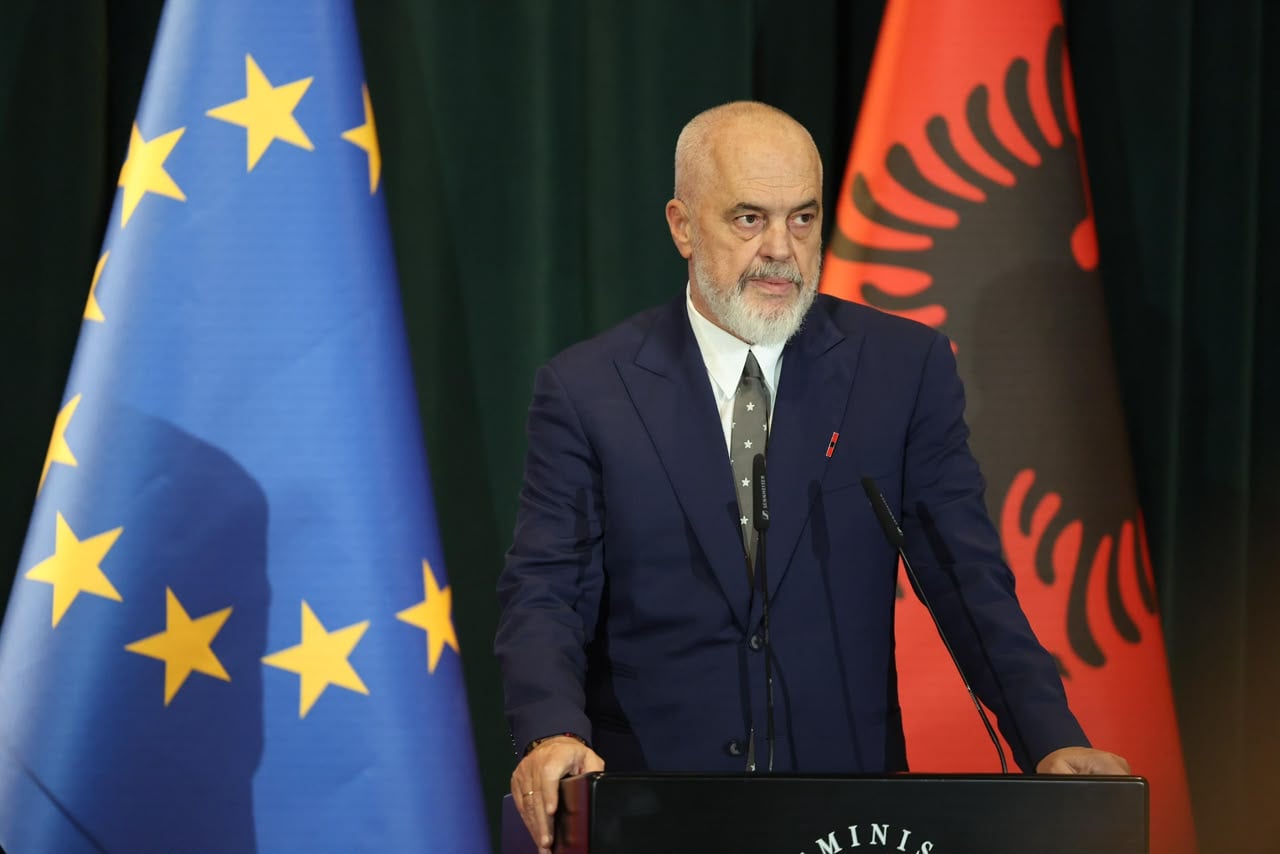
EU integration at the center of the meeting
Rama said the government remains committed to moving the integration process forward and entering the phase of closing negotiation chapters. According to him, the goal is for the closing of the first chapters to begin before the end of the year and for the pace to continue throughout next year as well.
He also praised EU support through the Growth Plan, presenting it as an instrument that, according to the government, brings not only financing but also a form of gradual integration for the region, without waiting for the formal end of the process.
Zvërnec, transparency promised after debate
The controversial Zvërnec project was also raised at the conference, with Rama saying the government is soon expecting the in-depth environmental study. He said the documents and the entire process will be published, in what he presented as a step toward transparency and interaction with the public.
The statement comes after the project triggered public interest and opposition, while the government is trying to defend it with the argument of procedures and technological steps for transparency.
Rama avoids a political answer on the investigations
Asked about the latest developments in the justice system and the investigations into the former head of SHISH, Rama insisted that the matter should be left to the justice institutions. He opposed the public use of investigative materials and said the process should show whether or not there had been a breach of national security or of relations with partners.
Along the same lines, the prime minister claimed that the concern amplified in the domestic debate has not been reflected to the government by international partners. This was his attempt to shift the emphasis from the political cost of the issue to its institutional and international reading.
“Regression” for the opposition, “progress” under Rama’s version
The most political point of the statement was the comparison Rama drew between domestic criticism and Brussels’ perception. He said that what many in Albania call regression is seen by the EU and the European Commission as progress, using this as an argument to defend the government’s course on justice reform.
The head of government presented his political responsibility as limited to not stopping justice reform and to continuing the fight against corruption and organized crime. In this way, he refused to take responsibility for individual cases, insisting that anyone who breaks the law should face justice and not political protection.
The meeting with the president of the European Commission gave Rama a favorable stage on which to link integration, reforms and the crisis of trust in institutions into a single government narrative.
But beyond the executive’s optimistic message, the fact remains that the issues producing public debate in the country are not resolved by political labeling as “progress” or “regression,” but by verifiable standards, real transparency and justice that convinces the public as much as international partners.