Kosovo’s Assembly approved changes to the Specialist Chambers in an extraordinary session held under dual political pressure: debate over the law and the deadlock over the election of the President. Outside Parliament, a protest called by the War Veterans’ Organization led to tensions at the entrance to the building.
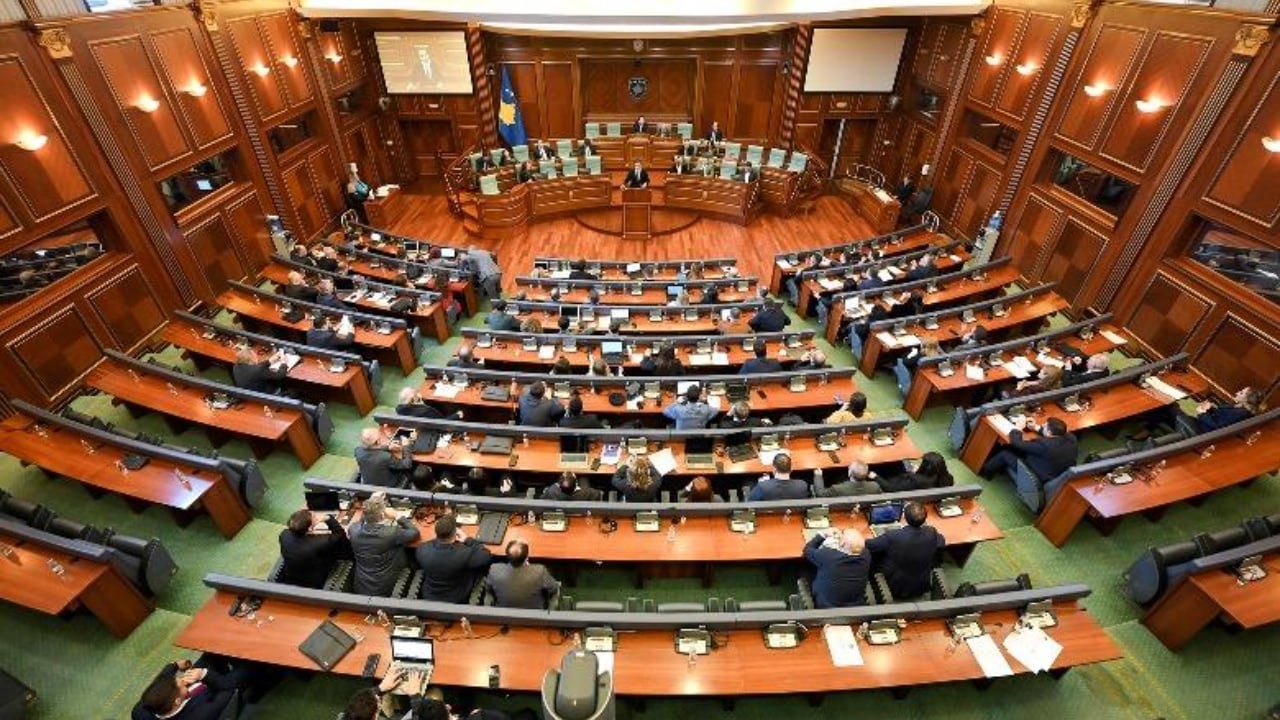
Extraordinary session with the law in focus
The plenary session began at 9:00 a.m. with 22 items on the agenda, but the main attention focused on amendments and additions to the Law on the Specialist Chambers and the Specialist Prosecutor’s Office.
Before the issue moved to the plenary hall, the draft law was first handled by the parliamentary Committee on Legislation at 8:00 a.m. It was then reviewed in the Assembly in a politically charged atmosphere.
Veterans’ protest and tensions at the Assembly entrance
In front of the Assembly building, a protest called by the War Veterans’ Organization took place, demanding the approval of the draft law amending the law in question.
According to reports from the scene, protesters had remained near Parliament overnight. During the day’s developments, tensions were recorded at the entrance to the Assembly, making the atmosphere outside the institution even more charged.
Political maneuvering around the vote
The issue had also been discussed a day earlier at a meeting between Prime Minister Albin Kurti and PDK leader Bedri Hamza. After that meeting, Hamza said the discussions had concluded and called for the draft law to be approved first in two readings.
According to his statement, the issue of the president could then also be discussed, while the PDK was ready to give its support. This placed the vote on the law at the center of the day’s political bargaining and calculations.
Two political deadlines hanging over the Assembly
In addition to the law on the Specialist Chambers, lawmakers are also facing the deadline for electing Kosovo’s new President. According to the institutional calendar, the Assembly has this day and October 6 available to complete the process.
If the election fails, the country risks heading to snap elections. This turned the session into a dual test for both the majority and the opposition: both in managing the contested law and in unblocking the political crisis.
The approval of the changes to the Specialist Chambers thus came at a moment when Kosovo’s Assembly was operating under pressure from protests outside the building and intense negotiations inside it.
Beyond the vote, the day’s developments showed that institutional decision-making in Pristina remains closely tied to political tension and to deadlines that could push the country toward a new crisis.