Erion Veliaj has been included by Politico in a list of political figures who have chosen artificial intelligence to address the public, at a time when the mayor of Tirana remains in pretrial detention. The case has brought back into focus not only the use of technology in political communication, but also the institutional paradox of a capital city officially led by a mayor behind bars.
The video with Veliaj’s avatar and the promise of free lunches
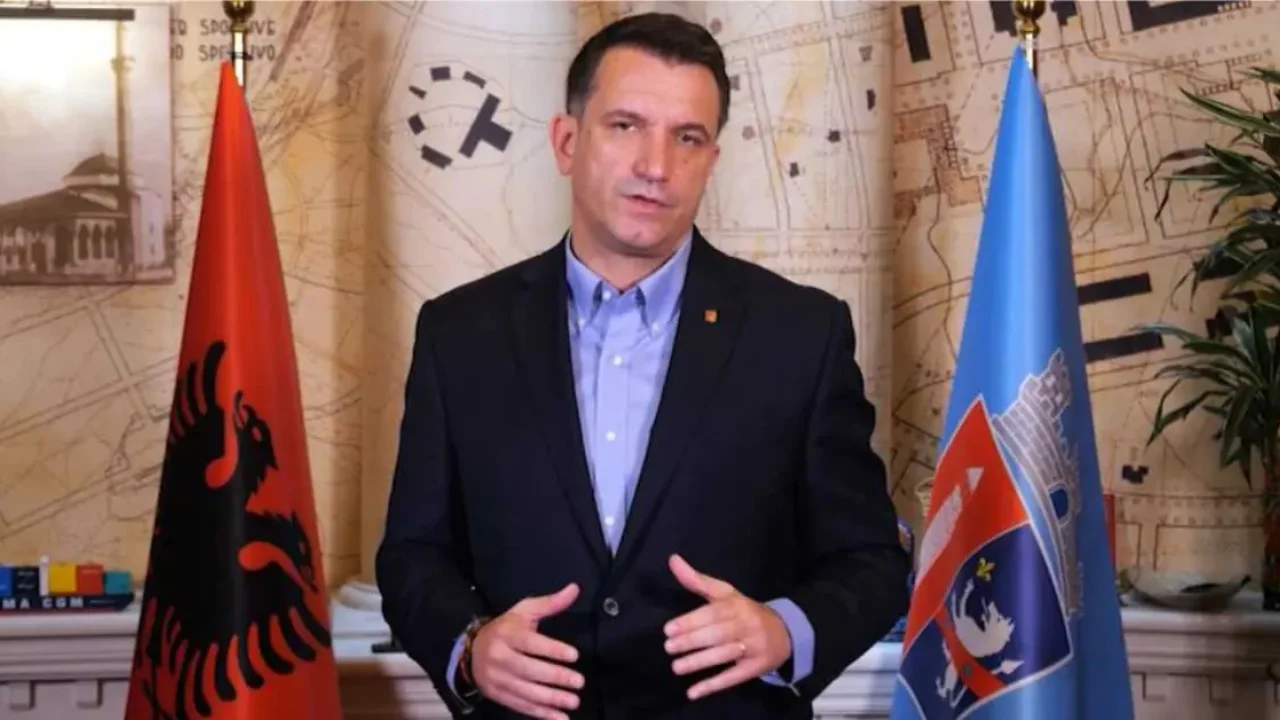
Attention returned after the publication on Instagram, on Veliaj’s official profile, of a video labeled as generated by artificial intelligence. It shows a figure resembling the mayor, in front of the Albanian flag and the flag of the Municipality of Tirana, repeating promises and speaking about the balance sheet of his work.
In the published message, the avatar also refers to the commitment on school food and says the promise will be kept “even from this cell where they have locked me up.” The content of the video has sparked debate not only over the political message, but also over the way AI is being used by an elected official who cannot communicate directly with the public.
Veliaj in pretrial detention, but still formally in office
According to the published version, Veliaj has been in pretrial detention in Durres since the beginning of 2025, as part of investigations into allegations of corruption and financial crimes. He has denied the accusations.
Despite the criminal proceedings, he officially remains mayor of Tirana. Early elections that had been scheduled for last November were canceled at the last moment, after the Constitutional Court concluded that his removal could not take place outside normal democratic procedures. In the meantime, duties have been delegated to several deputy mayors until the local elections scheduled for the first half of 2027.
From Imran Khan to Bolsonaro, AI is entering the communication of blocked politicians
Politico places Veliaj’s case in a broader international context. According to the article, this is not the first time imprisoned politicians or those restricted in communication have used artificial intelligence to keep their public presence alive.
In 2023, former Pakistani prime minister Imran Khan used an AI-created deepfake to call on citizens to vote for his party. Likewise, in July, an AI-generated avatar of former Brazilian president Jair Bolsonaro appeared at the launch of his son’s presidential campaign, while Bolsonaro himself is under house arrest and subject to restrictions on election-related activities.
Experiments with AI in Albanian politics are not new
Veliaj’s case does not come on empty ground. In the autumn of 2025, Prime Minister Edi Rama introduced Diella, which he presented as the world’s first virtual minister enabled by artificial intelligence, with a role in processes related to tenders and procurement.
The initiative was accompanied by significant publicity, but later drew criticism when the woman whose face and voice were used for Diella’s figure objected to the use of her image for a ministerial post. The episode raised substantial questions about ethical limits, transparency and the political use of technology in Albanian institutions.
Veliaj’s inclusion on this list is not simply a technological curiosity. It once again highlights the clash between the crisis of representation in Tirana, the investigations against a senior local official and the use of AI to maintain control over the public narrative.
In this picture, the question is not only what technology can do, but how it is being used to replace real accountability with curated messages on screen.