
Parliament closed the vote on the new territorial map amid extreme tensions, in a prolonged session filled with political clashes. In the final minutes, the chamber descended into physical and symbolic incidents, while the majority pushed the draft law forward despite strong opposition objections.
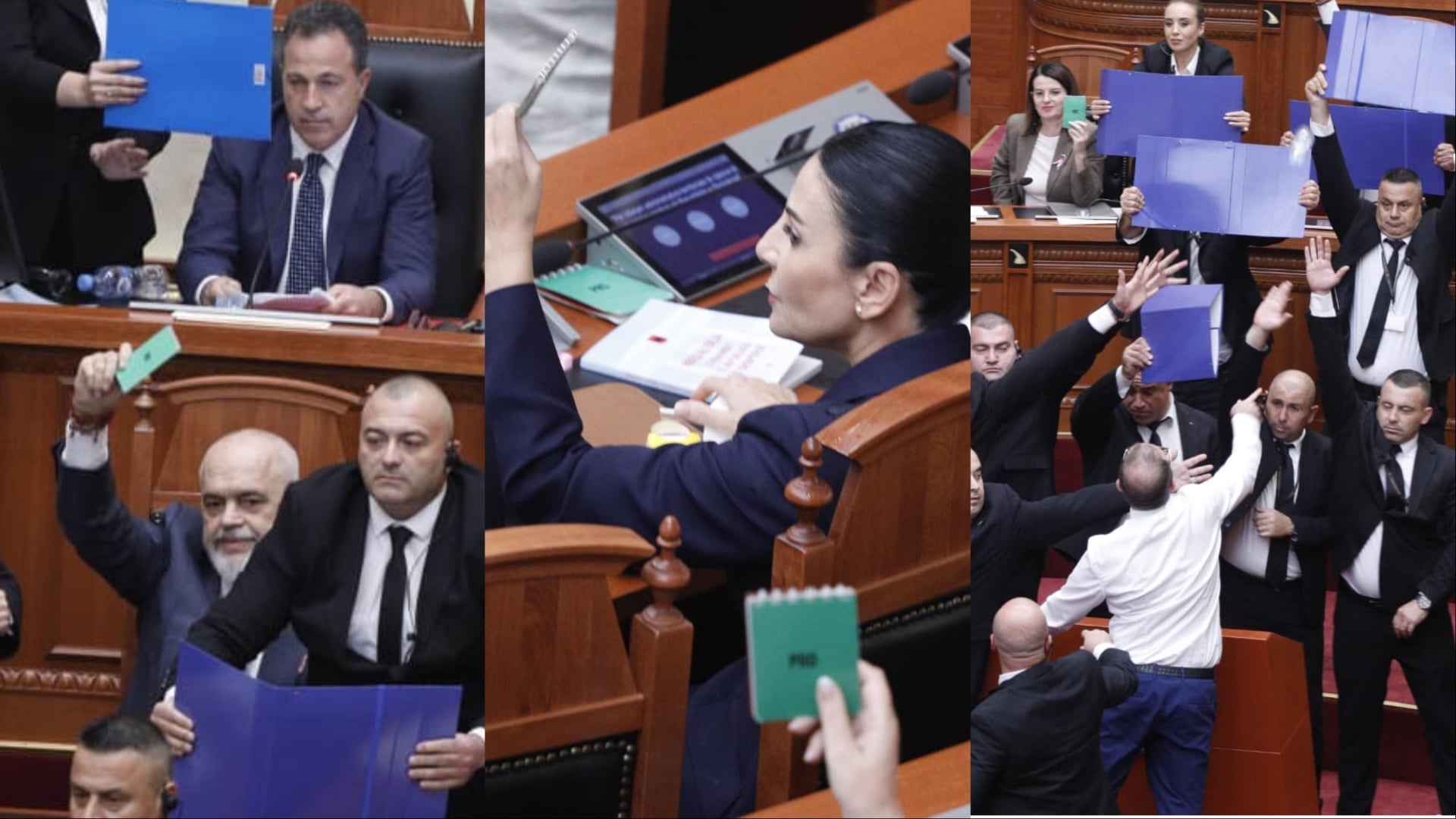
Clashes erupt at the end of the session
Just seconds before the vote on the administrative-territorial reform, Belinda Balluku arrived in the parliamentary chamber. She had been absent during the discussions together with Prime Minister Edi Rama and appeared only at the time of the vote.
Her presence was immediately accompanied by tension, in a chamber where relations between the opposition and the majority had reached their hottest point after long hours of debate.
Water at Balluku, bottles and eggs in the chamber
During the confrontation, Democratic Party lawmaker Gazment Bardhi threw water toward Balluku. At the same time, other opposition lawmakers hurled bottles toward Prime Minister Rama, while eggs were also thrown in the chamber.
The final images of the session highlighted a degraded parliamentary climate, at a moment when a measure with direct impact on the country’s local organization was being put to a vote.
Opposition against it: no consultation with citizens
The opposition’s objection was both political and procedural. According to it, the changes to the administrative-territorial division were drafted without consultation with citizens and without a process that would create public legitimacy.
Sali Berisha requested that the issue not be concluded only with the votes of the majority in Parliament, but be put to a referendum. This request was not reflected in the course of parliamentary decision-making.
Law passes after midnight with 85 votes in favor
Despite the incidents and the opposition’s objections, the majority approved the draft law shortly after midnight with 85 votes in favor.
With this vote, the way is opened for the country’s new territorial organization with 46 municipalities, a decision pushed through at the end of a marathon session that lasted around 14 hours.
The vote ended, but the way this reform was passed is expected to keep the debate open not only over the territorial map, but also over the standard of representation and public consultation in decisions of national importance.
Beyond the numerical result in the chamber, the latest clashes in Parliament once again raised the question of whether such reforms are being passed with social consensus or simply by the force of parliamentary numbers.