
Another unclear episode from the British administration has placed Albania at the center of debate. A Syrian family seeking asylum in the United Kingdom says it received a letter from the Home Office offering £3,000 to relocate to Albania, even though, according to them, none of them has ever been to that country. After the case was reported in the Scottish media, the Albanian Embassy in London categorically denied the existence of any such agreement.
The letter that raised doubts about how decisions are being made
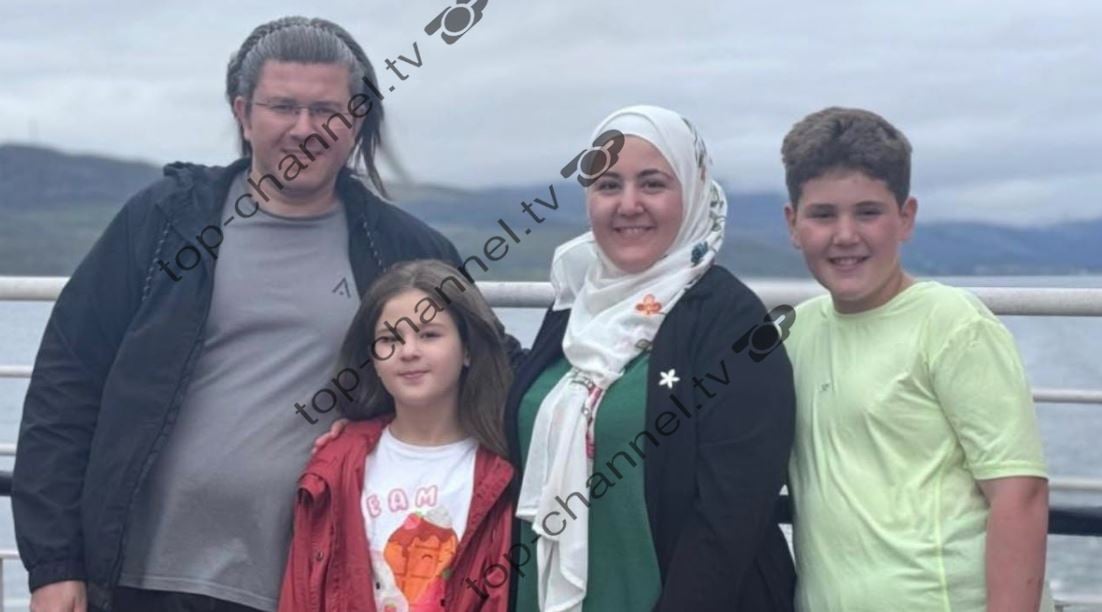
The case was reported by the Scottish newspaper The National, which wrote that the letter was addressed to Fadi Alsakka, a Syrian citizen who, together with his family, is seeking asylum in Britain. The document said the financial support “could help you shape your long-term future in Albania.”
Alsakka described such an error as unacceptable, arguing that it concerns decisions that directly affect the lives and future of families in asylum procedures. According to him, his family has no connection to Albania.
Suspicions over the use of AI and repeated administrative problems
Alsakka and his wife Lojain, who is pursuing a master’s degree in Artificial Intelligence at the University of Glasgow, raised suspicions that the use of automated technologies by the Home Office may have contributed to the error. However, The National reports that artificial intelligence was not used directly in drafting the letter that mentioned Albania.
The debate comes at a time when, according to reporting by The Independent, AI systems used by the Home Office to speed up decision-making had failed to meet accuracy standards in 22% of reviewed cases.
The family says this is not the first time it has faced administrative errors. According to their claims, the British authority had to resend identity cards six times, because in the first five cases their son’s face had been printed incorrectly.
Asylum refusal and the family’s objections
The issue does not stop with the letter mentioning Albania. The Syrian family is also appealing in court the Home Office decision rejecting its asylum application, with a hearing scheduled for early 2027.
According to Alsakka, the reasoning for the refusal also confused the chronology of an incident that took place in Syria. He claims the British authority referred to the year 2023, while, according to his version, the event occurred in 2025.
In the same document, according to The National, the family was advised not only to relocate to Albania, but also of the possibility of starting a new life in a Syrian city such as Aleppo. For Alsakka, both alternatives lead to the same result: removing the family from the life it has built in Scotland to places with which it has no real ties.
Reaction of the Albanian Embassy in London
After the case was published, Albania’s ambassador in London, Uran Ferizi, publicly disputed the claim that such a scheme exists between the two countries.
According to his statement, there is no basis for the published claims and there is no agreement between the United Kingdom and Albania for the acceptance of Syrian nationals or other non-Albanian nationals in the framework of voluntary return or relocation.
This reaction contradicts the version created by the Home Office letter, but leaves open the essential question: how did Albania’s name end up in an official document affecting a process as sensitive as asylum?
The case has highlighted not only serious inaccuracies in the administration of asylum files in Britain, but also the risk that such decisions could produce real consequences for families living in extreme uncertainty.
In this story, what appears clear so far is the mismatch between the contents of the letter from the British authorities and the official position of the Albanian state.