
Albania has deepened its dependence on imported grain, while the state mechanism that is supposed to guarantee its safety has been found to have worrying gaps. An audit by the State Supreme Audit raises serious questions about how the wheat and flour entering the Albanian market are being controlled.
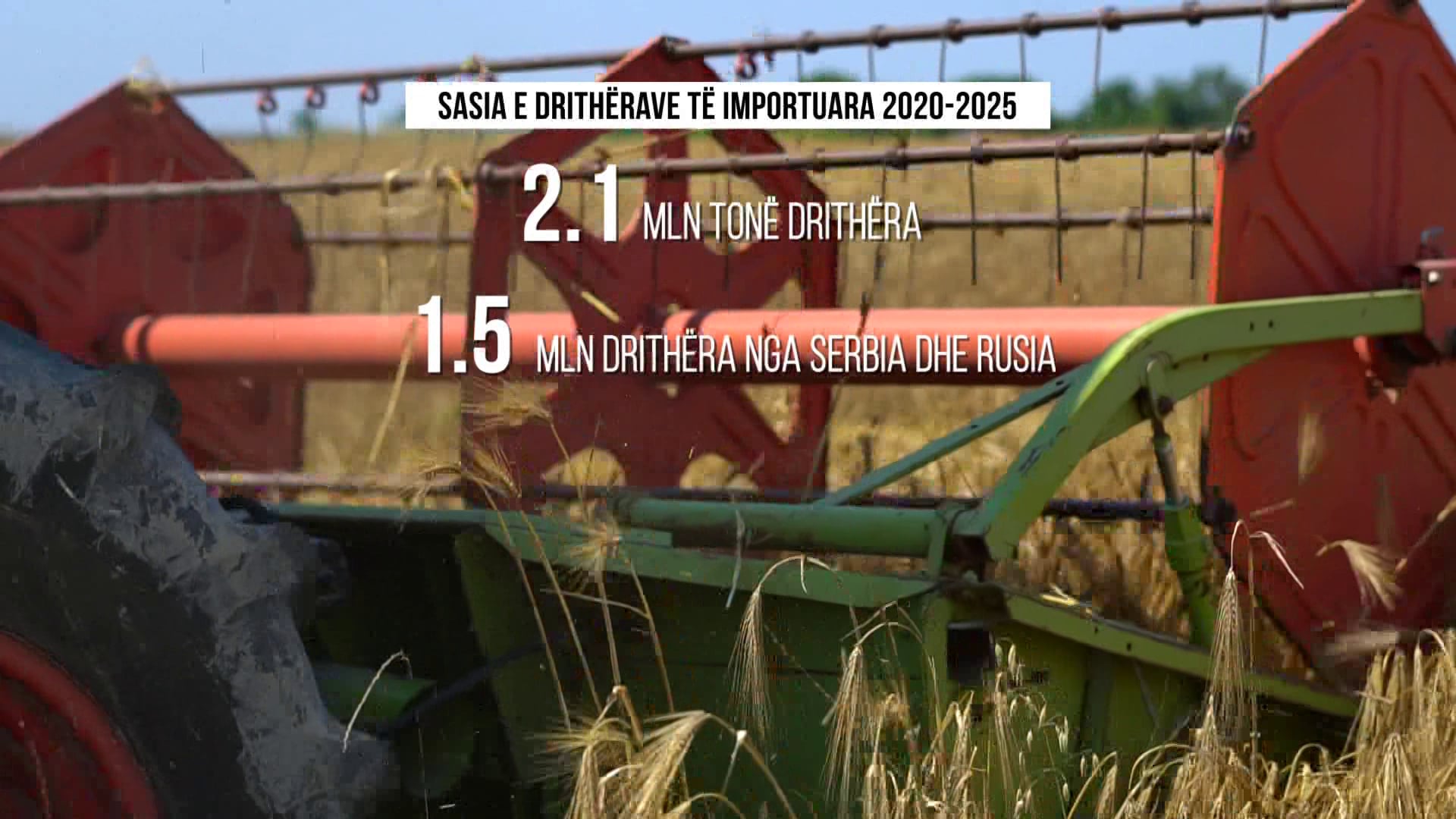
2.1 million tons of grain in five years, most of it from Serbia and Russia
According to data cited in the KLSH report, 2.1 million tons of grain entered Albania during the 2020-2025 period. Of this amount, 1.5 million tons originated from Serbia and Russia.
The figures show strong dependence on imports for a basic product in the food chain. In this situation, the burden of quality and safety control falls directly on state institutions that are supposed to filter every shipment at the border and in the laboratory.
Report: analyses remain limited and fail to capture the main risks
According to the audit, the laboratories of the National Food Authority do not analyze all the indicators necessary for food safety in grain. Controls focus mainly on basic parameters such as moisture and acidity, which provide only a partial picture of the real quality of wheat or flour.
The report stresses that more advanced analyses are lacking for chemical contaminants, pesticide residues, mycotoxins and heavy metals. These are precisely among the elements that directly affect the safety of the product that reaches the consumer.
Missing reagents and equipment out of service
The problem, according to KLSH, is not limited only to the narrow range of analyses. Even those checks that can be carried out are often hindered by a lack of reagents, malfunctioning equipment, or the absence of laboratory equipment itself.
The report identifies repeated interruptions in the carrying out of analyses and, in some cases, a complete inability to conduct microbiological tests. This means products may pass through important control stages without the full verification required by law.
Physical inspection in open ground and warehouses out of service
The shortcomings also extend to the Border Inspection Points, where, according to the report, the necessary infrastructure for effective physical control of grain is lacking. In the case of the Hani i Hotit Border Inspection Point, the audit found that there were three warehouses near the building, but they were out of service.
According to the KLSH findings, the warehouses at the Border Inspection Point were not available for storing products during the 2020-2025 period. As a result, physical inspection was carried out in open ground, while inspectors were forced to perform visual checks by climbing onto trucks and viewing the goods only from a limited position.
Risk of contamination and incomplete implementation of food safety
The lack of dedicated facilities creates another problem as well: products with issues or those awaiting analysis, according to the report, were in some cases handled in the same premises as other products, without physical separation and without special safety measures.
This finding raises serious doubts about how food safety is implemented in practice. As wheat imports increase and domestic production remains weak, the control system that is supposed to stop dangerous products at the border appears, according to the report, to be incomplete in laboratory work, storage, and physical inspection.
At its core, the report raises a clear alarm: for a basic commodity such as flour, the state claims control, but the real verification capacities appear far from the standard required by law.
When such large quantities of grain are imported and institutional filters operate with deficiencies, the issue does not remain merely technical. It directly affects the food safety of citizens.