
The Albanian Helsinki Committee has raised serious doubts about the way Erion Veliaj was transferred from Durrës to Fier, calling into question not only the reasoning behind the move but also respect for basic rights during pretrial detention. At the center of the concerns are a classified order citing the general motive of “security reasons,” the inability to contact family members, and delays in medical treatment.
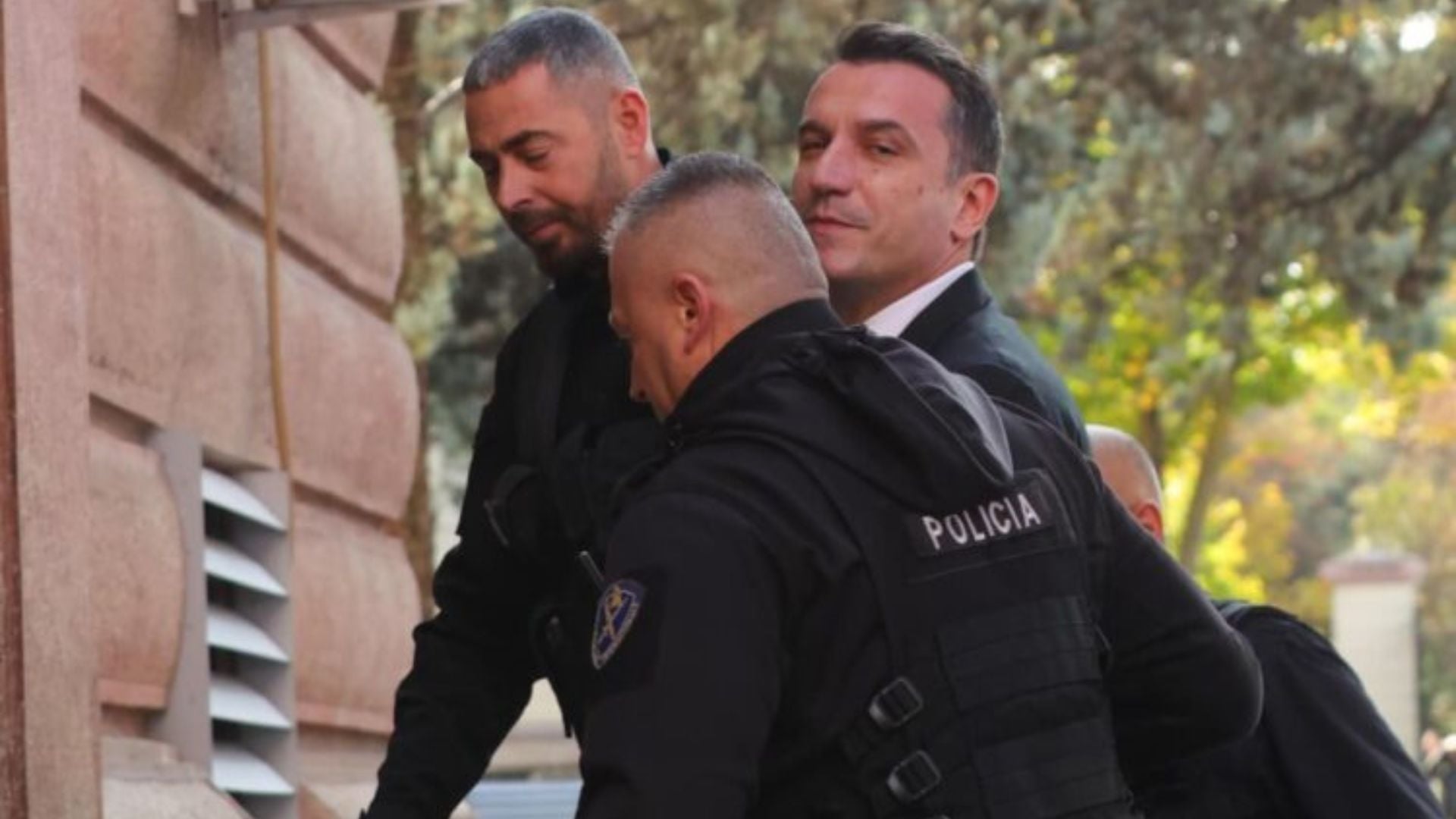
Monitoring at IEVP Fier and the main points of concern
In its published statement, the Albanian Helsinki Committee said that on October 30 it carried out a monitoring mission at IEVP Fier, where its representatives met Veliaj confidentially, inspected the premises, and held meetings with the institution’s management.
According to the committee, the verification process identified problems related to the transfer procedure, restrictions on communications with family members, missing medical documentation, and security conditions at the institution.
The transfer order, restricted for two years
One of the most sensitive issues concerns the transfer order itself. According to the Albanian Helsinki Committee, the monitor was able to review the document only for a limited time, while the reason for the move was recorded in general terms as being “for security reasons.” The order also carried the classification “restricted,” with a срок of up to two years.
The committee says that transfers for security reasons are provided for by law, but that this does not remove the obligation for the decision to be supported by concrete, documented, and verifiable circumstances. Under this position, the classification of an administrative act should not become an obstacle to understanding the essential reason for the decision and to exercising the right to appeal in court.
The organization also raises a broader question: whether the classification of this order has a clear legal basis, stressing that prison security and national security are not automatically the same thing.
Blocked phone calls and communication with family
According to the statement, two days after the transfer, Veliaj had been unable to make telephone calls to family members and other people he wanted to contact. The reason, according to the management of IEVP Fier, was the need to approve a new list of numbers and complete procedures with the company providing the service.
The Albanian Helsinki Committee considers this situation problematic, stressing that administrative or technical delays should not in practice result in restricting rights guaranteed by law. The organization is also seeking clarification as to why continuity of communications was not enabled through the numbers previously approved at IEVP Durrës.
The statement also addresses the issue of institutional contacts, as Veliaj has requested the possibility of communicating with representatives of state institutions and the administration of the Municipality of Tirana on matters related to his office. According to the committee, pretrial detention does not automatically mean the removal of every possibility to exercise powers that have not been restricted by law.
Missing medical documentation and cell conditions
During the monitoring visit, according to the Albanian Helsinki Committee, only Veliaj’s legal documentation had arrived at IEVP Fier, while his medical and psychosocial records had not yet been received. The organization views this not simply as a bureaucratic shortcoming, but as a problem that could directly affect continuity of treatment and protection of health.
Veliaj had stated that he had a fracture in his left leg and that he had not undergone the recommended radiological examination. According to the account relayed by prison officials, they were aware of the situation and intended to enable the examination during the following week.
The inspection also found that the cell where he had initially been placed had non-functioning windows. Veliaj also expressed concern about the presence in the same space of a person convicted of serious crimes. The institution’s management has said that measures have been taken to avoid contact and that no concrete risk to his life has been identified.
Requests to the Ministry of Justice and the prison authorities
In conclusion, the Albanian Helsinki Committee is asking the Ministry of Justice and the General Directorate of Prisons to clarify the legal basis for the transfer and the classification of the order, guarantee telephone communications, ensure the necessary health care, and reassess the security conditions.
The committee stresses that the concerns raised are not related to Veliaj’s guilt or innocence, but to respect for legal guarantees for every person deprived of liberty. The main message of the statement is direct: security cannot be used as a general formula to shut down transparency and oversight of legality.
The case has highlighted not only the treatment of a high-profile detainee, but also the gaps that can emerge when the prison administration acts on the basis of general arguments and documents closed to the public and to the affected person himself.
When a transfer order is covered by classification, phone calls are blocked, and the medical file remains in transit, the question is not only what happened to Veliaj, but how protected in practice are the rights that the law recognizes for every pretrial detainee.