
The political clash over the student protests and the violence reported on the ground was also openly on display in the Culture Committee, where the debate between the opposition and the Socialists quickly shifted from concern for the protesters to mutual accusations of political instrumentalization.
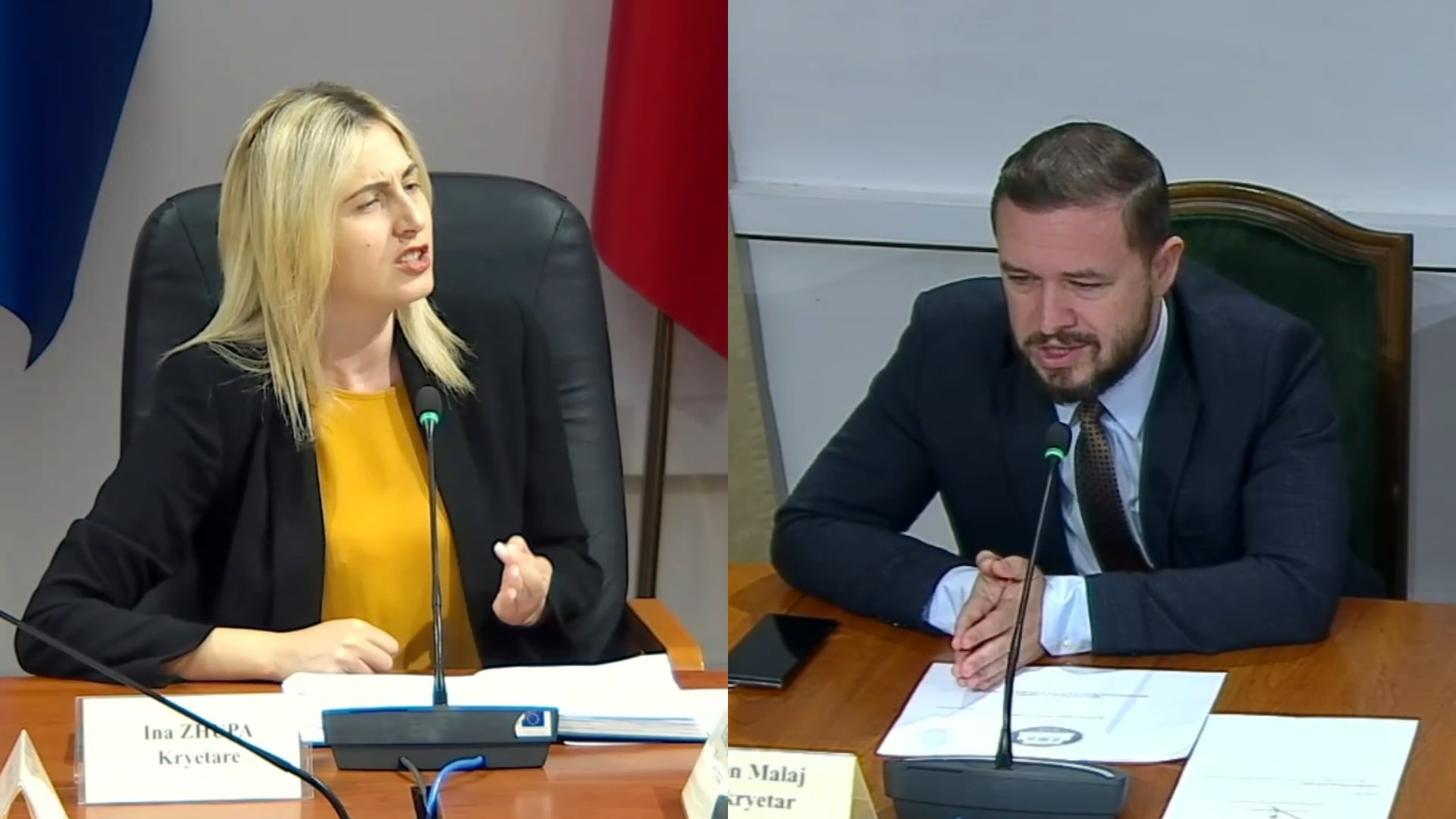
Zhupa calls for Rama’s resignation and a transitional government
PD lawmaker Ina Zhupa called for Prime Minister Edi Rama’s resignation and the establishment of a transitional government, linking that demand to what she said was the way the student protest has been handled.
In the committee, Zhupa said Rama “has lost his chance for dialogue” with the protesters, arguing that dialogue cannot be built under conditions of violence. She said the Democratic Party supports the student protest and does not seek to hold a monopoly over it.
Socialists accuse the opposition of hijacking the cause
On the other side, representatives of the majority strongly opposed that position, claiming that the opposition is trying to steer the student protest onto the tracks of its own political conflict with the government.
Committee deputy chair Erion Malaj accused the PD of having “stolen the cause” from the students and of bringing into the protest, according to him, a group unsuited to the nature of this movement. Along the same lines, he added that the protesters not only do not support the opposition, but do not want it near them either.
Arkend Balla also enters the debate
Socialist lawmaker Arkend Balla also intervened in the debate, referring to Saturday’s protest and claiming that PD representatives were driven away by protesters.
According to Balla, the opposition has tried to use the protest as a means of political pressure on the government. He said the government is not brought down through violence and shifted the debate to elections as the route for political confrontation.
From concern for students to a battle over the narrative
The debate in the committee showed once again that the clash over the protests is not playing out only in the streets, but also at the level of the political narrative: who speaks in the name of the students and who is trying to use them as cover for party interests.
In the absence of an in-depth institutional discussion of the claims about violence reported during the protests, the meeting was dominated by political accusations and by the race to control the public interpretation of what is happening.
This is precisely the essence of the latest clash: the opposition presents the student revolt as a sign that the government is exhausted, while the Socialists insist that the protest is being targeted for political hijacking.
Between these two positions, the main issues raised by the protests — including claims of violence and the relationship between institutions and the protesters — still remain without a convincing public response.