
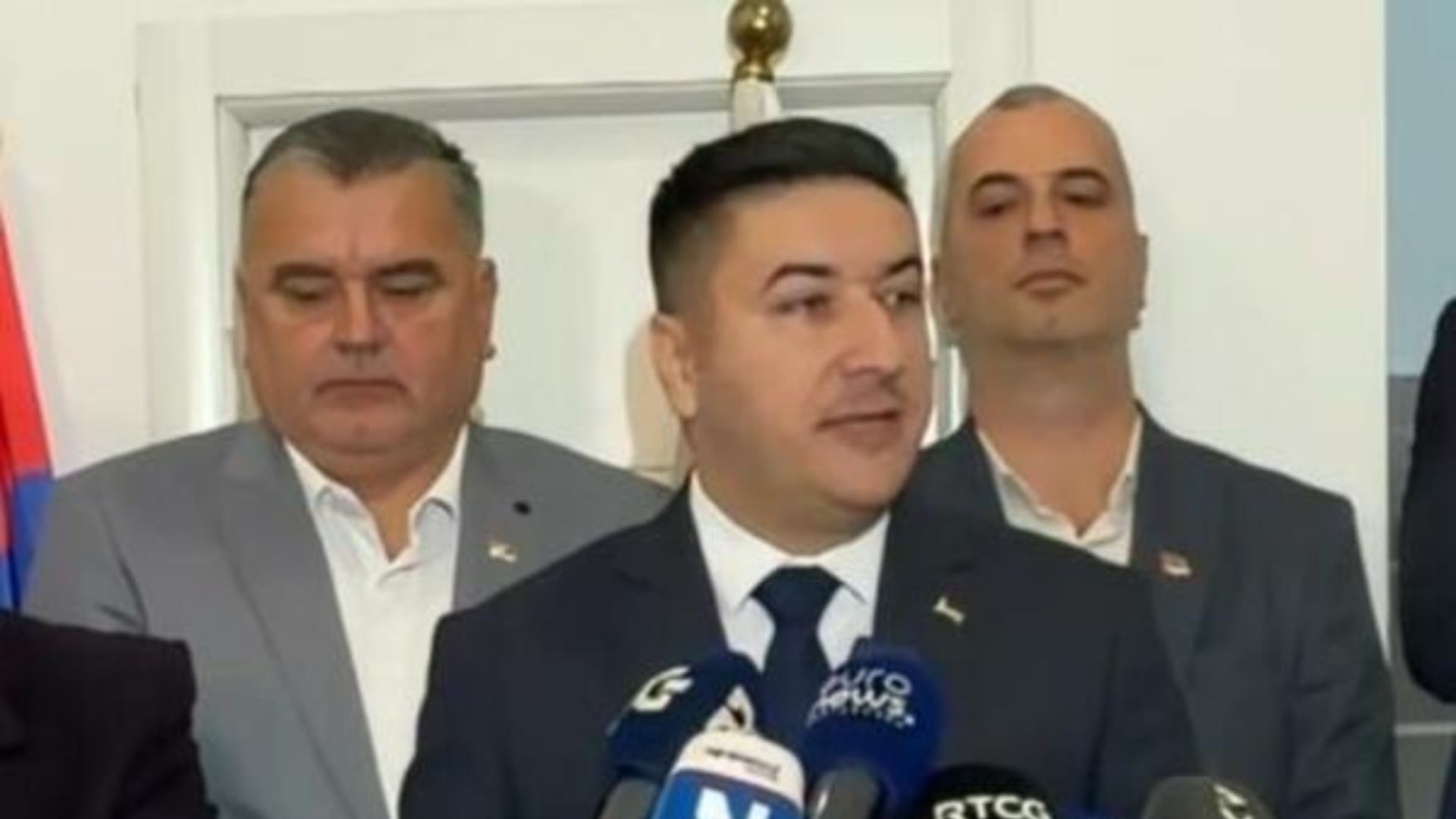
A statement by Montenegrin politician Vladislav Dajković has brought renewed attention to a sensitive case with nationalist and cross-border overtones. According to his version of events, he was sentenced by an Albanian court over a publication made years earlier in Shkodra, while he himself presents the proceedings as political rather than simply criminal.
What Dajković claims about the ruling
According to reporting by RTCG and statements by Dajković himself, the sentence is linked to a photograph taken six years ago in Shkodra with the Montenegrin tricolor flag, published with the caption: “Greetings to everyone from ancient Serbian Shkodra.”
He says the court found him guilty of the criminal offenses of inciting hatred and national division. According to him, the initial sentence was three years in prison, later reduced to one year because of personal circumstances and the absence of prior criminal convictions.
Allegations of political motivation and the role of institutions
Dajković claims that the reasoning of the ruling also includes information from the Albanian national service, in which he is described as a Serbian nationalist and a supporter of Greater Serbia ideas. He uses precisely this element to argue that the process, in his view, has a political background.
Along the same lines, he says he was assigned a court-appointed lawyer and was informed of the possibility of a suspended sentence only if he appeared in Shkodra. These are claims he has made publicly, while at this stage there appears to have been no public reaction from Albanian institutions regarding these specific allegations.
The content of the post and his defensive narrative
The Montenegrin politician insists that the post over which proceedings were brought contained no insult or threat to Albania’s sovereignty or to Albanian citizens. According to him, it is a matter of a historical interpretation, which he calls a known fact.
He also linked the publication to a family tradition, mentioning his great-grandfather Luka Šutov Dajković and an alleged historical role in Shkodra. However, his public defense goes beyond the legal issue and openly enters nationalist rhetoric, making the weight of the ruling and the way this process was handled even more sensitive.
He rejects surrender and announces an appeal
Dajković says he will not voluntarily surrender to the Albanian authorities. He states that he does not trust that he would be treated as a defendant in a normal proceeding and says he fears pretrial detention if he crosses the border.
In the end, he underlines that this is a first-instance ruling and that he will exercise his right to appeal. This means the case has not been definitively closed judicially, while the political statements surrounding it are expected to keep public debate alive.
The case once again raises questions about the boundary between freedom of expression, nationalist propaganda and incitement to hatred, especially when historical narratives affecting ethnic relations in the region are involved.
Equally important is the transparency of institutions regarding the reasoning behind such decisions, so that politically charged cases do not remain solely in the realm of one-sided versions.