
Food products are circulating on supermarket shelves without complete labeling or with information that leaves room for doubt, while enforcement of the law and oversight by the responsible institutions appear far from the standard required for consumer safety.
Products on sale with incomplete information
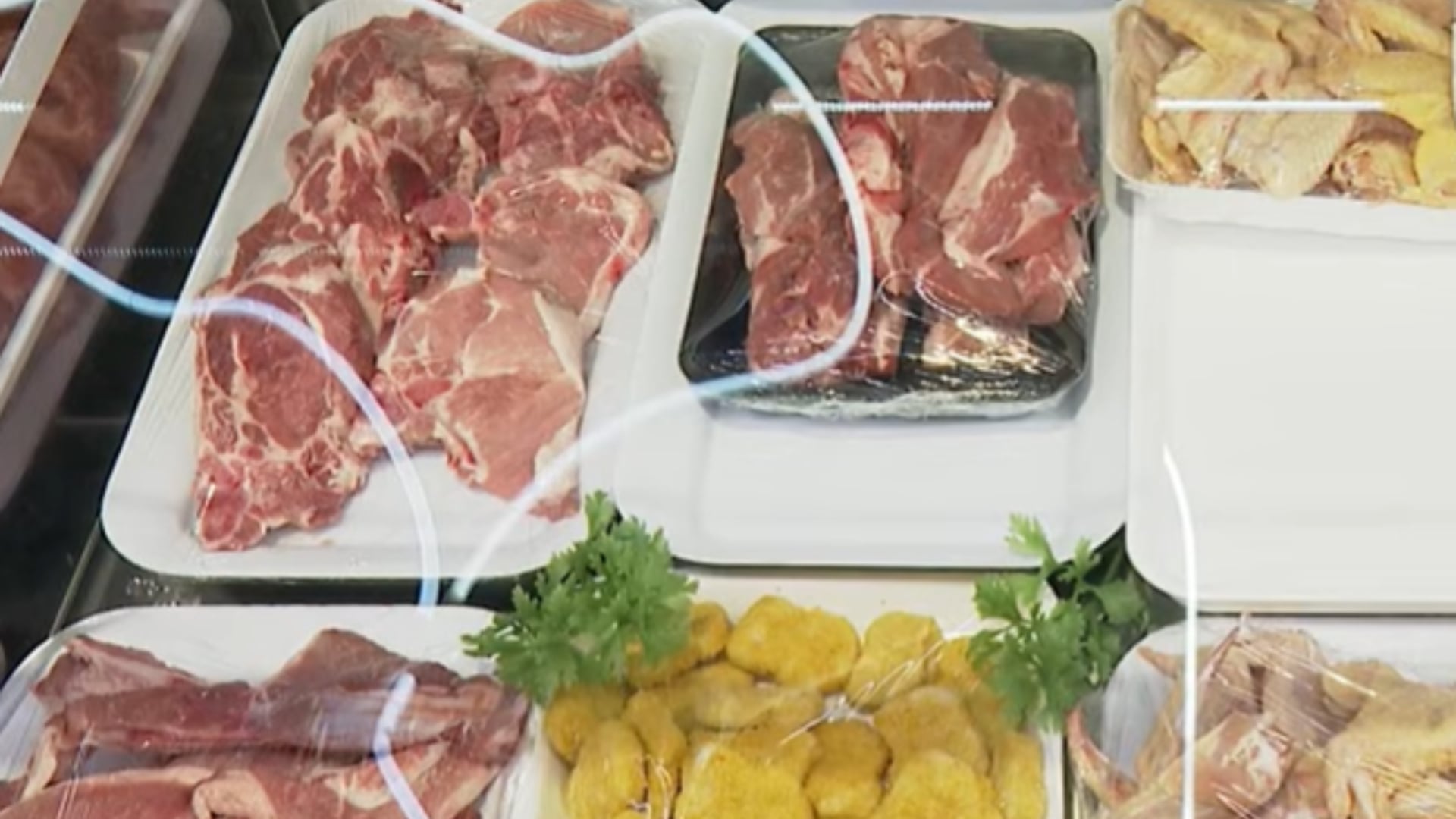
Observations at a supermarket in Tirana have highlighted food products, especially those of animal origin, being sold without informative labels or with only minimal data on their composition and characteristics.
In practice, the label should be the basic guarantee for the consumer: it should clearly show what is being bought, the ingredients, the nature of the product and the elements necessary for food safety. When these are missing, the burden of uncertainty falls on the citizen.
Experts raise the alarm over lack of transparency
Food safety expert Ana Vuksani has identified cases in products such as chicken meat where essential data beyond the general name is missing, making it impossible for the consumer to have real certainty about the product.
According to her, the problem is not limited only to the absence of a label. Even in cases where the product is composite, for example when ingredients of animal origin are combined with plant-based ingredients, this should be clearly reflected in the labeling. She has also raised concern about the inability to clearly understand the presence and quantity of palm oil in certain products.
The law provides for fines and criminal liability
Under the legal framework in force, the sale of products without proper labeling may be punished with administrative measures ranging from 100,000 to 300,000 lek. In certain cases, the legal consequences do not stop at a fine.
The legislation also provides for criminal liability for fraud involving food products, with sentences that can range from 3 to 10 years in prison. However, despite the tightening of the law, suspicious products continue to be found on the market.
A label that says one thing, the shelf another
The problem is linked not only to the lack of information, but also to the mismatch between what is presented to the buyer on the shelf and what is actually written on the packaging. There are products sold under one name in the display, while the product label gives a different description.
Also concerning is the case of fruit juices consumed by children. On the front of the packaging, the idea of a product being “100% fruit juice” may be promoted, while the information on the back gives a different picture, often in lettering so small that it is difficult for the average consumer to read.
Questions over the role of state oversight
The version presented in the denunciation raises strong questions about the effectiveness of inspections by the National Food Authority. If such products are found freely in the network of commercial outlets, then it remains to be clarified how well the inspection filter is actually functioning and how much the law is being enforced on the ground.
When violations are repeated on the shelves where thousands of citizens shop, the problem no longer appears to be an isolated case of traders, but an indicator of oversight that, at least from what is seen in the market, is not providing the guarantee the public expects.
For the consumer, the label is not a technical formality, but the minimum information they must receive before buying and consuming a product.
When this standard is compromised, responsibility does not rest only with the business selling the product, but directly affects the institutions tasked with controlling the market.