
A chronicle filled with dark satire and literary references has sharply attacked the way the Socialist Party assembly was presented, describing it not as a political forum but as a scene of tension, fear and internal calculations. At the center of the attack is Edi Rama, portrayed as a figure demanding obedience and punishment, while around him leaders and MPs appear depicted amid panic, servility and insecurity.
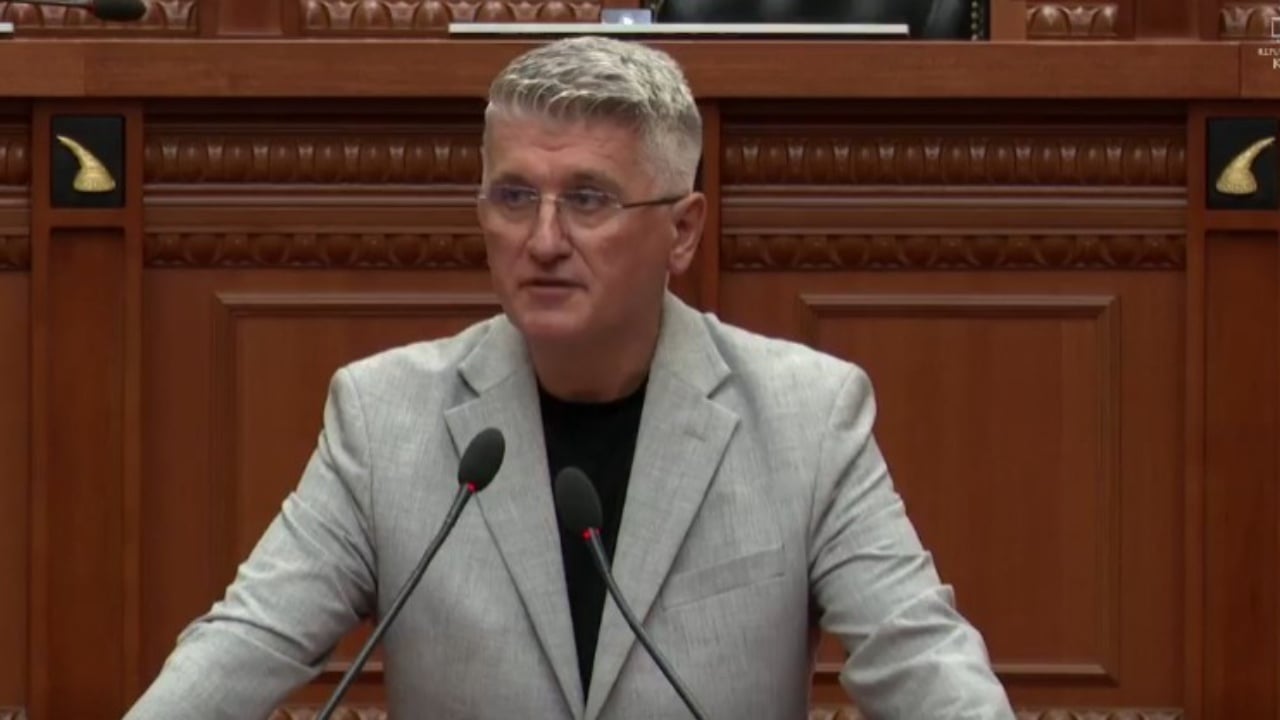
The assembly as a metaphor for a party closed in on itself
The piece turns the socialists’ meeting into a grotesque tableau, where participants are described as people moving between fear and the need to survive politically. The atmosphere is marked by dark imagery, where protests, egg attacks and the isolation of leading figures are used as a backdrop to underscore the internal crisis.
Instead of a normal political debate, the chronicle suggests an environment dominated by anxiety over individual fate and over one’s relationship with the leader. This shifts attention from public decision-making to the dramas of power within the party.
Rama at the center of the harshest portrayal
The prime minister’s figure repeatedly emerges as the axis of the entire event. He is described in sharply ironic language as an angry leader who speaks in punitive tones and demands accountability from those seen as disobedient or suspected of disloyalty.
This portrayal does not offer evidence or new factual developments, but provides a brutal reading of the political culture surrounding the majority: a structure in which fear of losing favor and political punishment appears to matter just as much as public debate itself.
The message about divisions and discontent within the SP
A strong part of the chronicle focuses on clashes involving certain figures within the socialists, hinting at discontent, criticism and attempts to avoid heading toward high-profile expulsions. In this narrative, some voices appear more critical, while others seem ready to preserve the balance at any cost.
The subtext is clear: behind the facade of political discipline, there is accumulated tension that erupts at times as personal conflict, at times as debate over power, and at times as a clash over control of the party.
A literary piece, but with a clear political charge
Although it uses artistic language, masked characters and mocking tones, the text has a direct political target. It aims to dismantle the image of a calm and controlled assembly and replace it with the idea of an organization consumed by fear, bargaining and rivalries.
This is precisely what makes the piece read not simply as political humor, but as a harsh commentary on how power is exercised in a party that governs the country. In this sense, satire serves more as a moral and political accusation than as entertainment.
Beyond the literary exaggerations, the message that emerges from this chronicle is clear: within the Socialist Party, a climate of distrust and submission is being projected, where the relationship with power appears to weigh more heavily than any principled debate.
And when a political assembly is described as a gathering of “dead souls,” the blow is aimed not only at certain individuals, but at the very way party leadership and control over it are conceived.