
EU Enlargement Commissioner Marta Kos delivered a direct message to Albania’s political class in Tirana: the concerns raised in recent protests cannot be ignored, especially when they touch on corruption, transparency and the environment. At the heart of her statement was a clear political warning: moving closer to the European Union is not measured by roadmaps on paper, but by institutions that function and laws that are actually enforced.
Protests entered the message on the negotiations
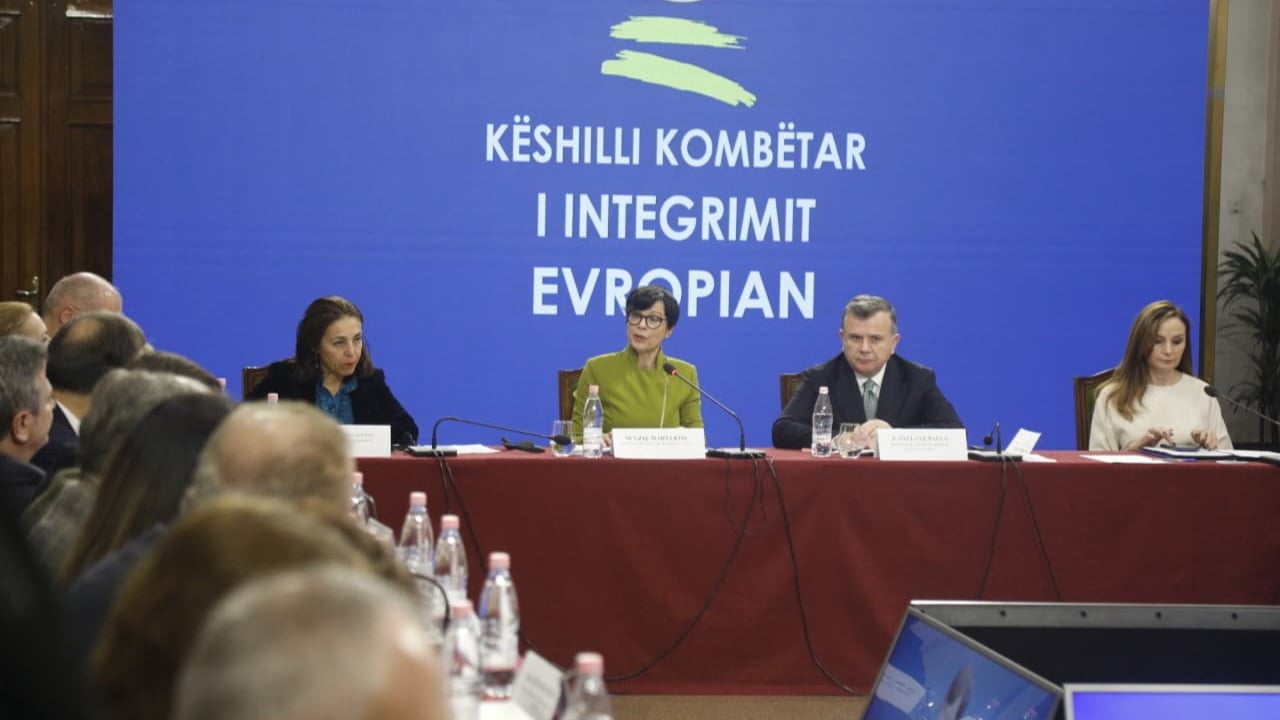
At the meeting of the National Council for European Integration, Kos repeated one of the concerns the European Commission has voiced before: the need to reduce polarization in parliamentary life and to listen to critical voices in society.
She said some of the issues raised in the recent protests are closely linked to accession negotiations, while others, according to her, require political dialogue within the country and should be addressed by Albanian politics, institutions and civil society.
According to Kos, citizens’ demands for action against corruption, greater transparency and better environmental protection can serve as an impetus to bring Albania closer to the EU, if they are taken seriously by institutions.
Between declared progress and the test of implementation
The commissioner said Albania has made visible progress over the past year on the path toward membership. However, she indicated that a political assessment is not enough without tangible results on the ground.
Kos described 2027 as a potentially decisive moment for Albania, but stressed that a roadmap published on paper is no guarantee. According to her, the closer the country gets to membership, the more important it becomes to prove that institutions function and that laws do not remain merely formal wording.
Corruption and people in power, the real test
In her statement, Kos clearly linked Albania’s progress toward the EU to results in the fight against corruption and organized crime, as well as alignment with the bloc’s environmental legislation.
According to the version she presented, for EU member states the main weight will fall on implementation and concrete action. A decisive test, she stressed, will be the way Albanian authorities respond to investigations, including cases in which people in power must also be held accountable.
The three political conditions Brussels expects to see
Kos listed three directions that, according to her, could make 2027 “Albania’s year”: continuing reforms with real enforcement of the law, broadening participation in the legislative process, and addressing political differences through democratic dialogue.
She called for groups affected by legal changes to have the opportunity to influence their drafting and underlined that EU membership remains a project requiring broader political and social inclusion, not only institutional rhetoric.
In the end, the commissioner stressed that she will work to help Albania meet the required conditions, but her main message remained this: the real test will be made on the functioning of the state, not on political statements.
Kos’s statement once again shifts attention to the point where the integration process collides with Albania’s internal reality: corruption, political polarization and the credibility of institutions.
Beyond the diplomatic tone, the message was clear that the demands emerging from protests and public pressure are no longer being treated as background noise, but as part of the test Albania must pass before the EU.