
The handling of citizens’ complaints and delays in public services became the most debated issue in the Committee on Citizen Initiatives, Cooperation and Institutional Oversight. The discussion presented a troubling picture: repeated complaints, institutions dragging out responses, and a mechanism that, even according to the questions raised in the committee, often seems to produce only case management, not solutions.
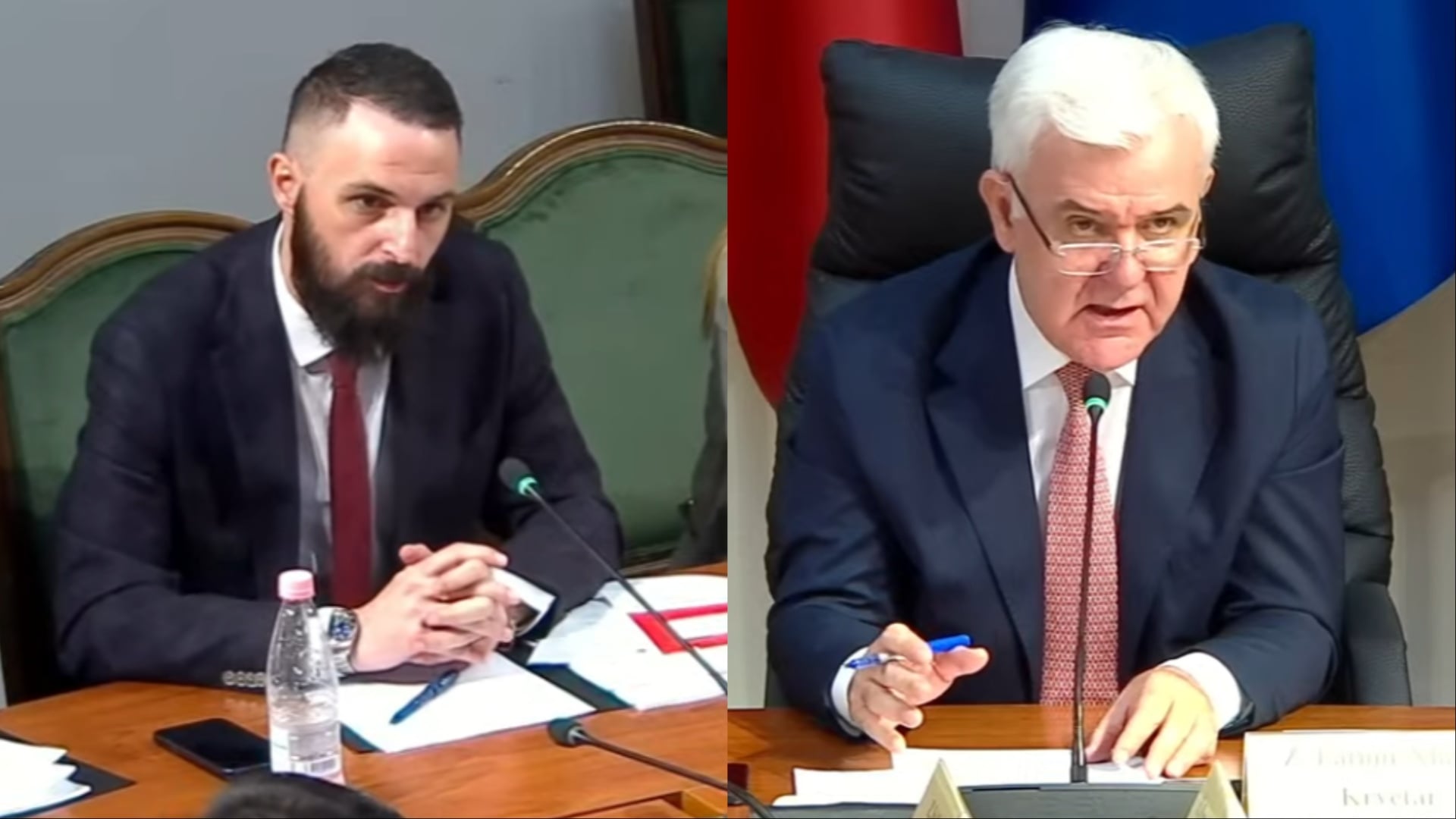
Xhafaj sought accountability for repeated complaints
The head of the committee, Fatmir Xhafaj, asked the director of the Agency for Dialogue and Co-Governance, Angelo Koleka, to clarify how far institutions actually manage to provide not just responses, but solutions for citizens who file complaints.
Xhafaj raised questions about cases in which the same complaint returns several times without a final resolution. He also gave a concrete example of noise from a bar in a residential building, where, according to him, intervention has taken place several times, but the problem has resurfaced again.
The message of the debate was clear: the concern is not only about reading or registering requests, but about the lack of a mechanism that gives citizens confidence that their issue is genuinely closed. This highlights doubts over the effectiveness of the links in the chain that are supposed to bear responsibility on the ground.
The agency lists the institutions with the most problems
According to the head of the agency, the biggest problems are linked to ASHK, the civil registry, healthcare and municipalities. He also mentioned issues affecting taxes, the privatization of agricultural land, the allocation of earthquake funds and cases related to the IKMT.
In the explanation given to the committee, part of the difficulties were linked to a lack of coordination in IT systems for delayed services. It was also acknowledged that there are continuing problems in relation to municipalities, including cases where permits are issued and demolition is later requested, or where procedures are blocked by delays in official correspondence.
This picture shows that the institutional chain remains fragmented: an agency that collects complaints, but whose final resolution depends on other institutions, precisely those that also emerge as the most problematic.
Responses within 10 days, but resolution remains the main issue
According to the version presented by Koleka, the agency provides responses within 10 days for complaints, while some cases require more time when additional complaints are opened on the same issue. For complaints related to notaries, the deadline goes up to six months, according to the law.
As for corruption reports, he said the cases are forwarded to the relevant ministry or directorate and the agency is then informed of the outcome. This is precisely where one of the problems implied in the debate lies: the process once again passes into the hands of the institutions that are the subject of the complaint, raising doubts over how independent and how effective the verification is.
On the other hand, Koleka stated that for the integration framework there are no outstanding requests and that the agency has no incomplete bylaws.
The online platform and the unclear role in relation to MPs
The meeting also touched on the issue of reporting MPs’ meetings with citizens. MP Gjin Gjoni asked whether these meetings are reported to the agency, but Koleka replied that this is not within his competence and that none of the MPs had come to report.
He also said that “Pasqyra Albania” will be an online platform, while regarding e-Albania he stated that by December the aim is to monitor more than 2,000 services, with more than 400 of them fully monitored.
However, even in this part, the debate left behind one essential question: what value is there in adding platforms and monitoring systems if citizens continue to face the same institutions that delay, repeat procedures or fail to provide final solutions.
At the end of the discussion, the agency’s director listed the Cadastre, the Property Treatment Agency, healthcare and civil registry offices as the sectors requiring special attention, where, according to him, citizens face major delays, especially for old certificates.
The debate in the committee highlighted a problem that has been repeated for years in the administration: institutions that report deadlines and procedures, but in practice fail to provide citizens with a sustainable solution.