
After the house arrest measure was imposed on SHISH director Vlora Hyseni, Prime Minister Edi Rama came out with a political defense of the governing majority, rejecting the reading that investigations into senior officials automatically constitute responsibility for the majority.
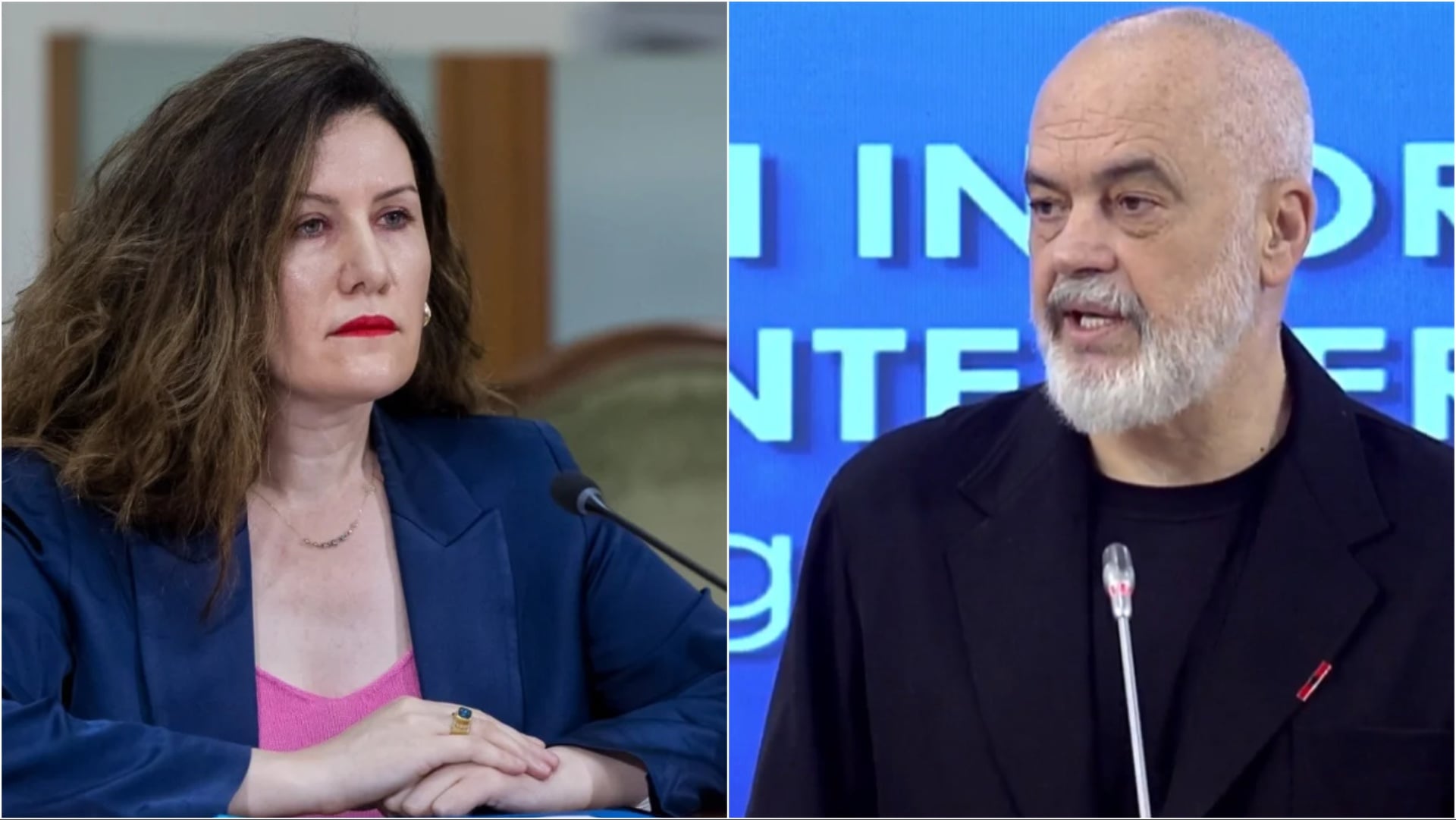
Rama’s reaction after the measure against Hyseni
According to the version made public by the prime minister, the actions of justice bodies toward public officials should not be interpreted as an “indictment” against the majority in power.
Rama reacted immediately after the house arrest measure against Vlora Hyseni, placing the emphasis on the separation between individual responsibility and the political cost that such a case could bring to the government.
The claim of independent justice
The prime minister said that investigations and justice measures are an expression of the independence of institutions and of the principle of equality before the law.
In his statement, Rama argued that they cannot at the same time be considered proof that justice is functioning and a political blow against the majority that, according to him, paved the way for this independence.
Responsibility, according to Rama, remains individual
Rama insisted that the guilt or innocence of an official or associate placed under accusation is a matter that belongs only to the relationship of the individual with the prosecution and the court.
With this line, the head of government sought to keep the majority away from any political identification with the case, even though the case affects a name at the head of an institution with significant state weight.
Message on the investigation and public judgment
Rama declared that he expects any suspicion by the prosecution body against Hyseni to be investigated and fully clarified through the court process.
At the same time, he criticized the public judgment of people under investigation before a final court decision, repeating the principle that no one is above the law, but also that everyone is considered innocent until the end of the process.
The prime minister’s statement comes at a moment when cases affecting senior officials produce not only individual criminal consequences, but also strong debate over the political responsibility of the government.
That is precisely where the clash is also focused: on the boundary between a criminal investigation into an individual and the public cost that remains with the power that appointed or supported that figure.