
Erion Veliaj has openly come out against the way the new territorial reform is being pushed forward and has asked Parliament to suspend the final review of the draft law. In the letter sent to the institutions, he does not reject revising the map in principle, but questions the procedure, the legal basis and the fact that citizens are being called on to give an opinion after the scheme appears to have already been drafted.
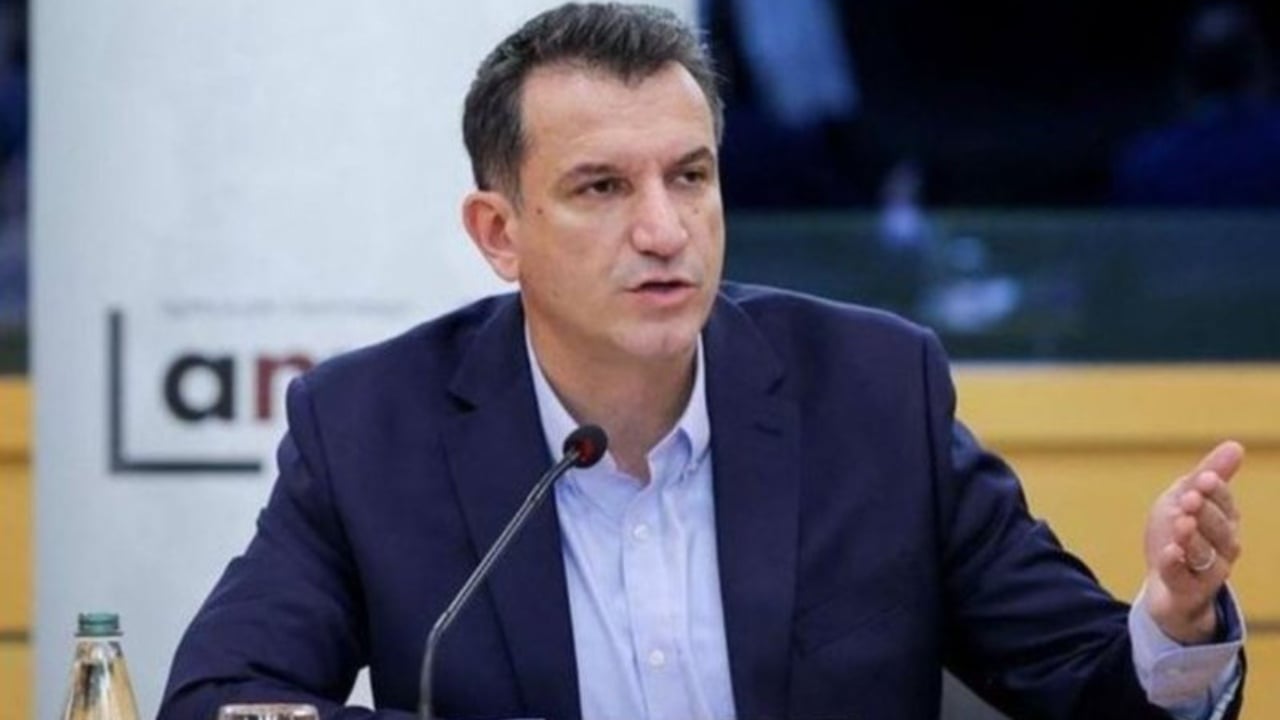
Main demand: stop the process until real consultation
At the center of the Tirana mayor’s request is the suspension of the continuation of the draft law’s final review until a consultation is held that, according to him, must be real, prior, effective and documented. According to the position presented in the letter, consultation cannot be used as a formal stamp on a solution already closed beforehand.
Veliaj asks for the consultation methodology to be made public, along with the information made available to citizens, participation, the positions expressed and the way those positions were reflected in the draft law, or why they were left out. In essence, he raises the suspicion that the procedure is moving backward: first the map, then hearing the population.
Conflict with the law and questions over the new model
The letter also challenges the architecture envisaged by the draft law, which according to the official proposal would take the country from 61 to 46 municipalities and change the way they are organized. Veliaj argues that there are inconsistencies between the draft law and the current law on local self-government, especially regarding the status of the “city,” the administrative hierarchy and the way representation is handled.
According to him, a reform that changes at the same time the territory, the internal structure of municipalities and the principle of representation cannot be left half unclear, with essential elements postponed to be regulated later. On this point, he calls for the draft law to be harmonized with Law No. 139/2015 and for clarification of the provisions on the transitional period, competences, financing, services and the administration of assets and liabilities.
Rinas, the concrete point where Tirana seeks a full balance sheet
One of the most concrete issues in the letter concerns the inclusion of the administrative unit of Rinas in the territory of the Municipality of Tirana. For this change, Veliaj requests a specific territorial, demographic, administrative and financial assessment before the Municipality of Tirana gives a full position.
The request includes data on the affected population and territory, the competences and services that would be transferred, assets, liabilities, personnel, revenues, expenditures, territorial planning and the continuity of public services. These are precisely the points where administrative reforms are usually presented as technical, while the real cost and the impact on citizens emerge later.
Representation, the vote and the limits of competences
Veliaj also raises concerns about the way the draft law treats the proportional representation of the constituent cities according to population. According to him, if the “city” becomes the unit of reference for political representation in municipalities, then the legal and electoral mechanism must be clarified in advance: how equality of the vote is preserved, how villages and administrative units are represented and what consequences this has for elected bodies.
Along the same lines, he asks for it to be clearly defined that municipal councils cannot use their powers for internal reorganization as a route to change the external boundaries of municipalities or to transfer territory from one municipality to another. According to the argument presented, any such move must go through a specific legal procedure and not through broad administrative interpretations.
Tirana’s institutional issue is also included in the letter
The document also includes an element of political and institutional weight for the Municipality of Tirana. Veliaj claims that the process requested by Parliament simultaneously provides for the mayor’s opinion, the position of the Municipal Council and consultation of the population, but that this chain cannot function normally as long as, according to him, the full exercise of the mayor’s mandate has been obstructed and the request for participation has been refused by SPAK.
In this part, he argues that the consequence does not affect only the figure of the mayor, but also the completeness of the Municipality’s institutional position and the very process of gathering citizens’ views. This turns the debate from a matter of maps into a broader clash over the way institutions are intervening in one another’s competences.
Veliaj’s position is not presented as a categorical rejection of territorial reform, but as opposition to the way it is being taken toward a vote. The essence of his request is that the new boundaries should not be approved without a process that proves citizens were heard beforehand and not after the decision-making has been packaged.
Whether Parliament will treat this as a procedural objection or as a signal of a deeper constitutional problem remains the decisive part of the clash now opening around the new administrative-territorial map.