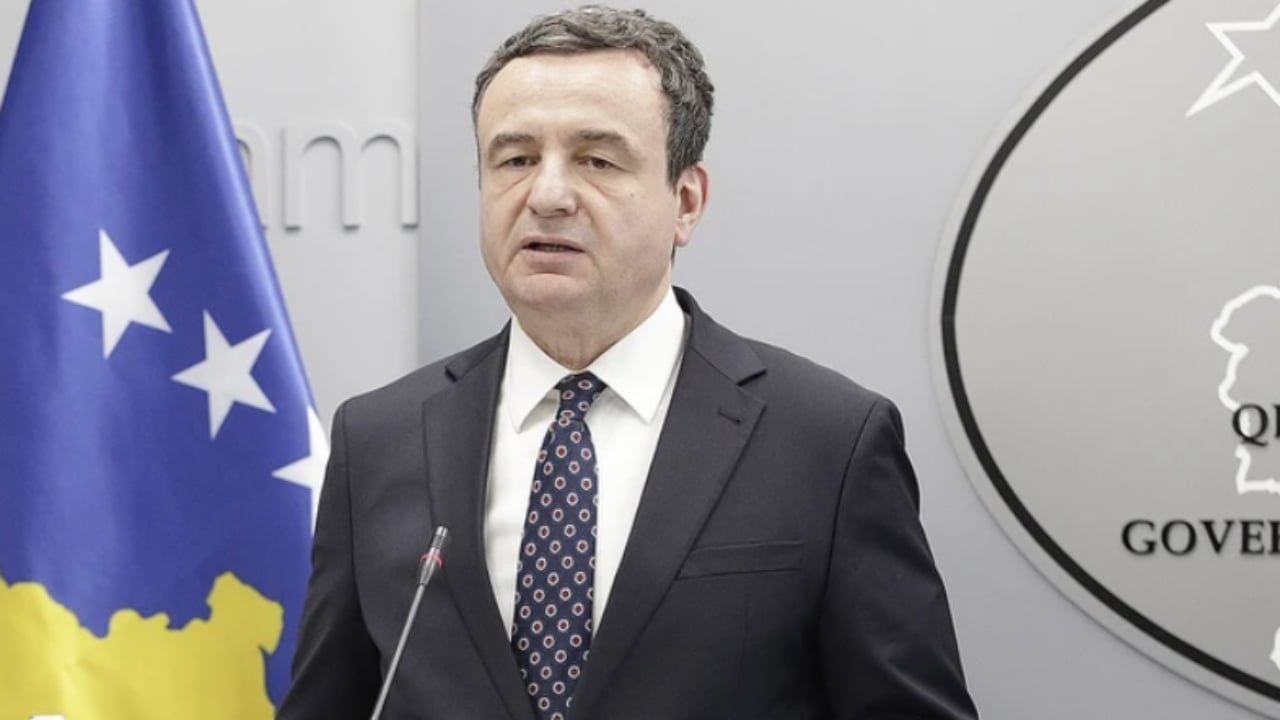
Kosovo Prime Minister Albin Kurti is stepping up political pressure on Brussels to move Kosovo’s application out of formal waiting and turn it into a concrete decision: candidate country status in the European Union. The request was articulated during the visit of European Commission President Ursula von der Leyen to the region.
Pristina seeks a clear step from the EU
Kurti said Kosovo expects its results in the process of moving closer to the EU to be translated into a measurable political step, specifically the granting of candidate status.
Kosovo has applied for membership in the European Union since December 2022, but the application has still not moved to the candidate status stage. In documents of Kosovo’s institutions, this status is seen as the step that would open the way for preparations for accession talks.
Kurti’s claim: criteria met and full alignment
According to the version presented by Kurti, Kosovo has made progress on reforms related to the European process and is 100% aligned with the EU’s foreign and security policy, including sanctions against Russia.
Kurti argued that, on the basis of merit, Kosovo meets the criteria both for candidate country status and for the opening of accession negotiations, while asking for von der Leyen’s support to push the issue forward in European institutions.
A formal opinion from Brussels is also being sought
Another request presented by Kosovo’s prime minister concerns the issuance of an EU opinion on Kosovo’s application. He has maintained that gradual rapprochement with the European Union should function as part of the path toward full membership and not as a substitute for it.
This insistence comes at a time when the enlargement process in the region continues to move at uneven speeds and with political filters that often go beyond the rhetoric of merit.
Reforms and the gap between statements and assessments
Kurti also mentioned the implementation of the reform agenda within the framework of the Growth Plan for the Western Balkans. But assessments that have circulated from within the European Commission show a more restrained picture than the one presented publicly.
According to an internal European Commission analysis reported by POLITICO, Kosovo has fulfilled about 24% to 26% of its commitments under this plan. This report creates a clear contrast with the elevated tone of political statements about meeting criteria.
The movement of goods is also on the table
Beyond candidate status, Kurti also raised the issue of easing the movement of goods, seeking Kosovo’s membership in the Convention on Common Transit.
According to Pristina’s request, this would make commercial transport between Kosovo and EU countries faster and less costly, at a time when economic integration is being presented as part of the political package of rapprochement with the Union.
Von der Leyen’s visit to the Western Balkans includes Albania, Kosovo, Montenegro and North Macedonia, with a focus on the next steps in European integration and the implementation of reforms.
For Kosovo, the new political demand is clear: no longer just assessments and waiting, but a concrete decision by the EU on candidate status.