
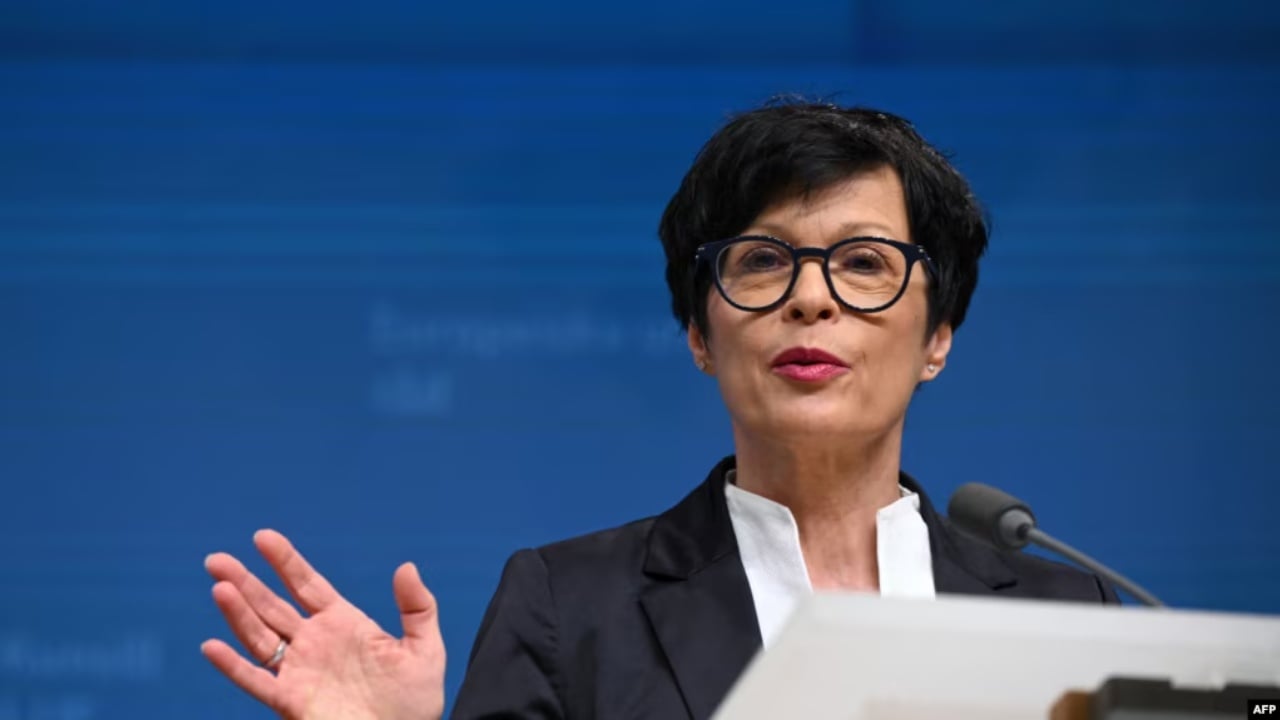
Albania and other candidate countries will be judged through two main filters in the process of joining the European Union. That was the message delivered by Enlargement Commissioner Marta Kos, who in a public video message listed the priorities that, according to her, will weigh in the new phase of enlargement.
The two criteria Kos places at the center
According to Marta Kos, the two basic conditions for countries seeking membership are progress on the required reforms and strategic alignment with the European Union.
Her message suggests that the process will not be measured only by the formal pace of negotiations, but also by the political and institutional positioning of candidate countries toward the EU line.
Brussels speaks of a new pace in enlargement
In the video message published on the social network X, Kos said that more progress has been made on enlargement in the past two years than in the previous two decades, according to her assessment and that of the member states.
She added that some candidate countries could close their accession negotiations by the end of this decade, an optimistic political signal that remains to be tested in practice by the real pace of reforms and decision-making within the Union itself.
The EU is also looking at itself ahead of enlargement
Beyond the demands placed on candidate countries, Kos also spoke about the need for the European Union itself to prepare for a larger union. According to her, this means examining the impact of new members on citizens, businesses and farmers in the EU.
She also mentioned internal reforms within the Union, such as reducing the areas where a single state can block others with a veto, increasing institutional efficiency, and ideas such as a rotation system to reduce the number of commissioners.
The rule of law and funding remain pressure levers
Another point emphasized by the commissioner concerns respect for democratic values and the rule of law by states seeking membership. According to the version she presented, safeguard mechanisms are being proposed to make it easier to respond in cases of breaches of commitments.
These measures could include, if considered necessary, funding cuts or the suspension of certain rights. This shows that enlargement is being presented not only as a technical process, but also as an instrument of political and institutional pressure.
From an ‘all or nothing’ logic to gradual integration
Kos said the EU aims to move away from the ‘all or nothing’ approach to enlargement. According to her, countries that fulfill the reforms can be integrated into certain parts of the Union even before full membership.
In this context, she mentioned expanding the freedoms of the single market and removing barriers between member states and those waiting to join. Brussels’ political message is that the choices being made today on security, energy, critical raw materials and artificial intelligence will carry long-term weight for the future of the continent.
For Albania, the commissioner’s statement brings the focus back to two elements that Brussels considers decisive: concrete reforms and strategic alignment with the EU.
It remains to be seen how much of this new pace declared at the political level will be translated into real steps, both for the candidate countries and for the European Union itself.