
Sali Berisha has issued a direct call for political mobilization, urging Democratic Party supporters and citizens in the districts to join in Tirana as part of what he presents as civil disobedience. In his statement, the opposition leader escalated his tone toward the government and called for Prime Minister Edi Rama’s resignation.
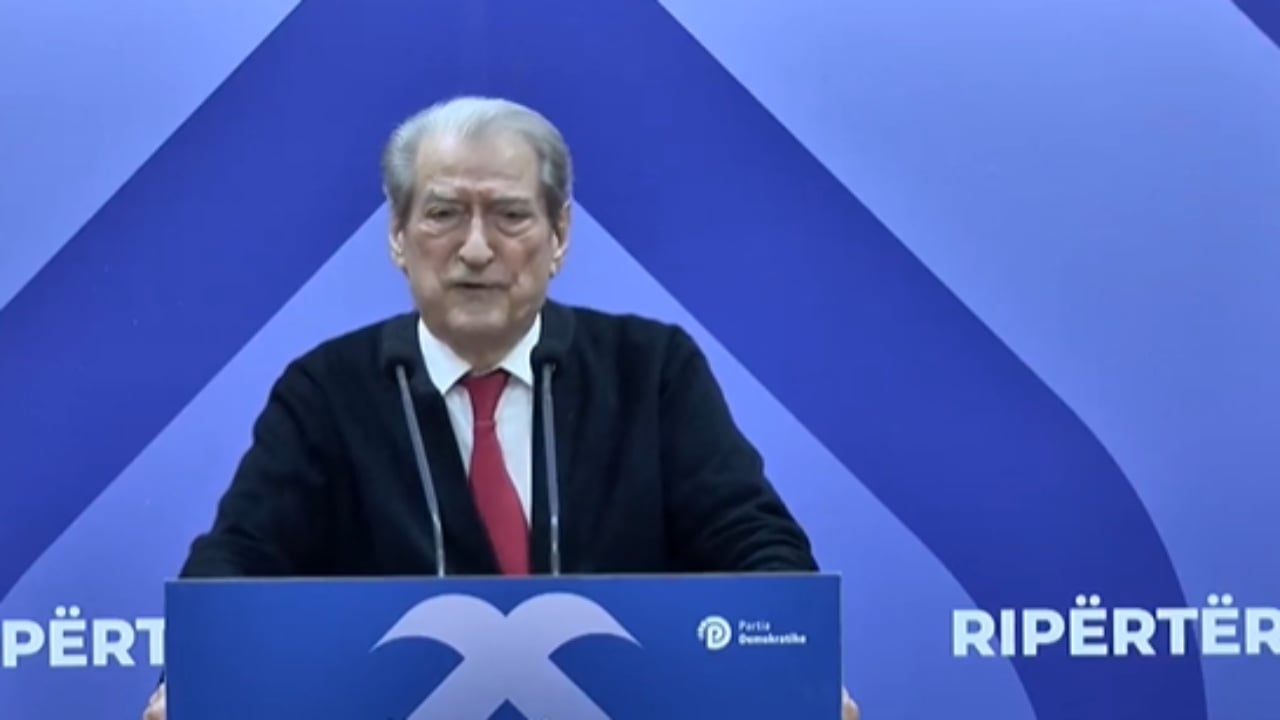
Call for mobilization in the capital
In his statement to the media, Berisha called on Democrats and citizens outside Tirana to move toward the capital. According to him, the gathering in Tirana will serve as the political moment when, in the opposition’s version, victory over the government will be sealed.
He used strong political language, presenting civic participation as an act of punishment against the ruling majority. The rhetoric places the confrontation at a high political level, at a time when the opposition is seeking to turn protest into an instrument of public pressure.
Civil disobedience as a political message
Berisha described civil disobedience as valuable support for students and high school pupils, whom he called “true heroes.” This positioning seeks to link the opposition’s call to broader social discontent, although no further details were given in the public statement about the concrete form this civil disobedience would take.
In practice, the use of this term in Albanian political discourse is usually associated with an escalation of opposition action and with efforts to raise the public and political cost for the government.
Attacks on the government and call for resignation
In the same statement, the PD leader asked Prime Minister Edi Rama to resign. According to Berisha, Rama’s departure would pave the way for a solution that he considers worthy of a member state of the European Union.
Accusations and strong labels directed at the government were central to his message, but the statement remains a political position of the opposition and not a formalized institutional development.
What this opposition move signals
The call to “flood” toward Tirana signals the opposition’s effort to test its capacity for mobilization on the ground. Beyond the heated language, the real weight of this call will be measured by public participation and by how it is translated into concrete action.
At this stage, Berisha’s statement serves as a clear signal that the opposition is trying to raise political tension and shift the confrontation from parliamentary rhetoric to pressure in the streets.
Berisha has presented this call as a decisive moment for opposition action, while his demand for the prime minister’s resignation takes the message to a level of open political confrontation.
It remains to be seen whether this rhetoric will be followed by significant mobilization on the ground or remain another political call in the usual climate of confrontation between the opposition and the government.