
Prime Minister Edi Rama appeared before the media with a long list of people arrested during the protest, claiming they “are not students” and that they were used for violence. Beyond the harsh political tone, the statement left the central issue unresolved: how many of these accusations are backed by verifiable documents, and how many are being used to delegitimize the entire protest?
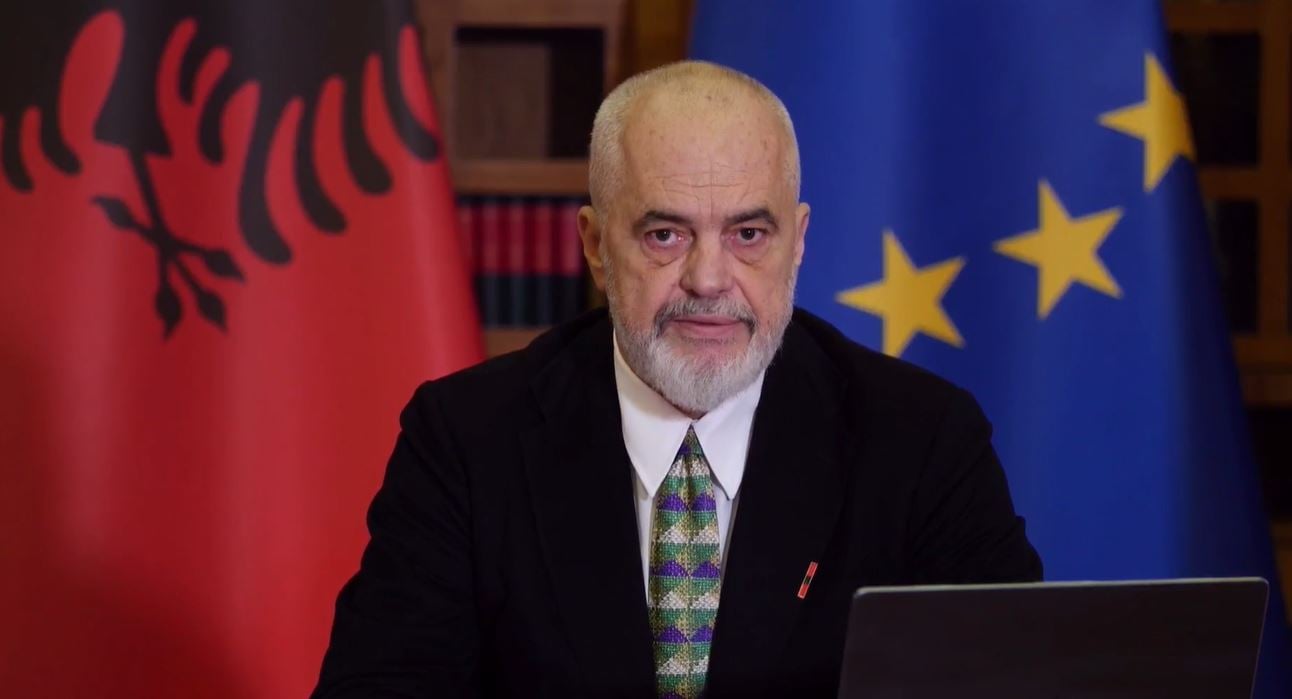
The list was read out publicly with initials, ages and accusations
In his statement, Rama published a list with the initials and ages of those arrested, while for each person he also read out criminal offenses or previous records that, according to the official version, appear in their past.
The prime minister insisted several times that the detainees have no connection to the university and do not represent students. In some cases, he used irony with the term “student” in quotation marks, presenting those arrested as elements foreign to the student protest.
Serious allegations, but without full public transparency
While reading the list, Rama mentioned a wide range of accusations and previous convictions, from disturbing public order and resisting police, to narcotics, document forgery, theft, domestic violence, human trafficking and, in one case, murder.
In some cases, he also added claims of funding from the Islamic Republic of Iran, but without publicly presenting evidence or supporting documentation in the same appearance. This makes the statement politically forceful, but not necessarily sufficient to close the public debate over what really happened at the protest.
From individuals to an attempt to label the protest
The essence of Rama’s message was clear: to create a distinction between students and a “criminal component” which, according to him, entered the protest to carry out violence. But moving from individual cases to labeling an entire protest remains a step that requires caution and fuller evidence.
The fact that there may have been people with criminal records at the protest does not automatically prove that the movement as a whole was manipulated or criminal. This is precisely the point where political rhetoric often tries to replace institutional transparency.
The prime minister’s statement and its public weight
Rama used harsh language toward those arrested, but also toward media outlets and public figures who, according to him, have “heroized” the protest. He spoke of a “gloomy world” and organized interference, giving the event a broader political and security framing.
However, when such accusations are made from the highest level of government, the burden to support them with full facts is even greater. In the absence of publication of documents, decisions, procedural status and concrete evidence for each claim, the statement remains largely a political version of events.
The debate now is not only who was arrested, but also how this information is being used publicly by those in power. If the government claims that the protest was infiltrated by criminal elements, then the public expects more than a reading of names at a conference: it expects evidence, standards and accountability.
Otherwise, the risk is that the list read by the prime minister will be seen more as a political instrument to attack the legitimacy of the protest than as a full institutional clarification of what happened on the ground.