
Political rhetoric in Serbia has sharpened even further after the tragedy at the Novi Sad railway station. Parliament Speaker Ana Brnabić has made strong political accusations, claiming that preparations are under way for the arrest of President Aleksandar Vucić, in a climate where demands for accountability are increasing.
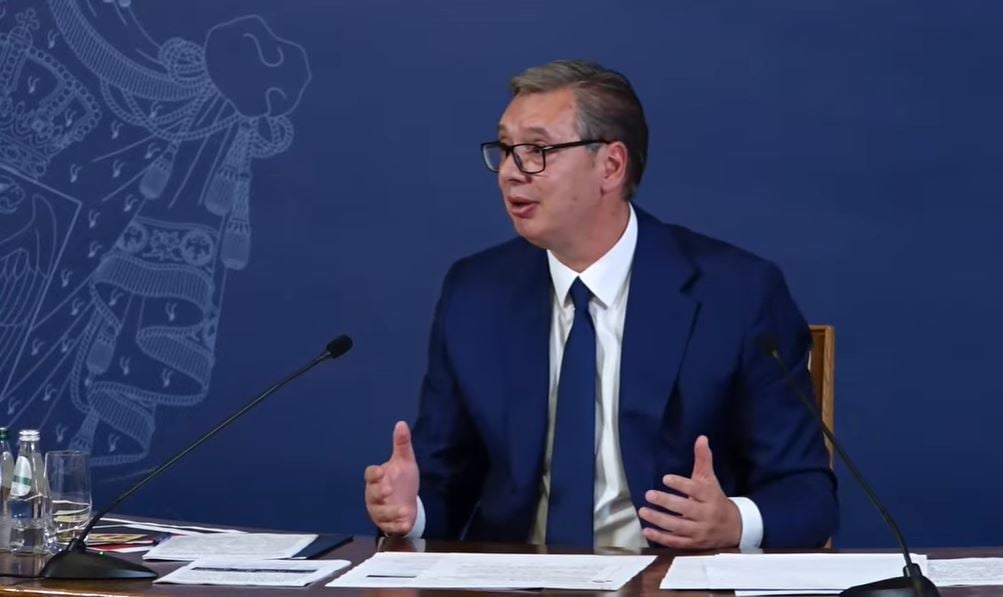
Political accusations from the top of government
In a post on the social network X, Brnabić said political opponents are building a campaign aimed at questioning and then arresting Vucić. According to her, the objective is not justice for the serious incident in Novi Sad, but his removal from politics.
She called it a form of “political persecution” and used harsh terms, speaking of “revolutionary terror.” Her statements come from the highest level of the ruling majority, at a time when public pressure for accountability has not subsided.
What happened after the Novi Sad tragedy
The incident at the Novi Sad railway station, where 16 people lost their lives, has shocked public opinion in Serbia and triggered demands for a full investigation into the circumstances surrounding the collapse of the station canopy.
Against this backdrop, calls to question senior state officials have entered the political debate. It is precisely here that Brnabić intervened, describing demands involving Vucić as unjustified and insisting that the investigation should focus on the people responsible for oversight of the project and approval of the works.
The comparison with France and Brnabić’s defense of Vucić
To support her argument, Brnabić cited the example of the collapse of part of the roof of the Charles de Gaulle Airport terminal in France in 2004, where four people lost their lives.
She raised the question of whether, in that case, then-French President Jacques Chirac would have been questioned as a suspect. With this comparison, Brnabić seeks to present the pressure that, according to her version, is being exerted on Vucić as political rather than criminal.
Unconfirmed claims and a climate of tension
Brnabić also said that less than 72 hours after the Student List’s election victory, a campaign to arrest Vucić began. She added that the Serbian Progressive Party would oppose what she described as “revolutionary terror.”
So far, the claims of an arrest plan remain Brnabić’s political statements and do not constitute official confirmation that such a measure is being prepared. Nevertheless, the emergence of these accusations shows how heated the political conflict in Serbia has become after the tragedy that has raised serious questions about institutional responsibility.
Instead of full clarification of a tragedy with grave consequences, public debate in Serbia is shifting increasingly toward political confrontation and a narrative of victimization by those in power.
This makes it all the more important to distinguish between political claims and the facts that should emerge from the real investigation into what happened in Novi Sad.