
A wave of youth protests has swept across several European countries, with demands ranging from education to the cost of living and housing. But beyond the stated causes, the day’s toll was heavy: clashes with police, mass arrests, property damage and forceful interventions by law enforcement.
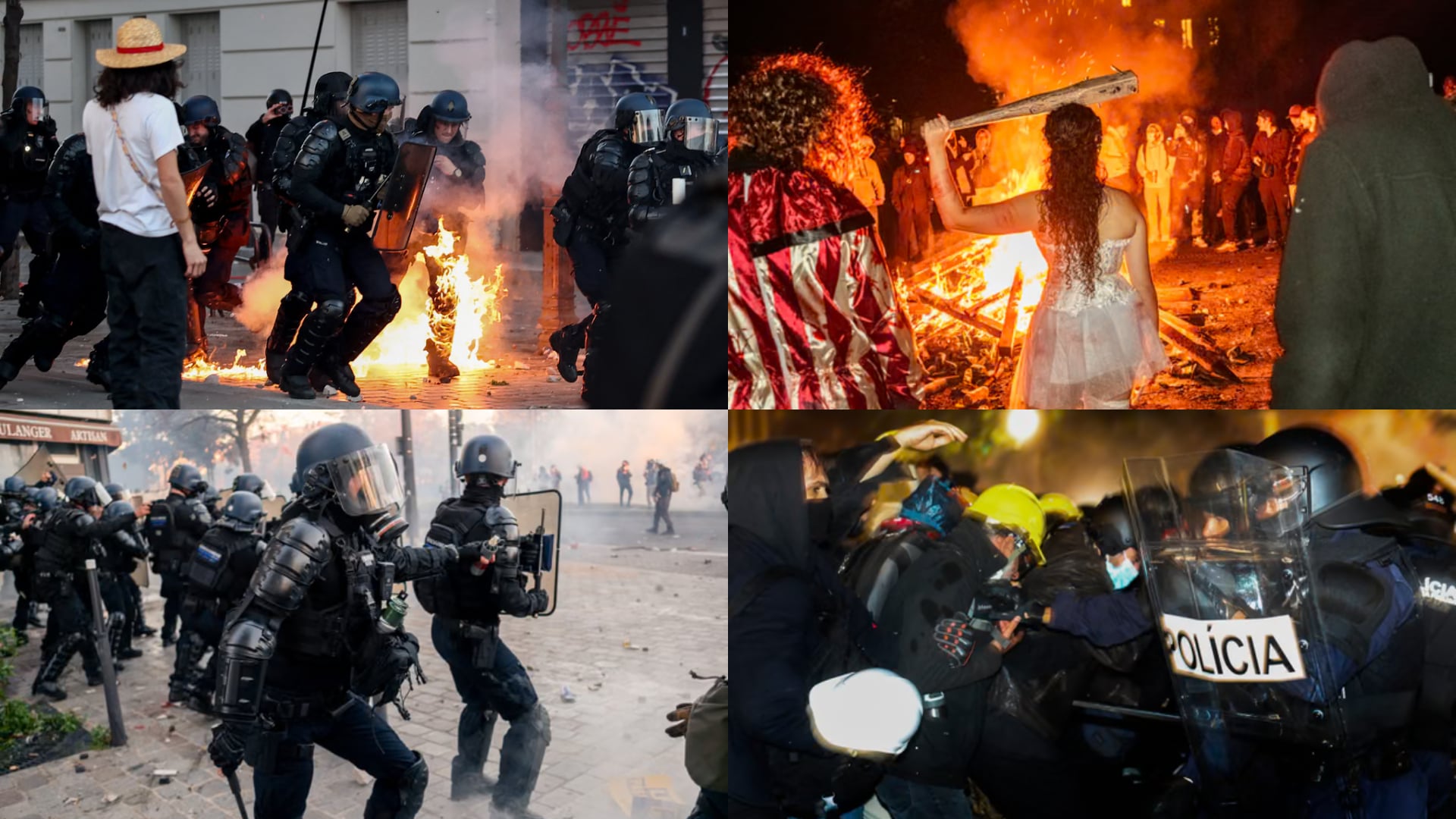
France records the highest number of arrests
In France, according to official data, around 320,000 people took part in Saturday’s protests in Paris, Marseille, Grenoble, Bordeaux, Lyon and Toulouse.
More than 770 people were arrested, while the Paris Prosecutor’s Office opened an investigation into attempted murder of persons exercising public authority, after incendiary devices were thrown at a group of around 15 gendarmes and police officers.
However, the situation was reported to be calmer than on October 17, when 2,600 people were arrested in France and up to 3,000 shops were looted, in one of the most serious episodes of urban unrest in recent years.
Germany: police injured and shops attacked
In Germany, more than 100,000 people marched in over 30 cities as part of the “Gen Z regelt” campaign, demanding improvements to the education system and a reduction in the cost of living.
In Frankfurt, the situation went beyond a peaceful protest. Masked individuals damaged 17 shops and looted five of them.
According to Hessen Interior Minister Roman Poseck, hard objects were thrown at police, including Molotov cocktails. More than 100 officers were injured during the unrest.
Portugal and Switzerland: forceful action to disperse protesters
In Portugal, police intervened to disperse protest camps after marches against the housing crisis. In Lisbon, protesters were forcibly removed from Rossio Square.
Demonstrators oppose a draft law that, they say, makes it easier to evict tenants and removes rent caps for new contracts. A protest camp was also dismantled in Porto.
In Switzerland, unauthorized protests in Zurich and Basel ended in clashes. Police used tear gas, water cannons and rubber bullets, while protesters threw stones, bottles and fireworks. Damage to shops, vehicles and bicycles was reported, as well as incidents in Geneva.
In Albania too, the protest deteriorated at the end
In Albania, the protest also took on a direct political dimension. Demonstrators called for the resignation of Prime Minister Edi Rama amid allegations of corruption.
At the end of the rally, clashes broke out with police. Protesters threw stones and Molotov cocktails at law enforcement, while rubbish bins were also set on fire.
According to the official version of the Interior Ministry, 350 people were injured during the protests, including 200 police officers, while 269 minors were arrested. These figures place the institutional response and the handling of the protest under unavoidable public scrutiny.
The picture emerging from several European capitals is one of social anger that is no longer being contained only within placards and chants in the square.
When protests over education, living conditions and housing end in Molotov cocktails, mass arrests and the use of force by police, the issue is no longer only public order, but also the failure of politics to respond before the street erupts.