
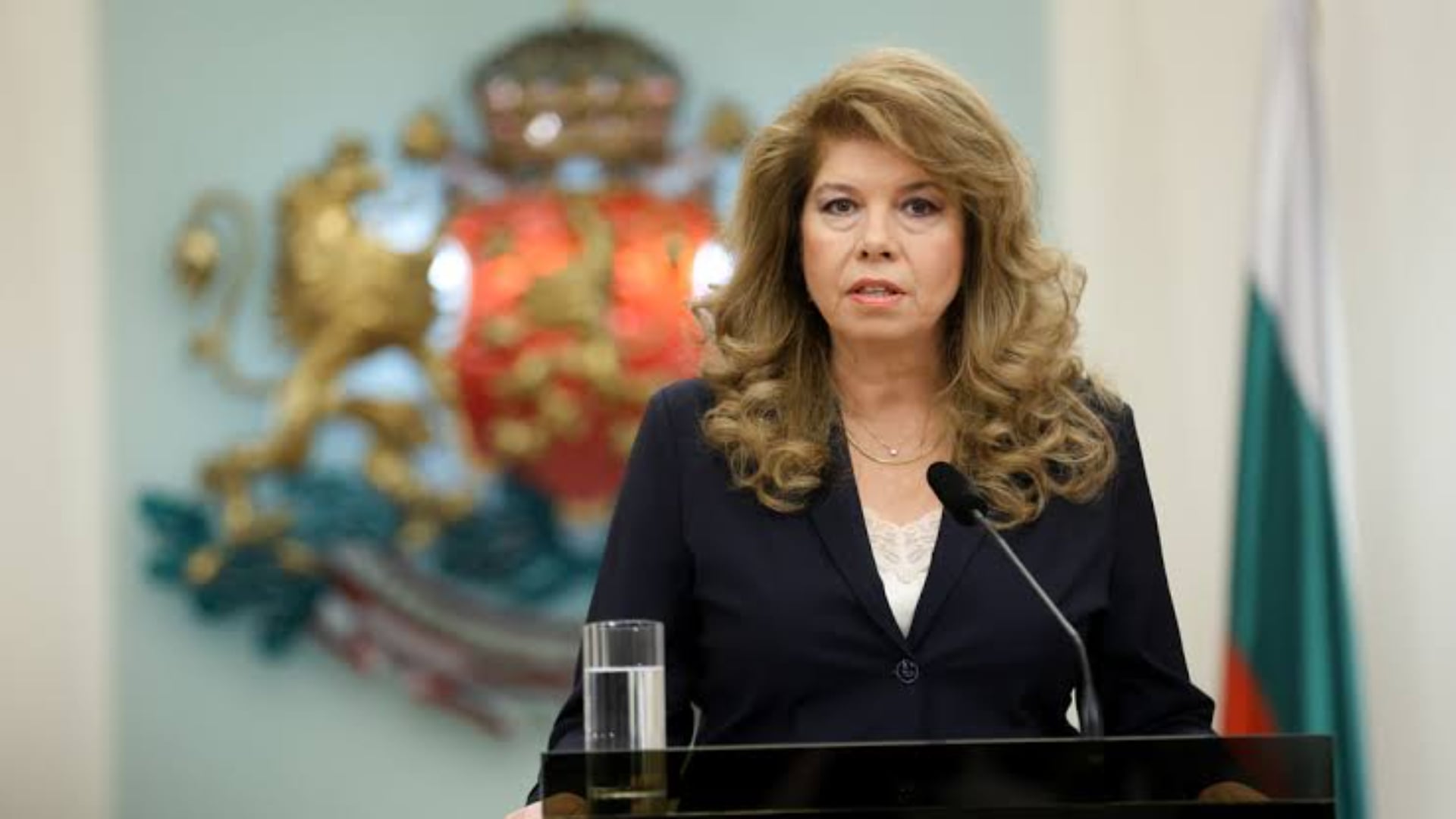
Bulgaria appears close to a historic moment in its politics, but the outcome still remains in the hands of the official count. Iliana Yotova is leading the presidential runoff with 52% of the vote, according to exit polls, while her rival Andrey Gyurov is projected at 45%.
Clear lead, but not a final result
The initial figures put Yotova ahead in the decisive round of the presidential race. If these preliminary numbers are reflected in the official result, she will go down in history as the first woman elected president of Bulgaria.
Until the final result is announced, the gap reported by the exit polls remains a strong political indicator, but not the institutional seal on the race.
Low voter turnout
According to preliminary data, voter turnout was around 29%, a figure that raises questions about the level of electoral mobilization in this runoff.
Such low turnout is also expected to be read politically, especially in a race presented as an important test for the country’s internal balance.
Ukraine and Russia dominated the campaign
The presidential campaign in Bulgaria was dominated by positions on the war in Ukraine and relations with Russia. Yotova has supported a solution to the conflict through negotiations with Moscow.
On the other side, Gyurov has promised closer cooperation with Western partners and stronger support for Ukraine. That has turned the race into a clear clash between two foreign policy lines.
A test for Radev’s camp as well
The election is also being seen as a test for Prime Minister Rumen Radev’s Progressive Bulgaria party, which backed Yotova’s candidacy.
Yotova took office in January after Radev’s resignation, when he stepped down to run in the parliamentary election. In this context, the runoff is seen not only as a contest between two candidates, but also as a measure of strength for the political camp behind her.
The weight of the presidency
Bulgaria’s president is elected directly by citizens for a five-year term. Although the office is largely ceremonial, the head of state holds important institutional powers.
These include command of the armed forces, the right to veto laws, and representing the country in international relations.
The final results will determine whether Bulgaria will, for the first time, have a woman elected as head of state.
Until then, Yotova’s lead remains the main political signal emerging from the runoff.