
Prime Minister Edi Rama used an appearance in Dublin to reaffirm the government’s narrative on justice reform, presenting the current situation as a sharp break from the country’s political and judicial past. In the same statement, he said there is no longer protection for anyone facing justice, but also acknowledged the existence of “judicial overreach.”
The speech in Dublin and the message on justice
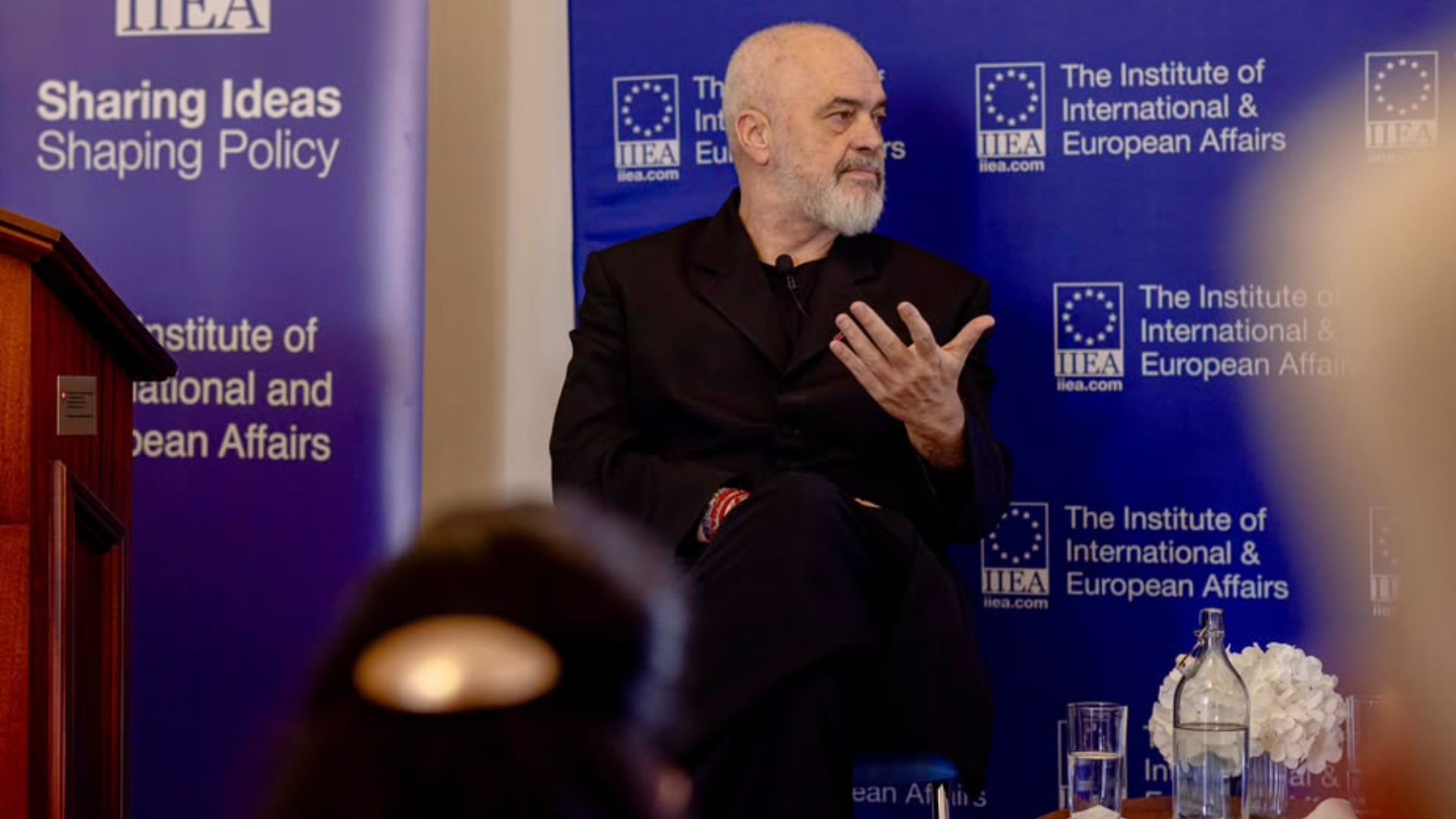
Rama is in Dublin, Ireland, at the invitation of the Institute of International and European Affairs, where he spoke before experts on European and Balkan affairs, as well as diplomatic representatives.
At the center of his remarks was justice in Albania, a topic the prime minister presented as evidence of institutional progress. According to him, for the first time, figures with power are facing trial before independent courts.
The claim of a historic change since 1912
Rama said that since the declaration of independence in 1912, Albania has not seen a case in which someone with power was tried by an independent judge. He argued that even during pluralism, an independent judiciary did not truly exist.
This is a political thesis that the government has often repeated to support the record of justice reform, linking it to the removal of political influence over the judicial system.
The EC report and corruption
Referring to the language of the European Commission report, Rama said the document no longer speaks of corruption as “widely spread,” but that corruption remains a concern. According to him, this change in wording shows real progress.
However, the fact that corruption remains a concern in European assessments shows that the government is selling as a success a landscape that continues to remain problematic and under institutional scrutiny.
“No protection,” but also an admission of problems in the process
The prime minister declared that now “there is no longer protection for anyone who appears before justice,” describing the action against powerful officials as part of a new phase.
At the same time, he acknowledged that there are also “judicial overreaches and similar things,” calling them part of the process. This admission leaves room for questions about how the system the government presents as freed from political influence is functioning in practice.
Greece also in focus: maritime border remains unresolved
In Dublin, Rama also touched on relations with Greece, which he described as excellent, although he acknowledged that there are issues for debate between the two countries.
He said the maritime border remains an unresolved issue, but that the sides have agreed to turn to the international court, with the aim of having the issue resolved by a third party.
The statements in Dublin come at a time when the government is seeking to strengthen abroad the message that justice reform is producing tangible results.
But beyond the political wording and the optimistic reading of international reports, what remains essential is how measurable this claim is in the daily practice of institutions and in the real standard of judicial independence.