
The 2027 draft budget has triggered a sharp political clash after the Democratic Party announced it would vote against it and described the fiscal package as a scheme that sells tax cuts to the public while shifting more costs onto citizens and businesses. At the center of Gazment Bardhi’s criticism are VAT, fuel, pensions and the lack of support for productive sectors.
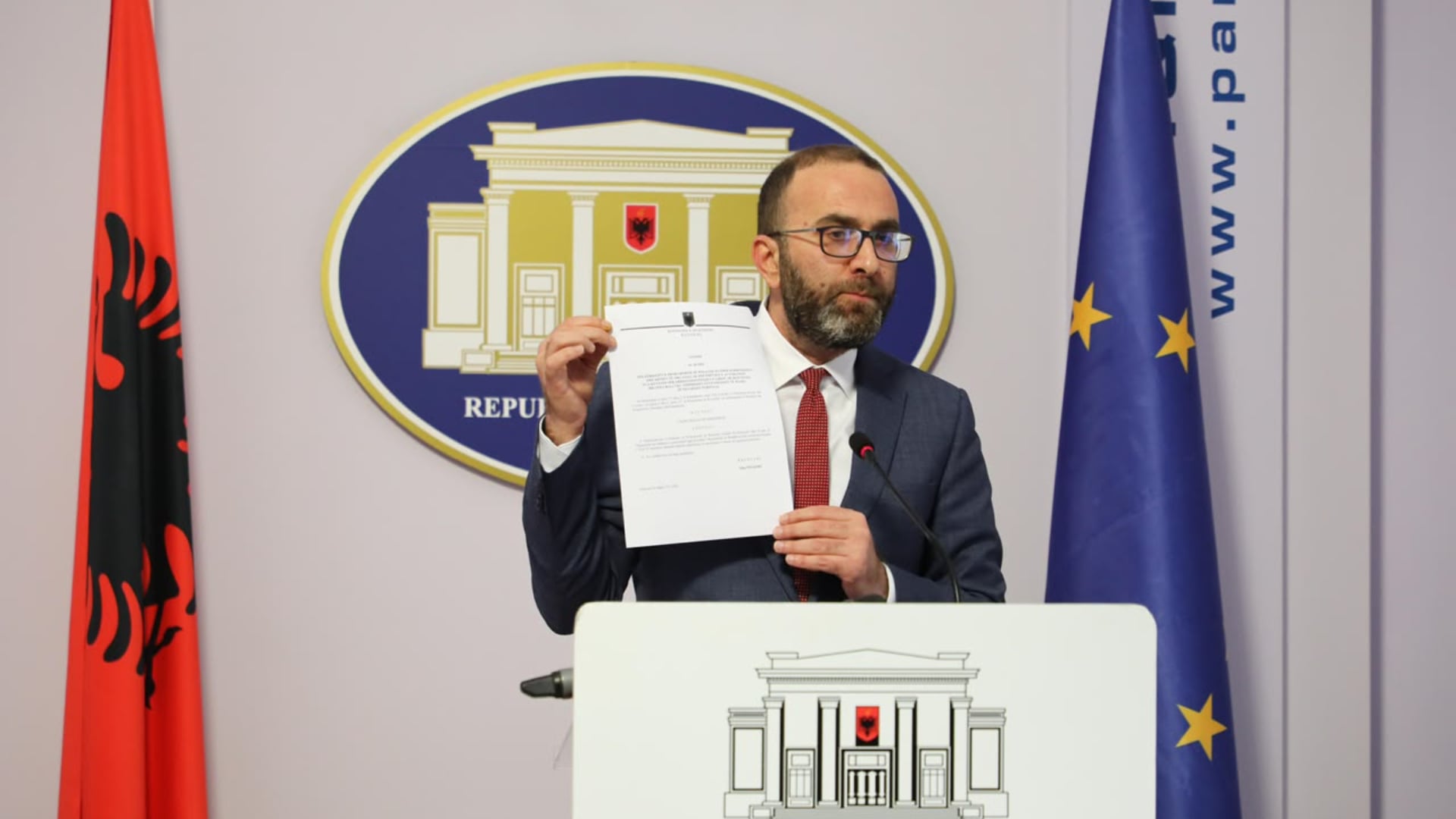
The opposition reads the budget as a hidden increase in the burden
Gazment Bardhi, head of the PD parliamentary group, said the opposition will vote against the 2027 budget, claiming it does not improve well-being but instead sustains a model that favors corruption and clientelist interests.
According to Bardhi’s account, the government is trying to market the proposal as a relief package, while its real effect, he said, is to increase the fiscal burden on families and businesses.
VAT and fuel at the center of the accusations
One of the main points of the political attack concerns taxes on consumption. Bardhi claims that although the government speaks of lowering the cost of living by reducing VAT on some food items, at the same time it foresees increasing the general VAT rate to 21 percent.
He also opposed the fuel package, saying that removing one element from the pump price is accompanied by other measures that, according to him, further increase the burden: a doubling of the circulation tax, an increase in VAT on fuel to 21 percent and a new tax on electric cars.
Small business and pensioners among the most disputed points
The PD also opposes bringing businesses with annual turnover above 5 million lek into the VAT scheme. According to Bardhi, this affects thousands of small businesses and self-employed professionals, while the expected consequence is higher service costs for citizens.
Another accusation concerns pensions. Bardhi says the monthly bonus for pensioners is being politically presented as a pension increase, while in essence, according to him, it remains limited assistance that is not included in the basic pension and does not produce the same long-term effects for beneficiaries.
Criticism also of the economic model and agriculture
In his statement, Bardhi broadened the criticism beyond taxes, targeting the economic model which, according to the opposition, favors construction rather than production. He claims the budget does not support agriculture, manufacturing industry and the creation of jobs with a real basis in the economy.
According to him, the 2027 draft budget does not place at its center the development of sectors that produce, process and increase the competitiveness of Albanian products. In the opposition’s reading, this makes the document more of a political instrument than an economic plan serving the majority.
The clash over the 2027 budget is unfolding not only over the figures, but also over their political interpretation: the government presents it as a relief package, while the opposition sees it as a redistribution of costs onto the groups with the least room to absorb them.
The debate remains open especially over the concrete effects the fiscal measures could have on prices, small businesses, pensioners and productive sectors, where the promise of development usually collides with the real bill paid by citizens.